

A Bed Bug's Feeding Habits Are Pure Nightmare Fuel
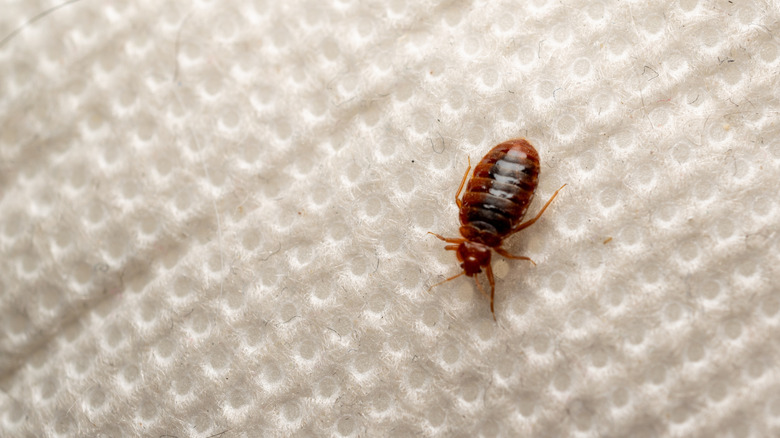
Just the mention of bed bugs is enough to give many of us a creepy, itchy feeling. The idea of blood-sucking insects lying in wait in the dark recesses of bedding is unsettling enough. But the feeding habits of a bed bug through its life cycle from newly hatched nymph to reproducing adult could be described as pure nightmare fuel.
Bed bugs are part of the Cimicidae family of insects, all of which feed exclusively on blood. Of the many species in the Cimicidae family, only a handful bite humans. People in the United States usually encounter the common bed bug, though the tropical bed bug affects humans in tropical and subtropical countries. Bed bugs are far from the only type of insect that feeds on human blood. However, as pesky as mosquitoes are, it's possible to limit your exposure to them with insect repellent and mosquito nets. We're also more aware of mosquitoes feeding, and in some cases we can swat them away. But bed bugs move in silence and mostly at night. People who have been a bed bug snack often don't know until long after.
Hidden away
Bed bugs are small, flat-bodied insects that spend the majority of their lives hiding in small cracks and crevices where they are unlikely to be seen or disturbed. Bed bugs were once thought to be descended from insects that fed on the blood of bats; however, new research shows that we may be wrong about their origins and that bed bugs have been around longer than previously accepted.
Bed bugs follow their hosts around closely. In the case of humans this often means hitching a ride in clothing or personal items from one location to another. Once in a new location, a bed bug can travel several yards in search of food. This involves a decent amount of random wandering, but once within a few feet of a potential host a bed bug can zero in on body heat and exhaled carbon dioxide. Bed bugs will then collect in crevices like the seams of a mattress where they are hidden from view and safe.
They mostly come at night
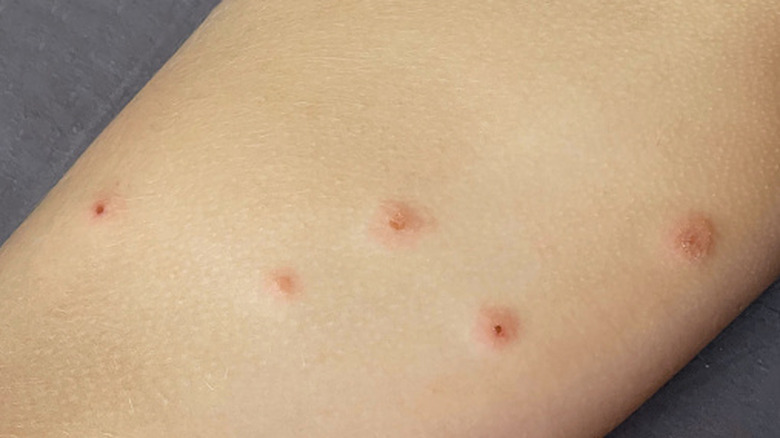
During the day, bed bugs hide away, becoming active at night while their hosts lie in bed like a sleeping buffet. Once a bed bug has found a host it will bite through the skin with its mouth parts. The insect will bite a host several times in search of a capillary that will supply enough blood. Once it's found a good spot, the bed bug will feed for five to 10 minutes and head back to its hiding spot to rest and digest. A bed bug will typically feed every three to seven days.
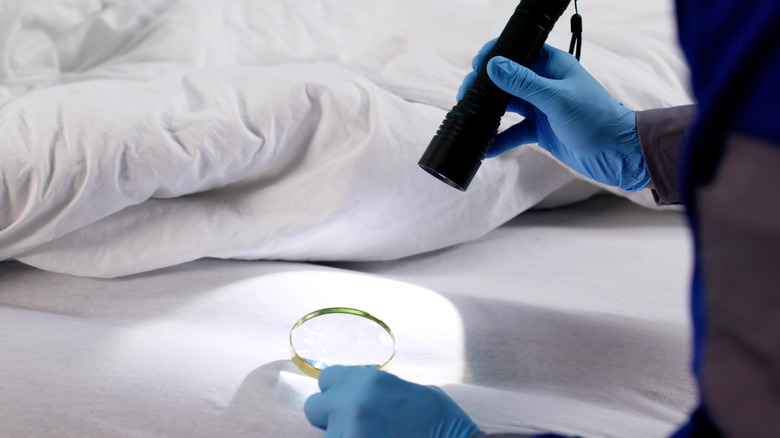
Because bed bugs spend much of their time hiding away, it can be hard to find them. Carefully inspecting the seams and corners of mattresses with a flashlight is one effective way to find bed bugs and their droppings. It's also become more challenging to get rid of bed bugs because they are now largely resistant to most common pesticides. While researchers are looking into new game-changing sprays that could help control bed bugs, the main solutions available now are using protective bedding covers and treating infested areas with steam and heat. However, it will take every tool at our disposal to get rid of the nightmare fuel of bed bug feeding habits.