

Scientists' Crucial Ocean Equipment Is Getting Dismantled, Threatening Climate Research
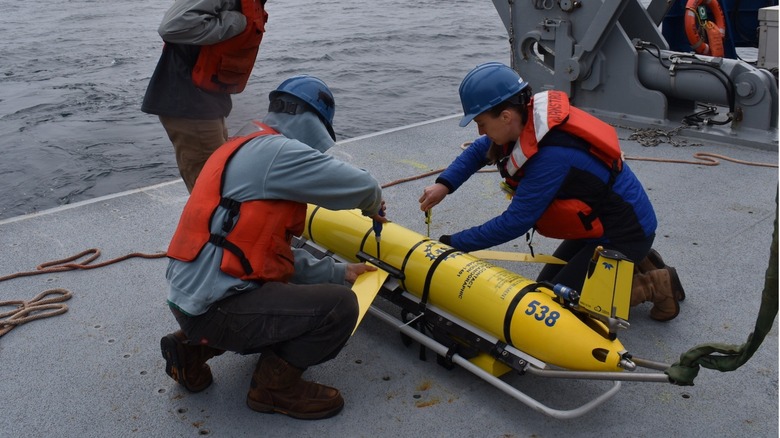
So far, it's been a rough year for climate science. In January, President Trump withdrew the United States from both the Paris Agreement and the UN Framework Convention on Climate Change, even as resource-hungry AI data centers continue to expand into areas heavily effected by climate change. Now, the Trump administration is striking a new blow to climate research, this time by gutting a $368-million ocean-monitoring system that's been in operation for the past decade and was scheduled to keep running for another 15 years.
The United States funds scientific research by issuing grants to applicants via government agencies, such as the National Institutes of Health and the National Science Foundation (NSF). With this money, the NSF created the Ocean Observatories Initiative (OOI) in 2009, which created a network of sophisticated instruments on both coasts to monitor climate change over the ensuing years. The data was incredibly useful, and not just for climate scientists. Once fully operational in 2016, the initiative allowed scientists to study everything from the global carbon cycle and the atmosphere to plate tectonics and deep-sea life forms.
The Trump administration is dismantling the OOI as part of a wider strategy to scale back climate-change research. In May, the OOI website announced that funding had been cut by approximately 80% and would begin a process of "descoping" its operations. Four of the five arrays are to be dismantled and stored in nearby facilities by the NSF, where they're to be, "retained by the operating institution pending further guidance from NSF." In other words, one of our most advanced tools for monitoring the climate along both the east and west coasts has been severed.
In a changing climate, oceanic research is more important than ever

The Trump administration has been calling climate change research a waste of money for years, and the dismantling of the OOI is just the latest in an ongoing campaign to slash spending on climate monitoring. Yet, even for those strongly against studying the climate with science — and those who deny the fact that human beings are the reason for global warming — oceanic monitoring systems are valuable assets for the United States.
For instance, oceanic monitoring networks like OOI can help us predict and respond to natural disasters, a powerful tool as weather events become more extreme in a changing climate. The OOI provided a network of instruments across vast parts of the northern Pacific and northern Atlantic, with over 900 devices in total. These devices were connected to the "OOI Cyberinfrastructure," which provided 250 terabytes of oceanic monitoring data that is freely accessible to the public. This meant oceanic and climate data could be shared in real time, allowing scientists to collaborate across the world.
With four of the five arrays being dismantled, the United States will be in the dark as the world braces for the upcoming El Niño summer, which is predicted to break weather records and cause extreme floods, droughts, and storms. And oceanic climate data doesn't only help us understand the weather above the ocean surface. For example, the OOI was also used to help engineers and scientists monitor the the environmental effects of offshore windfarms. Such research is especially useful on the east coast, where underwater shelves provide viable space for extensive windfarms. By dismantling these systems, the US government is killing two birds with one stone: renewable energy and climate research.