

The Carnivorous, Deep-Sea 'Death Ball' Sponge Scientists Found Off The Coast Of Antarctica
The deep ocean is one of the remaining frontiers on earth, with many new animal species that have yet to be discovered. One bizzare new species is the carnivorous "death ball" sponge, which looks like a ghostly molecule with stalks that have spheres at their tip. According to the Nippon Foundation-Nekton Ocean Census, the spheres feature tiny hooks that the sponge uses to catch its prey, which include small crustaceans. This carnivorous behavior is very rare for sponges, which usually consume microscopic organisms such as plankton by passive filter feeding. The death ball sponge was discovered by marine scientists from the Nippon Foundation and the Schmidt Ocean Institute in 2025.
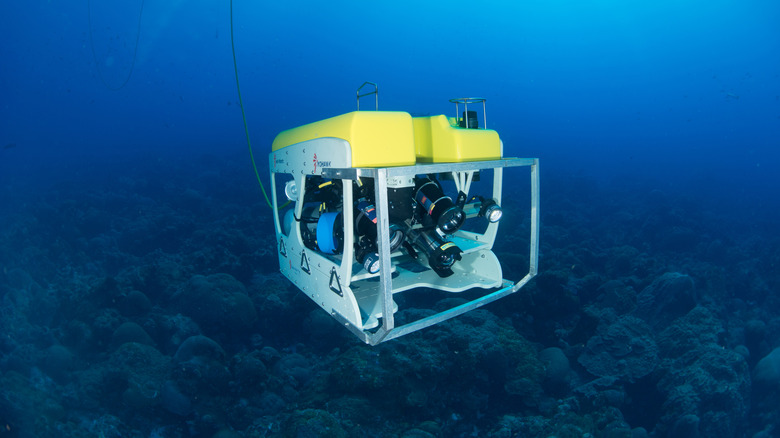
The scientists used a remotely operated vehicle (ROV) called SuBastian. Diving to an enormous depth of 3601 meters at the Trench North dive site that lies east of Montagu Island in the South Atlantic Ocean, the ROV captured footage of this otherworldly sea creature. The scientists who discovered the sponge called it Chondrocladia sp. nov after the Chondrocladia genus of carnivorous sponges, which is part of the sponge family called "Cladorhizidae Dendy, 1922." Finding new marine species is just one of the things you need to know about marine biology (the study of life in oceans & seas). ROVs such as SuBastian enable discoveries at depths where humans cannot safely dive. This is especially important in marine science since being a marine biologist is even riskier than you thought.
The death ball sponge is just the beginning

Although the discovery of the death ball sponge is undoubtedly an amazing discovery, it is only the tip of the iceberg. The research team also reported finding new species of armored and iridescent scale worms, new sea star species, new isopods and amphipods (including possibly an entirely new family of amphipods), as well as rare gastropod and bivalve species that are adapted to the unique habitat that includes volcanic and hydrothermal features.
The excitement of discovering the death ball sponge and other new species was eloquently articulated by Dr. Jyotika Virmani, the Executive Director of the Schmidt Ocean Institute. "The goal we share with Ocean Census to accelerate discoveries has resulted in the first confirmed sighting of a juvenile colossal squid and new species, and exemplifies what becomes possible when technology, ship time, and a global science network work as one," said Dr. Virmani. What is even more mind-blowing is that all these new species were found in the 30% of samples from the Trench North site that have been analyzed so far. That means that, as scientists continue to characterize the remaining 70% of samples, many more new species are likely to be identified.
What? These sponges eat animals?!
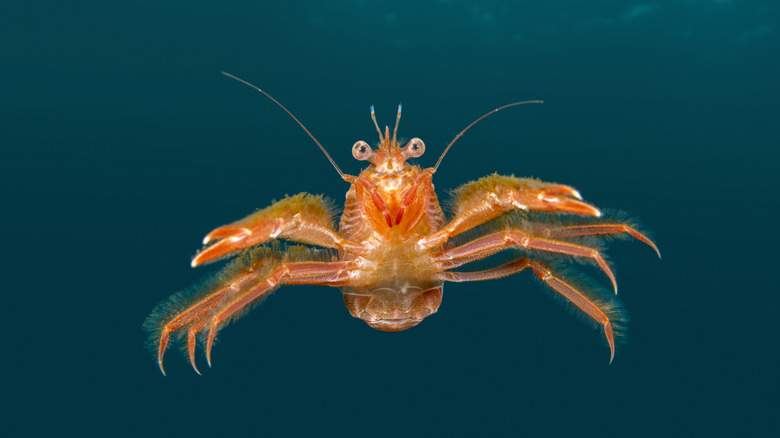
Beyond its distinctive appearance, the carnivorous nature of the death ball sponge makes it extremely rare. The sponge uses the tiny hooks covering its spheres to trap prey (usually unsuspecting small crustaceans), rendering them helpless and immobile. Then, assuming that it follows a similar mechanism as other carnivorous sponges, the death ball sponge uses specialized cells called amoebocytes to digest its prey over several days, literally sucking the life out of these unfortunate victims. Symbiotic bacteria has been reported in other carnivorous sponges, leading scientists to speculate that they may be involved in digestion of prey. However, more research needs to be done on the function of these bacteria and on whether they occur in the death ball sponge.
Carnivorous sponges tend to live in deeper parts of the ocean. Scientists think that the carnivorous feeding is an evolutionary adaptation to the specific environment of the deep sea, where nutrients are more scarce than in shallower waters, rendering filter feeding less optimal as a feeding strategy.
Thanks to ROVs and other advances in marine science, we now know about the death ball sponges and other truly odd creatures in the deep sea. Scientists will continue to discover new species, such as another carnivorous sponge or, possibly, something completely different and even more bizarre. One thing's for sure — the strangest deep-sea discoveries made to date are just a small taste of what's to come.