

The 'Brown Note' Poop Myth, Debunked By Science
Bowel movements may be taboo to talk about in casual conversation, but they can be interesting on a scientific level (except for the gross bit of analyzing the poop). For instance, just being nervous makes some people poop because of the connection between the fight-or-flight response and the gut. You might have also heard that the "brown note" — said to be an infrasonic frequency of sound, which humans can't hear — can cause involuntary diarrhea. According to science, this simply isn't true.
It's believed that the brown note poop myth originated from a 1974 spoof article about a giant horn: When it was used for the first time in 1850, it triggered diarrhea in everyone who was listening. Then, a study published in the Scandinavian Journal of Work, Environment & Health in 1987 found that infrasound between 3 Hz and 6 Hz could affect normal stomach motility.
With uncertainty in the air, the cast of the television series "MythBusters" decided to test the brown note theory during Season 3, Episode 3, which aired in 2005. At 7 Hz and 9 Hz, Adam Savage didn't feel the need to poop his pants, even while dancing — although, he was prepared with a pull-up diaper on over his pants. The definitive word came from a 2007 paper published in Military Medicine, though. After reviewing previous peer-reviewed literature, the researchers didn't find any evidence of infrasound triggering diarrhea. Therefore, the brown note is an urban legend that doesn't exist.
Low-frequency noises can affect the body in other ways
Since the brown note has been proven a myth when it comes to inducing a bowel movement, you'll need to try alternatives that do work if you suffer from constipation. Apple cider, for example, is a heart-healthy juice that science says can help you poop. Despite that, researchers have found that low-frequency sounds affect the body in other ways.
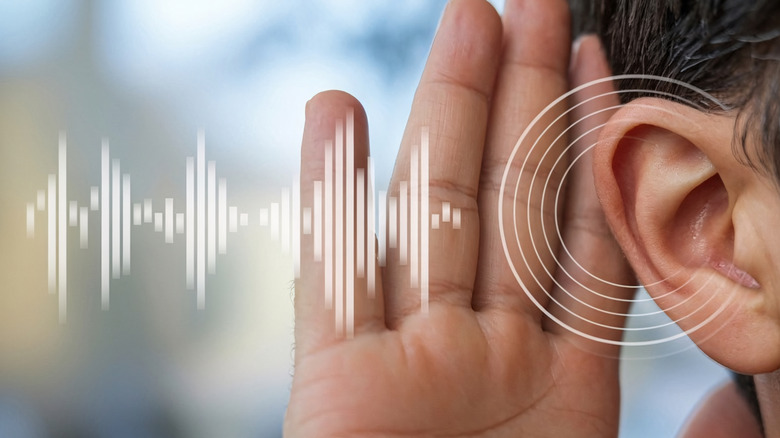
First, it's important to note that the average human hearing range is between 20 Hz and 20,000 Hz. Anything below 20 Hz is considered infrasound, but while it can't be heard, the vibrations it creates can be felt. You might be surprised that there are a lot of things that produce these low frequencies naturally — from avalanches and volcanoes to industrial sites, vehicles, and wind turbines. Also, infrasound is part of the secret language of elephants, and giraffes communicate using it, too. A consolidated review of research into the effects of infrasound on the body was published in Noise and Health just last year. Among the complications noted by the scientists were anxiety, dizziness, poor mental performance, sleep disturbances, temporary shifts in blood pressure, and tinnitus.
Another crucial fact to point out is that brown noise isn't the same thing as the brown note. In fact, psychiatrist Shivnaveen Bains, MD, explains to Cleveland Clinic Health Essentials that brown noise is a balanced "combination of all the different frequencies we can hear," such as crashing waves, heavy rainfall, and rumbling thunder. Brown noise has gained popularity to enhance focus, but there's no scientific evidence to back that up yet. Similarly, there's not enough research to prove that it improves sleep, although many people tout this as a benefit.