

Scientists Discovered One Of Australia's 'Cutest And Fiercest' New Species
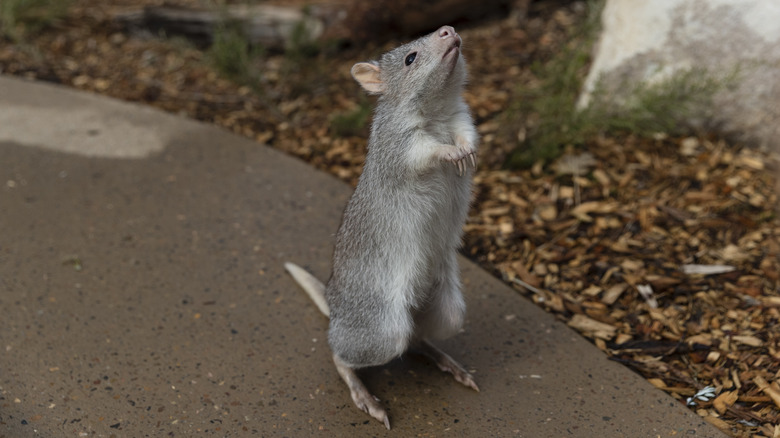
Australia is renowned for having unique wildlife, some of which they're trying to protect. For instance, scientists are using poop to save an adorable, critically endangered animal from extinction — Gilbert's potoroo, a type of marsupial. Meanwhile, it looks like the list of marsupial animals that call the country home is growing with the discovery of a new species. The Planigale petrophila might be the "cutest and fiercest" of them all, according to Queensland University of Technology (QUT) associate professor in ecology and environmental science Andrew M. Baker in an article on The Conversation.
Planigales are the smallest marsupials in the world, with some species weighing little more than 0.07 ounces (2 grams). Capable of squeezing through tiny crevices, they hunt at night for insects, spiders, small lizards, and other vertebrates or young mammals. Publishing their findings in the Zoological Journal of the Linnean Society, researchers from various universities and organizations were studying more than 2,000 genetic samples of P. ingrami. Earlier studies suggested that it (and P. maculata) may have been misclassified because of how hard it is to tell them apart.
Conducting comprehensive and morphological analyses of samples from Australia's museums, they found that the P. ingrami specimens actually contained the genetics of three separate species — P. ingrami, reinstated P. subtilissima, and the new P. petrophila. The scientists determined that all of these are part of the same paraphyletic group, which also includes P. tealei. However, the newly identified P. petrophila appears to be special.
What scientists have learned about the Planigale petrophila so far
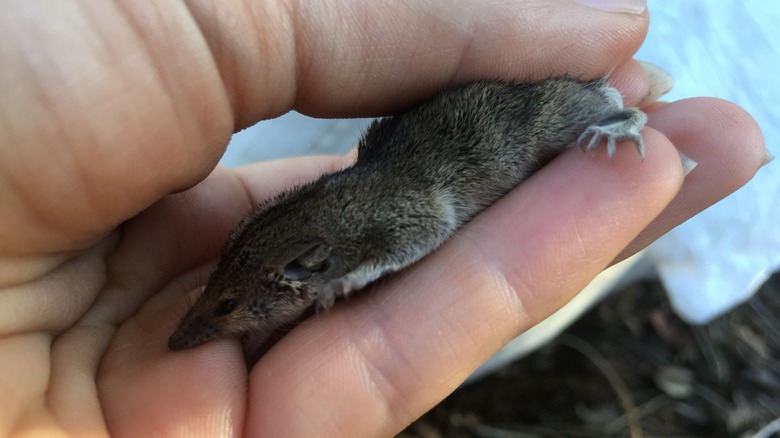
The specimens that the researchers used to determine the existence of the P. petrophila species took some finesse because they were highly degraded, so much so that chunks of data were missing. Some of those specimens were collected in the 1970s, and no new ones had been collected since 2004. Of the more than 2,000 samples, only three of them were of P. petrophila. Plus, they were all collected within 7.5 miles of each other atop a sandstone plateau in Arnhem Land and along the rocky slopes of Kakadu National Park. That's actually where its name "petrophila" came from, which means "cliff loving" in Greek.
The fact that planigales all have brown fur but in slightly varied shades makes it hard to tell them apart at a glance, which is why studying their genetics has been so crucial. Since they're so small and weigh so little, though, conventional box traps aren't effective at capturing specimens, so "pitfall" traps are used instead. Despite all that, researchers have been able to identify two key characteristics about the P. petrophila that sets it apart from the other species. Baker and Western Australian Museum research associate and first author of the study Dr. Linette Umbrello describe them as having longer tails, as well as larger skulls and bodies covered in dark, grizzled fur.
These and other factors suggest that this tiny marsupial is scarce and could be at risk of extinction like other animal species. Andrew M. Baker said in a QUT press release, "Given the small geographic area where P. petrophila has been found, and the alarming declines in other mammal species from northern Australia, we recommend an urgent full conservation assessment of the species in the Territory."