

This Everyday Kitchen Culprit May Be Behind The Parasitic Outbreak Causing Explosive Diarrhea

From May 1, 2026, the Centers for Disease Control and Prevention (CDC) began receiving reports of illness related to Cyclospora, a tiny foodborne parasite that can cause explosive diarrhea. The resulting infection (cyclosporiasis) has affected more than 4,000 people — over 300 of whom were hospitalized — as of July 20. The Food and Drug Administration (FDA) traced the illnesses back to the iceberg lettuce served at Taco Bell — which gets its supply from Taylor Farms de Mexico. However, the investigation results aren't so straightforward.
The CDC and FDA collaborated to investigate the Cyclospora outbreak, and on July 16, they announced that the illnesses had been reported at Taco Bells across five states. The following day, the FDA revealed that Taylor Farms was identified as the single iceberg lettuce supplier where the outbreak originated, and the farm voluntarily removed all of that produce from the U.S. market and issued a recall. While most of the recalled iceberg lettuce was distributed to restaurants and distributors across 27 states, a small portion was sold under the brand Marketside at Walmart, which was removed from store shelves.
However, the sample from Taylor Farms that the FDA lab tested and initially reported positive for Cyclospora was apparently a false positive. Detecting this tiny parasite is a complex process, so the scientists reviewed the sample results again. Could that mean the origin of the outbreak isn't Taylor Farms or even iceberg lettuce after all? Although they haven't confirmed a positive result since July 19, the scientists are still conducting tests, and the FDA will provide more information as it becomes available. Meanwhile, cyclosporiasis cases have spread to 41 states and continue to rise, with more than 7,400 cases reported and yet to be confirmed.
How Cyclospora affects lettuce and spreads
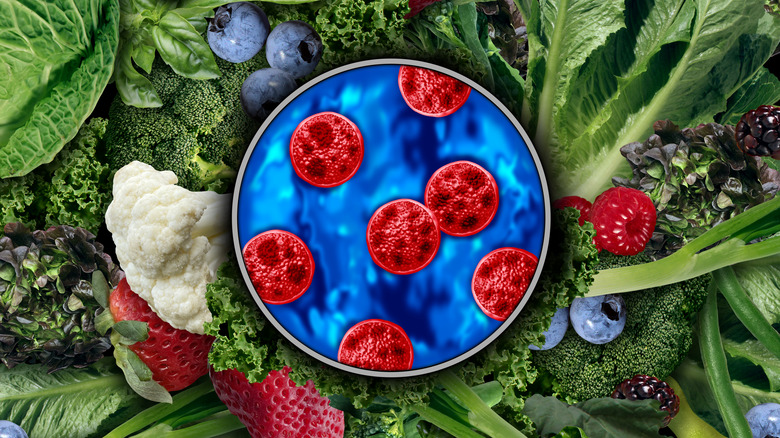
This 2026 Cyclospora outbreak isn't the first, with outbreaks being identified almost annually since the mid-1990s. In the United States, it has been found in water sources and various fresh produce, such as basil, cabbage, cilantro, and raspberries. The outbreaks generally occur between May and August.
When it comes to leafy greens, there have been notable outbreaks involving salads at restaurants and bagged salad mixes sold in stores in 2013, 2018, 2019, and 2020. The 2020 outbreak seems to have been the biggest to affect lettuce, resulting in 701 cases of cyclosporiasis (38 hospitalizations) in 14 states — nowhere near the cases confirmed so far this year.
Scientists have only ever found Cyclospora in humans, affecting the intestines and leaving behind oocysts (the infectious stage of this microscopic protozoan parasite) that are excreted in poop. At temperatures of about 72 to 90 degrees Fahrenheit, the oocysts sporulate, which means that they form spores in an attempt to survive harsh conditions. Excystation only occurs after the sporozoites are ingested, allowing them to exit the oocysts and enter small intestinal epithelial cells. There, they multiply to produce more oocysts, and the cycle continues.
University of Delaware microbiologist Kalmia Kniel explained to The New York Times that this current Cyclospora outbreak could have spread from multiple workers. Then, it may have entered the water used to irrigate or wash the crops via heavy rainfall or a septic system leak.
Best practices and guidelines for preventing exposure to Cyclospora
Cyclosporiasis is far from the most contagious disease in the world, but it's important to take precautions. Alongside frequent, watery diarrhea, this gastrointestinal illness can cause bloating, nausea, fatigue, loss of appetite, and weight loss. Some people may develop a low-grade fever and vomiting as well, but these symptoms are less common. The onset can happen two to 14 days after exposure and follow a course of remission and relapse for a month or longer. Although it's not typically life-threatening, complications can develop, such as cholecystitis (gallbladder irritation and swelling), malabsorption, and reactive arthritis.
That's why it's important to seek medical attention if you experience watery or prolonged diarrhea after potentially being exposed to Cyclospora, which can be treated with an antibiotic. However, the ultimate goal is to avoid it altogether. The FDA recommends that you don't consume affected produce that you've purchased or ordered at a restaurant. Fortunately, Taco Bell has taken the guesswork out of that by removing Taylor Farms iceberg lettuce from its locations as of July 17. At other restaurants, you can ask where they source their lettuce before ordering.
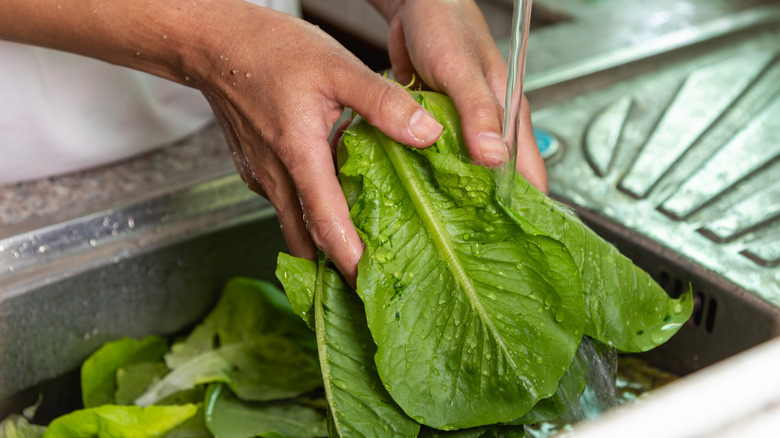
Washing fresh produce thoroughly is also essential, even if it has been pre-washed, but the first two or three layers of lettuce and other leafy greens should be thrown away. Additionally, any potentially affected produce that can be cooked should reach at least 158 degrees Fahrenheit. That's because Cyclospora is resistant to chemical disinfectants and may not be fully eliminated by them.