

The 'Useless' Organ That Can Actually Protect Your Body Against Infection
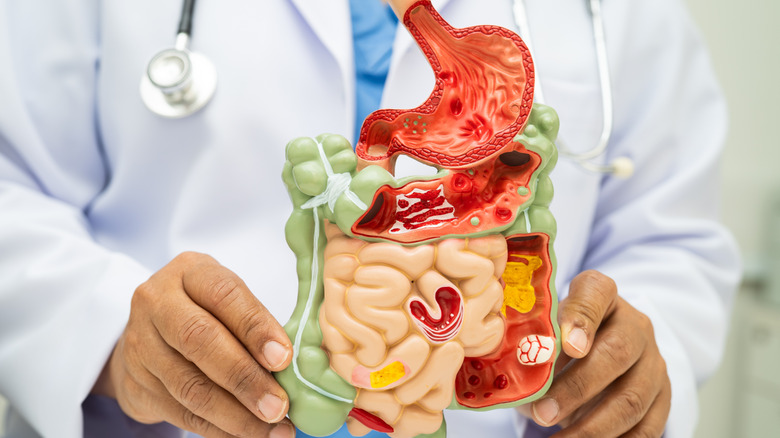
The slow, ongoing process of human evolution is a biological response to the changing environment. As a result, some body parts become less functional or simply aren't needed anymore. That's why some scientists still debate whether certain organs are "useless" (otherwise known as vestigial organs). For instance, the thymus gland is a useless organ that's more important than you thought. The spleen is another organ that is more important than scientists once believed.
First, it's worth pointing out that the belief the spleen is a vestigial organ may have started with Erasistratus of Chios, a pioneering Greek anatomist and physician who lived around 310 to 250 B.C. It wasn't until 1952 that two doctors published their findings of infant splenectomies (surgical spleen removal) in Annals of Surgery, demonstrating that the organ is actually an important part of the body's defense against infection. Since then, scientists have been studying and learning more about the spleen to find out how it works, which has been a challenging process.
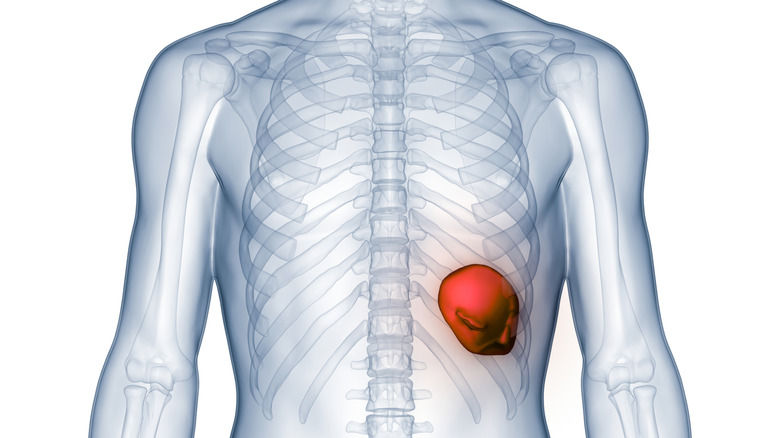
Located in the upper left quadrant of the abdomen behind ribs nine and 11 and right above the stomach, the spleen is a significant part of the lymphatic system. What scientists have found is that this organ stores blood and has two types of tissue — red and white pulp — that each have a unique function. Made up of splenic cords and venous sinuses, the main function of red pulp is to filter blood by eliminating damaged and old cells while also destroying bacteria and viruses. The white pulp is made up of lymphatic tissue that produces the white blood cells that make antibodies to fight off infections.
Sometimes the spleen doesn't work or has to be removed
Aside from playing a large role as part of the immune system, one of the facts to know about the spleen is that it's possible to live without one or to live with one that doesn't function properly. In either case, the body isn't as effective at producing white blood cells, filtering the blood of damaged and old cells, and eliminating bacteria and viruses. The body isn't as good at fighting infections as a result. While the liver, lymph nodes, and thymus are a few other organs that compensate for that, not having a functional spleen still puts people at a higher risk of infection from certain bacteria, which requires vaccinations for additional protection.
Doctors refer to living with splenic dysfunction (hyposplenism) or no spleen at all as the condition asplenia. In cases of functional asplenia, people still have a spleen, but its function is impaired. Hyposplenism can be caused by various underlying conditions — such as celiac disease, alcohol-induced liver disease, or sickle cell disease — or an injury that affects the spleen's arteries or veins.
Additionally, some people don't have a spleen. It's rare, but some babies are born without the organ. Meanwhile, a splenectomy may be necessary because of disease-related enlargement or injury-related rupture. In fact, the spleen and liver are the two organs most likely to burst because of trauma.