

The Excruciating Science Behind Stingray Venom And Why It's So Painful
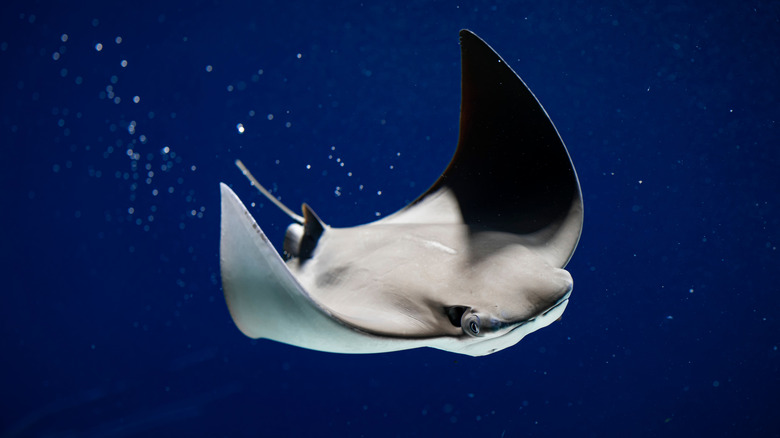
Thousands of people are stung by stingrays every year, though fatalities are exceedingly rare. Many sources place the yearly death-by-stingray figure in the single digits. Most victims of stingray stings, however, survive the ordeal, but not without first suffering the excruciating effects of its venom. In the worst case scenarios, a stingray sting's chemical cocktail can light up the nervous system with electrifying, fiery pain that lasts for up to 48 hours.
Most venomous animals use their venom to kill or subdue prey. Expectedly, venomous hunters dominate the lists of the world's fastest-killing animals, and many can kill a human within minutes. But stingrays only possess venom in their tail barbs for self-defense, and they only sting when they feel threatened. Because stingrays are bottom feeders, sucking up crustaceans and mollusks like seafloor vacuum cleaners, their venom is adapted to give an immediate sharp reminder to predators to steer clear and to inform wading animals, like human swimmers, where not to step in the shallows.
Most stingray venom contains an abundance of enzymes called hyaluronidases, which immediately break through cellular structures to create an opening for other toxins. This "opening" allows more potent enzymes to flood into tissues. These latter chemicals act as cytotoxins, which means they kill cells by dissolving their structural proteins, leading to necrosis of the flesh. But the most immediate pain comes from a flood of serotonin.
Normally, serotonin in the brain binds to mood receptors, making us feel happy or alert. When injected into the flesh by a venomous stingray barb, however, serotonin binds to nearby pain receptors instead. The result is an immediate, blinding, agonizing pain that may lead you to believe you had molten lava injected into your bloodstream.
After the initial shock, stingray venom stings keep throbbing for days
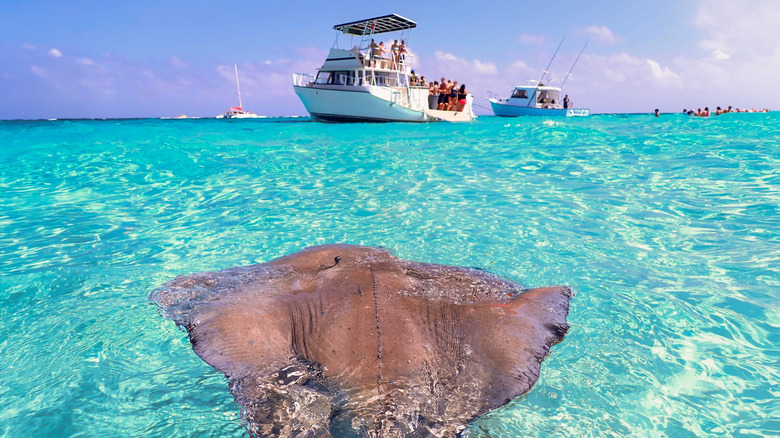
The flood of serotonin and nucleotidases are responsible for the infamous fiery shock of a stingray sting, but the worst of its damage can take a long time to run its course. Though not nearly as deadly, the disturbing effects of stingray venom are comparable to those of a flesh-eating disease. Its cytotoxins cause necrosis of the tissues, and they can even leave behind a gaping hole or a raised scar at the sting site. And there's no antivenom for a stingray sting; the main treatment is hot water. By immersing the wound in hot water, the enzymes break apart before they can spread deeper into tissues.
Besides physical pain, stingray venom introduces a whole laundry list of other terrifying side-effects, including edema (swelling), cyanosis (low oxygen), rashes, and open sores on the skin. To make matters worse, stingray venom slows wound healing, so any puncture wounds or sores can easily become infected. Such severe complications are rare, as most venom effects wane in the hours after a sting. Still, many patients report a lingering soreness at the sting site that lasts for weeks.
While stingray venom is scary, it's not as deadly as is often believed. Marine biologists face a slew of dangers in their line of work, but stingrays are towards the bottom of the list. In fact, sometimes stingray stings deliver little to no venom. On the other hand, sometimes a stingray's tail barb may break off and become embedded in the flesh, delivering a full dose of venom. In both cases, victims almost always survive. Getting stung by a stingray may feel like a fiery death, but it's a pain that countless people have lived through.