

Scientists Explain The Mystery Behind Why Your Dominant Eye And Hand May Be Different
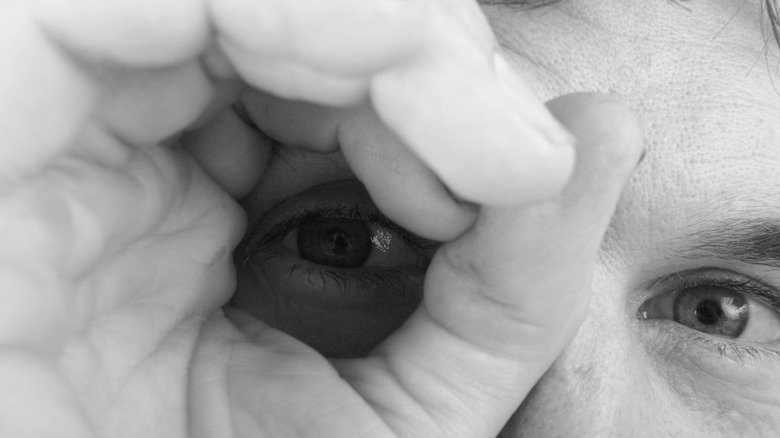
Everyone except for the rare truly ambidextrous person has one hand that they use more for daily activities like writing, throwing, and brushing their teeth. While it's common for someone to know if they're right-handed or left-handed, many people aren't aware that they also have a dominant eye. Just as most people are right-handed, the majority of people are right eye dominant. However, the percentage of right eye dominant people is smaller than the proportion of the population that is right-handed, and in some cases, people's hand and eye dominance don't match. Scientists solved the mystery of why 90% of people are right-handed, and can now explain why your dominant eye and hand may be different.
Eye dominance comes down to the way the brain processes visual information and how each eye supplies that information. In many cases this is because one eye works harder to focus images. In other situations, one eye can see distant objects more clearly than the other, leading that eye to be dominant. There are also times when the brain prefers information from one eye over the other based on the layout of neurons in the brain's visual cortex, the portion that handles visual information.
Eye and hand dominance don't always match

Somewhere around 65% of people are right eye dominant, and this figure is similar across geographic regions and cultures. This points to eye dominance having a biological origin and being something that can't be changed by training in the same way that left-handed people were once forced to use their right hands. However, while most people have the same side dominance in their hands and eyes, around 18% of people have opposite dominance. That is, some right-handed people are left eye dominant and vice versa. Also, another 17% or so have no clear dominance between their eyes regardless of their handedness.
However, eye dominance is not always as stark as handedness, such as a righty trying to throw a ball left-handed. Some people will have one eye that is only slightly dominant than the other while the difference between eyes is notably different for others. It's also possible for someone to have one eye dominant for close-up tasks and favor the other one for seeing things at a distance. Eye dominance is established in early childhood and typically doesn't change, but injury or vision loss in one eye can cause the brain to favor the other eye.
Is it left or is it right?
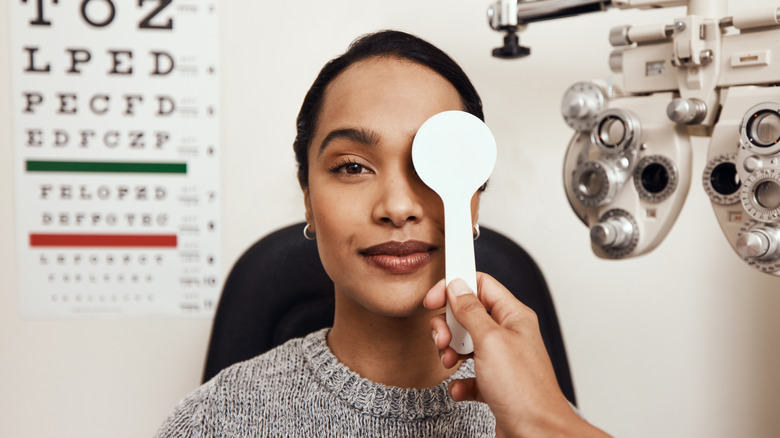
It's easy to tell whether someone is right-handed or left-handed, but determining eye dominance can be a bit trickier. However, knowing which eye is dominant is important in some sports like baseball, golf, or archery. This is especially the case when eye and hand dominance don't match, which can add challenges to the sport. Eye doctors also need to know eye dominance when treating vision problems like cataracts, lazy eye, or difficulty focusing on nearby objects.
Doctors will test eye dominance using a series of lenses to see which eye sees more clearly, but people can test their own eye dominance easily. Simply make a circle with your hand and hold it at arms length. Look through the circle at a distant object with both eyes, aligning it in the center. Then alternate looking through the circle with each eye. Whichever eye sees the object in the center of the circle is the dominant one.
Eye dominance is one of those features of biology like handedness, with people relying on one side over the other. While most people are right eye dominant, there are plenty of cases where the opposite hand and eye take the lead. This doesn't necessarily mean that one eye sees better than the other, or that someone is left-brained or right-brained. It's just that the dominant eye sends information to the brain more efficiently.