

You Should Think Twice Before Thawing Frozen Food On Your Counter
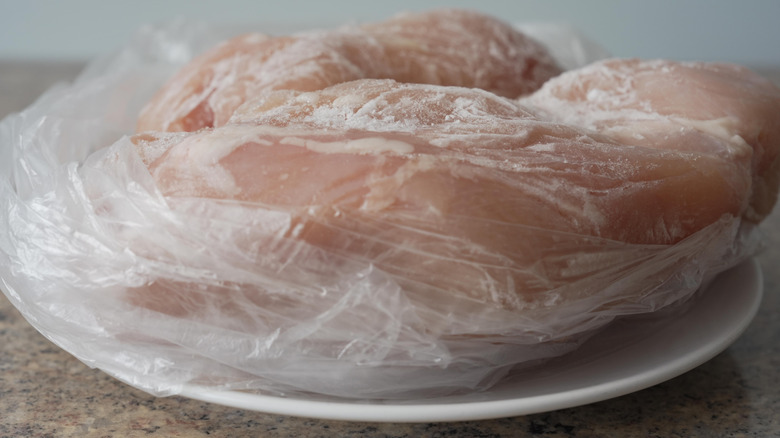
If you're like most people, you probably don't have a lot of time to eat, let alone cook. You're probably trying to find as many cooking shortcuts as you can while still maintaining a healthy diet. Foods from the freezer are convenient, but they need to thaw before you can cook them. To save some time, you could be tempted to allow frozen foods to thaw on the counter. For the sake of your health though, you should never utilize this strategy for unfreezing perishable foods because it can pose the risk of foodborne illnesses.
Gradually thawing foods (especially raw meat) on the counter is a dangerous practice because it allows any lingering bacteria in the food to multiply. It might seem logical that any bacteria would be eliminated once you start cooking. The problem is, these pathogens also produce illness-inducing toxins as the food thaws out on the counter, which might not go away when heated up. Food temperatures between 40 and 140 degrees Fahrenheit are dangerous, says the U.S Department of Agriculture (USDA), since these are the most likely to induce bacterial growth.
Much of this problem starts along the outer edges of foods, which are likely to exceed 40 degrees first, while the middle stays frozen. The perceived safety of frozen foods thawing on the counter may also be connected to a dangerous misconception that the freezing process kills all bacteria (it does not). Amid concerns about the most recent parasitic outbreak causing explosive diarrhea, or the spicy culprit behind the latest salmonella outbreak, the last thing you want to deal with is a foodborne illness related to thawing mistakes on your part.
It's best to thaw foods in the refrigerator or in cold water
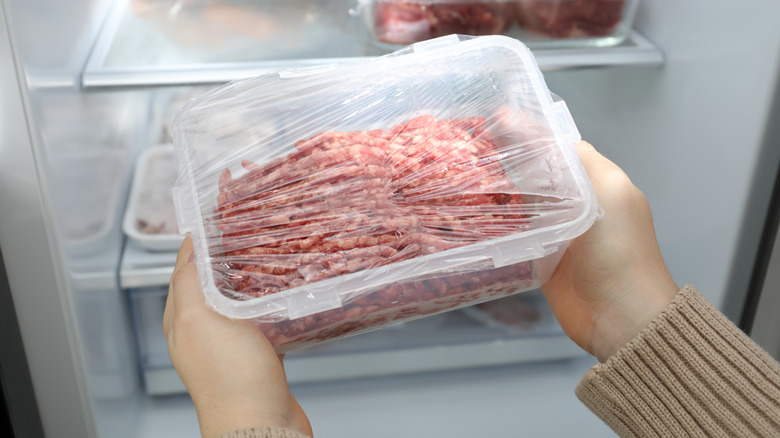
Despite the serious risks associated with thawing frozen foods on a counter before cooking, there are other options. If you have an opportunity to plan ahead, one alternative is to place frozen foods in the refrigerator the night before you want to use them. This works by allowing the food to thaw without temperatures ever rising above 40 degrees Fahrenheit, and works particularly well for meats. Foods that are thawed in the refrigerator may also be safe for a short time afterward. The USDA says red meats can last for 3 to 5 days after thawing in the fridge, while poultry and seafood ought to be cooked within 1 to 2 days.
On the other hand, if you're short on time and are trying to put together a meal with frozen items at the last minute, you may be able to use cold water. Fill up your kitchen sink and place packaged food items in cold water for 30 minutes. Just be certain that the bags are completely sealed, and that the water is indeed cold (it's also worth knowing some of the safety risks of resealable plastic bags). Using hot water in an attempt to speed up the process can actually increase bacteria growth in perishable foods. After the initial 30 minutes is up, you may need to replenish the sink with a fresh round of cold water. Also know that this method is quicker than thawing by refrigeration, but it can still take up to a few hours, depending on the weight of the food.
Using a microwave to thaw frozen foods, and other safety considerations
Microwaving frozen foods can be another option, especially when you select a defrost setting. You may also need to rotate the foods during the defrosting process to ensure the foods thaw evenly. The caveat here is that any foods that are thawed via microwaving ought to be cooked immediately afterward. In other words, you cannot thaw food in this manner and then place it in the refrigerator for later. This all goes back to the temperature of the food and how it can be a breeding ground for bacteria when it reaches 40 degrees Fahrenheit or higher.
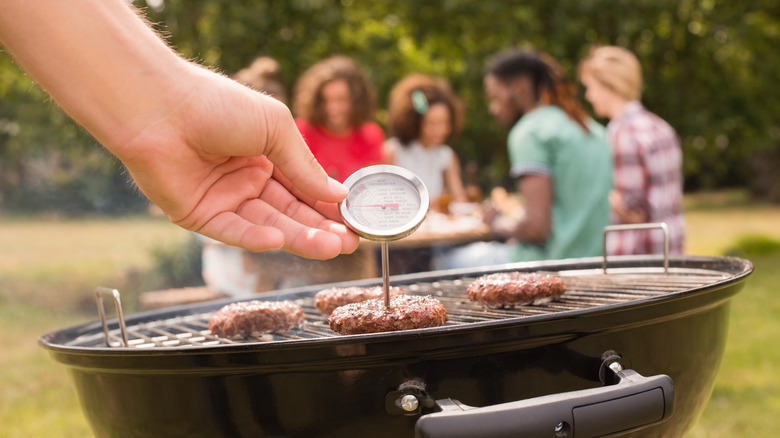
Also, you are not obligated to thaw frozen foods at all if you are cooking them to temperature on a grill, oven, or microwave. Foods are safe to cook when they are still frozen via most cooking methods. Just know the process will take a bit longer, and you should plan accordingly. One notable exception to cooking frozen foods is with slow-cooking methods. You should never cook frozen meat in a slow cooker, since it can take the appliance several hours before it gets hot enough to kill bacteria. Finally, no matter what thawing or cooking method you use, it's always a good idea to check the item's internal temperature before eating. Safe temperatures range between 145 and 165 degrees Fahrenheit, depending on the food you're cooking.