

In The '50s, The US Military Ran Risky Germ Warfare Experiments On Unsuspecting Americans

As the Cold War began on the heels of World War II, concerns arose about the possibility of U.S. enemy spies releasing biological weapons on American cities. A special operations division was set up at Camp Detrick in 1949 to test the potential devastation such an incident would cause. It involved exposing areas to different types of bacteria and chemicals. The first target was the Pentagon, but the test operations were soon expanded to cities as well. One of those operations was Operation Sea-Spray on the coast of San Francisco, which sprayed bacteria in the city's air without notifying the residents.
Operation Sea-Spray was conducted between September 20 and 27, 1950, and involved a U.S. Navy ship spraying Bacillus globigii and Serratia marcescens into San Francisco's fog, which acted as a great cover. Around the area, 43 monitors held up cones to collect the aerosol as it descended. That allowed researchers to determine that the spray had traveled up to 23 miles on the wind. While the test provided valuable data on how biological weapons like anthrax and botulism could impact American cities, some of the unsuspecting residents suffered as a result.
The aftermath of Operation Sea-Spray
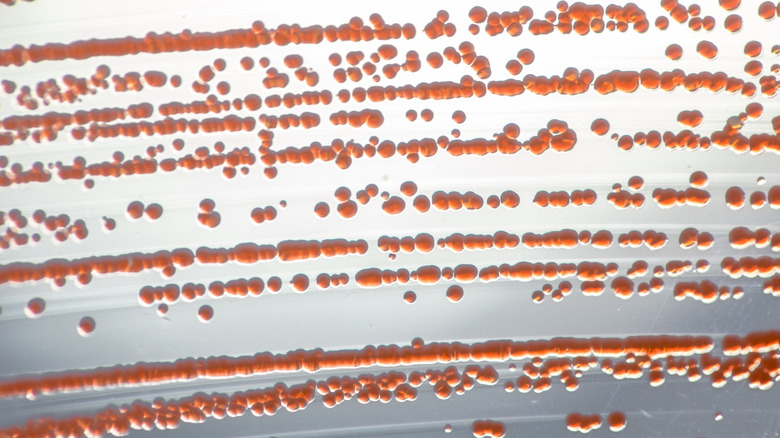
Because the B. globigii (a type of spore-forming bacteria) and S. marcescens sprayed over San Francisco were carried on the wind, hundreds of thousands of people were exposed, including some at the old Stanford University Hospital. The doctors were bewildered when 11 of their patients became infected by S. marcescens, an outbreak they had never seen before. While B. globigii is harmless, S. marcescens is common in sewage, soil, and water, but it's particularly harmful to immunocompromised individuals like those in the hospital. One of those patients was 75-year-old Edward Nevin, who died just three weeks after Operation Sea-Spray because the bacteria caused a urinary tract infection, built up in his arteries, and spread to his heart.
The U.S. government's open-air biological weapons testing program involved at least 239 tests, and seven of them involved S. marcescens. One of those shady '50s government experiments that changed the United States forever involved zinc cadmium sulfide, a fluorescent material that also turned out to be toxic. Although President Richard Nixon terminated the program in 1969, information about it didn't start to emerge until years later. On top of that, some scientists think the sprayed S. marcescens may have lingered and that the descendants changed the region's microbial ecology for good. It's also possible that it caused a 2001 pharmacy outbreak that led to 10 hospitalizations and three deaths.