

Sneezing Myths That Have Been Debunked By Science

Sneezing is a minor inconvenience for most of us — unless it is the middle of high pollen season — but there is actually a lot going on during the short-lived process. There are lots of wide-held beliefs about what happens during that split second, though many of them are myths that can be easily debunked by science. The main cause of a sneeze is the sensitive lining of your nasal passages becoming irritated, causing them to expel the irritant out of your nose, along with air, water, and of course, mucus. Microorganisms also make their way out in the process, which is why sneezing is closely associated with the spread of disease.
If you sneeze more than once, you may start to get concerned looks from those around you, who assume you are sick, and are worried that your expelled droplets are going to spread the disease to them. This is not necessarily the case, and there are many causes of sneezing that are not infectious. Pollen, dust, animal hair, or simply dirt can all upset the delicate tissue in the nose, causing a sneeze or even a sneezing fit. Once the nasal hairs detects an irritant, they send a signal to the brain to get ready for a clear out. Research carried out in 2012 and published in The FASEB Journal has suggested that a sneeze may actually reset the nasal passages so that the cilia can get back to trapping dirt efficiently. Let's explore some other myths about sneezing that science can shed some light on.
Myth: If you sneeze with your eyes open, they will pop out of your head
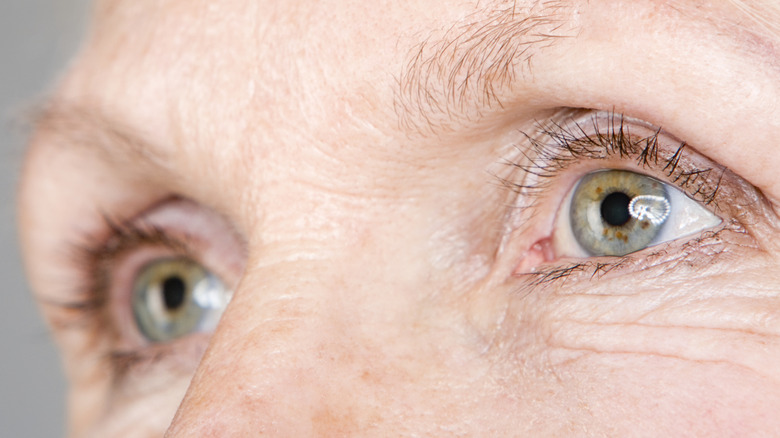
If you remember as a child desperately trying to keep your eyes open while you sneezed, it was probably because you were told that they would pop out of your head if you did so. It may be a big relief to find out that this is, in fact, a myth. The truth is that in most cases our eyes do close when we sneeze, but not because it would be dangerous for them to remain open.
The closure of the eyes during sneezing is an autonomic reflex. This means that it happens automatically without us consciously deciding to. The likely reason is to prevent droplets of mucus from sneezing from entering the body through the eyes. While sneezing does involve pressure changes in the head, the idea that our eyelids — the thinnest skin on our bodies — could prevent our eyes from popping out just doesn't hold up. "There is no way that keeping your eyelids closed can prevent [your eyes from popping out]," says Dr. Robert Naclerio, who is a professor of surgery and section chief of otolaryngology at the University of Chicago Medicine. "It's not like the muscles are strong enough."*
The myth may have come from a 19th century story of a woman who did burst an eyeball in public during a violent sneezing fit, but this seems to be an isolated case. So while forcing your eyes to stay open during a sneeze is a difficult task, your eyes are likely to stay firmly in your head if you do achieve it.
Myth: Sneezing can make your heart stop beating

You may have been told that when you sneeze, your heart stops beating for a few seconds, before resuming its crucial blood-pumping activities. If you've ever tried to sense it, it may have felt like your heart missed a few beats, but you can rest assured that your heart is still working perfectly.
Before and during a sneeze, the pressure changes in your body, including your chest. This affects the blood flow to your heart, which slows down for a moment. This can sometimes result in an alteration in either the speed or timing of the heartbeat to compensate for the change in blood flow. However, this is not your heart losing function and is nothing to be concerned about from a medical perspective.
According to cardiologist Dr. David Rutlen, the heart slows down, and in some cases can even miss a beat when you sneeze. "Built up pressure in the chest can cause a vagal reaction pertaining to the vagus nerve, which is part of the nervous system that controls the heart, that slows down the heart," he explains. "The heart could hold in place for several seconds." This temporary pause is not the same as the heart no longer beating, but is where the heart stopping myth likely originates. The confusion lies in the fact that the heart can function perfectly while still missing a beat. No matter how powerful your sneeze feels, it will never be explosive enough to stop your heart from working properly.
Myth: Holding in a sneeze is harmless
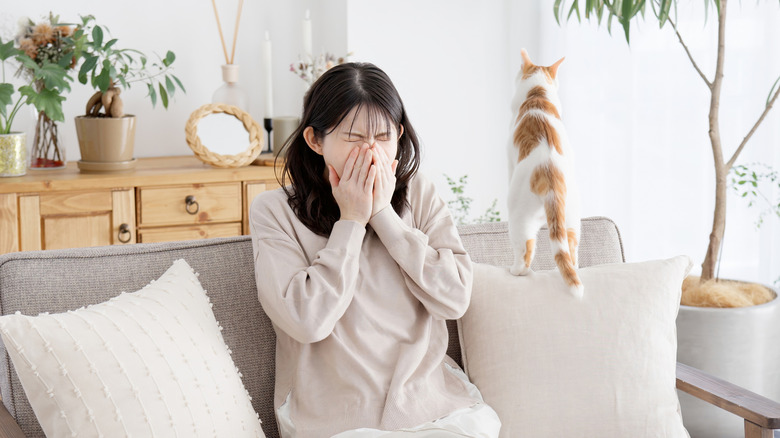
Sneezing is a loud — and in some cases explosive — bodily function, and feeling a sneeze coming on in public can sometimes be incredibly inconvenient. To avoid embarrassment in a staff meeting or the movie theater, some people try to stifle a sneeze, but this can be much worse for you than a disapproving glance from a colleague.
Before you sneeze, a significant amount of pressure builds up, and escaping through your nose and mouth is the easiest and safest route for it to escape. If you cover your nose and mouth while sneezing, you are forcing both the pressure and mucus back into your body, which is not the direction it wants to go in. "Pushing infected mucus back into the eustachian tubes could cause a middle ear infection," says Dr. DeVon Preston, an allergy and clinical immunology specialist. In the worst case, this can lead to a ruptured ear drum, which can be incredibly painful and take a long time to repair.
It may seem that it is your nose and mouth doing the work when you sneeze, but since the air originates in your lungs, your chest plays a big part too, and suppressing the sneeze could cause issues. "You're putting pressure on your diaphragm, the muscle in the chest that helps us breathe," explains Jason Abramowitz, an otolaryngologist. "You might also experience pressure in the chest, in the ribs." While it is unlikely to cause long term damage, releasing the sneeze in the way your body intended can avoid these issues and give your nose the relief it desires.
Myth: You can sneeze in your sleep
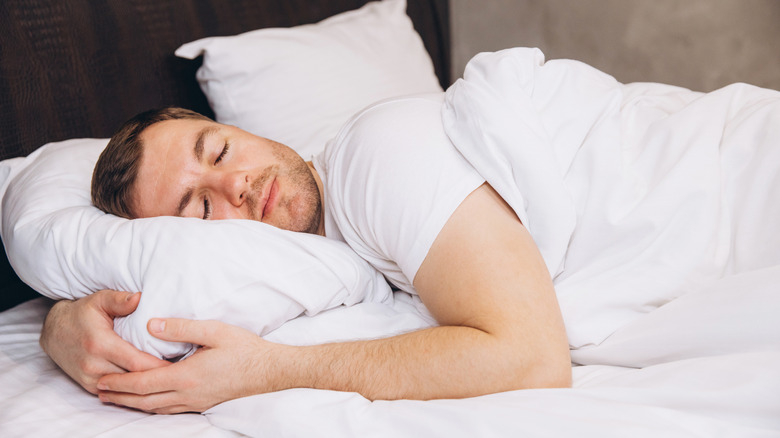
Have you ever sneezed so hard in your sleep that it woke you up? Well, the answer is no, you haven't, since it is generally not possible to sneeze while asleep. While many bodily functions continue to operate throughout our hours of slumber, sneezing, and the sensory stimulation that causes it, do not. "Sneezing requires a certain amount of cortical or brainstem stimulation," Dr. Timothy Tramontana, explains. "You need to wake up in order to sneeze."
This doesn't mean that the body would never have a reason to sneeze during the night. The same allergens that exist during the day, especially pet hair and dust in your home, could easily be present in the bedroom, meaning that the nasal passages would need to be cleared. It simply means that you would need to wake up, let it all out with a mighty sneeze, then go back to slumber land, all in one fluid motion. This may seem to you, and other members of your household, that you are sneezing in your sleep, but your brain needs to come out of its sleeping state to perform the physical actions of sneezing.
Myth: The speed of a sneeze is more than 100 miles per hour

One fun fact that people like to share is the air and mucus come out of your nose so violently during a sneeze that they exceed 100 mph. As impressive as it sounds, this is not the case, and the true velocity of a sneeze is disappointing in comparison. A study carried out in 2013 found that sneeze velocity was on average between 13 and 16 feet per second, which equates to only around 10 mph. The authors were surprised to discover that the velocity of coughing and sneezing produced very similar results, in spite of the commonly held belief that sneezing is a much faster process.
The myth of 100 mph likely comes from reports from 1955 by William F. Wells, claiming a sneeze velocity of 328 feet per second. However, researchers suggested that this figure was an inference rather than an accurate measurement, explaining why it is wildly different from the experimental data they gathered. While sneezing is indeed a forceful process, like many sneeze-related myths, the claimed velocity is exaggerated, and the speed of mucus flying across the room from your nose is not quite as dramatic as you have been led to believe.