

Doctor Reveals 2 Dangerous Health Myths That Can Cause Extreme Pain
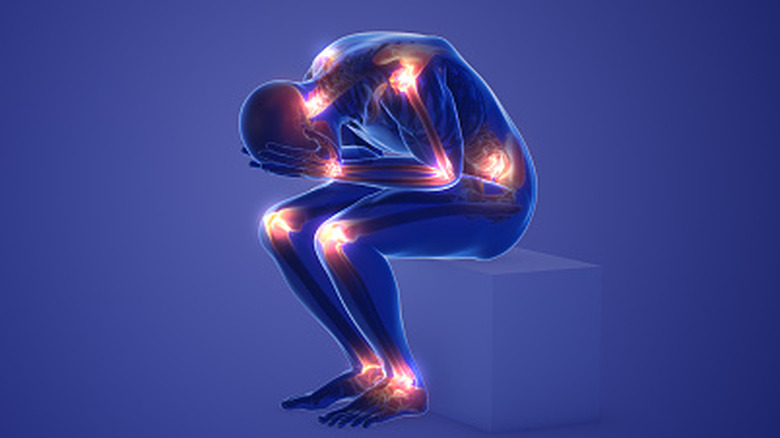
There are several misconceptions surrounding pain, such as nontraditional treatments being ineffective and chronic pain being a part of aging that you eventually get used to. What's alarming is that some misconceptions can actually lead to more pain. That's what Sciencing learned in an email from Dr. John Parente, a board-certified emergency medicine physician practicing in northeast Ohio with more than 20 years of clinical experience and host of the Emergency Minute podcast.
Along with explaining that skin burns and polytrauma are the two most physically painful ways to die, Parente told us that, contrary to popular belief, unresponsive people can feel pain. "I think the biggest misconception is that if someone is unresponsive, they must be unconscious and unable to experience pain, which is untrue," he says.
According to an observational study published in The Lancet Neurology, people in a minimally conscious state — an altered consciousness where the individuals have minimal awareness of their self or environment — showed activity in the regions of the brain that respond to pain. Another study published in Brain and Behavior found that some patients with unresponsive wakefulness syndrome — also referred to as a vegetative state — had a neural reaction when their index fingers were subjected to electrical stimulation.
The trouble is that doctors may withhold pain medications from unresponsive patients because they don't realize the individuals could be in pain or because the individuals can't express it. However, that can just lead to more extreme pain. Parente added that it's "important for both patients and healthcare providers to realize" the possibility.
Vital signs don't always reflect the pain that a person is experiencing
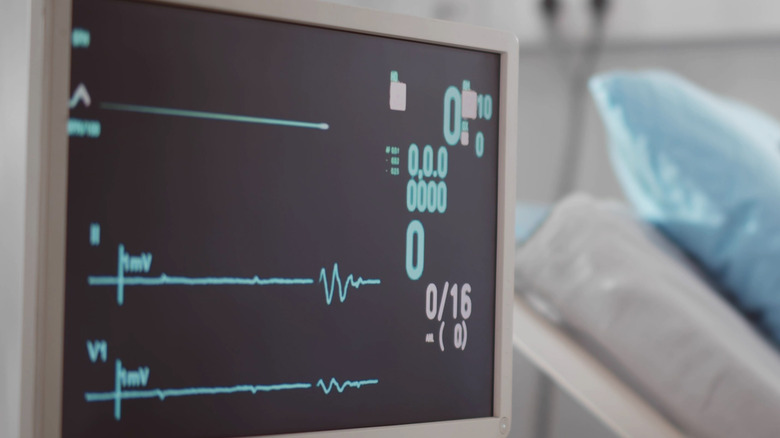
Generally, doctors use a numerical rating scale (NRS) or visual analogue scale to assess the severity of pain that injured individuals experience. When their patients aren't able to communicate though, these tools are useless, which is when they use alternatives. The aforementioned studies into whether unresponsive individuals can feel pain monitored neural activity in the brain.
Since that's not practical in a hospital environment, one of the alternatives that physicians rely on is elevated vitals, such as a faster heart rate, blood pressure higher than the American Heart Association's guidelines, and rapid breathing. In fact, there's a final heart rhythm doctors often see before death.
However, Parente said that another "common misconception is that vital signs will reflect the patient's experience of pain." Some patients who experience a 10 out of 10 on a NRS could have normal vitals, while others may have elevated vitals for other reasons. "Alternatively, they may be unable to mount an elevated heart rate due to medications, shock, etc. so vital signs don't always indicate how much pain a patient is experiencing and could lead to undertreatment of pain by the clinicians," he added.
In such cases, medical teams may also use a behavioral pain score (BPS) to assess and measure pain in unconscious patients. This tool involves observing the individuals' facial expressions, breathing, and upper limb movements. A study published in Anesthesia & Analgesia even found that the BPS is a reliable method of measuring pain in intensive care patients who can't communicate.