

In The '60s, The US Military Secretly Spread Clouds Of Bacteria In New York City Subways
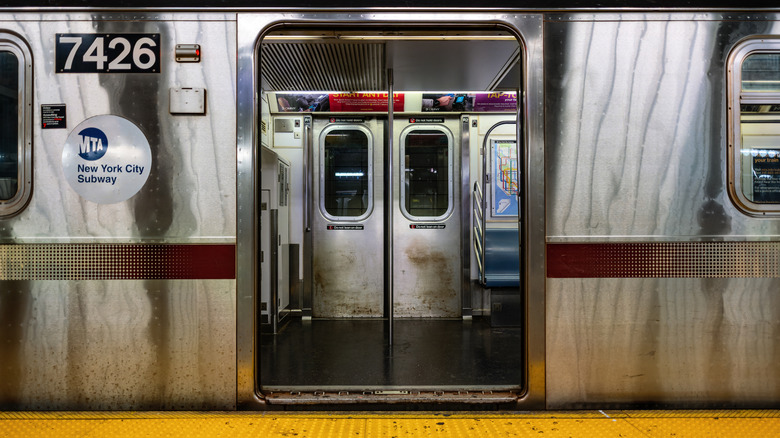
The 1960s were the height of Cold War paranoia. The leadership in Washington was terrified of what the Soviet government could do in the name of world domination, but as for the American people? Well, they probably had more to fear from their own government, as evidenced by an experiment conducted in the summer of 1966, in which the United States Army unleashed bacteria in a crowded New York City subway station.
The day was June 6, and riders aboard the Seventh and Eight Avenue subway lines had no idea what was about to happen. At 23rd Street Station, a team of Army scientists shattered glass bulbs filled with Bacillus subtilis bacteria (formerly known as Bacillus globigii). Other scientists waited, posted at stations along the routes with air sampling machines. The results were frightening.
Within five minutes of deploying the bacteria at 23rd street, researchers recorded its presence at every station between 14th and 59th street. They estimated that within five days, over 1 million people were exposed. The implications were clear: An enemy could infect millions with shocking ease. Fortunately for commuters that day, Bacillus subtilis is considered harmless, but it isn't always. It has been known to cause bacterial meningitis in rare cases. There was real danger in this experiment, and no civilian knew what they were risking. The Nuremberg Code dictates that "The voluntary consent of the human subject is absolutely essential" in scientific research, making the events of June 6, 1966, a clear violation.
Inside the United States' secret germ warfare program
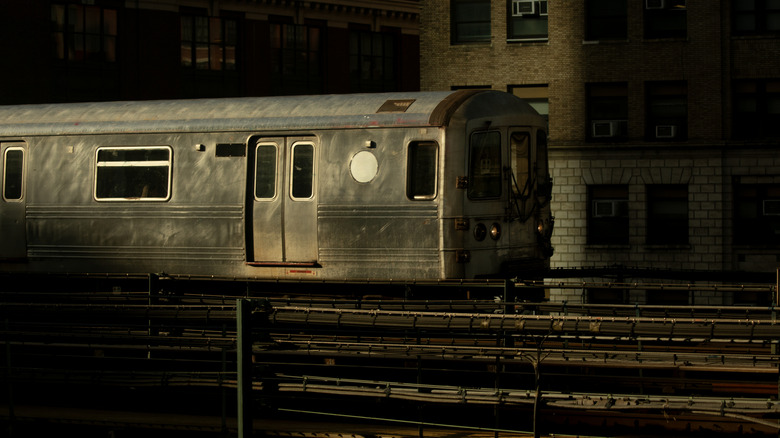
Unfortunately, the New York City subway experiment reflects an all-too-cavalier mindset under which the government often operates, particularly during the height of the Cold War (this is the same era that saw the U.S. detonate a nuke in outer space, after all). To trace this particular instance to its origin, however, you need to go back to the midst of WWII, when the United States government first approved a committee to research biological warfare. What was formally a deterrence program grew into highly secretive biological weapons development, birthing several experiments that used civilians as test subjects without their knowledge.
The best-known of these experiments was Project MKULTRA, the shady experiment that tried to harness the power of mind control, undertaken from the early 1950s to the late 1960s, and possibly beyond. It set out to test the potential to hack a person's biology through mind-control or chemical truth serums. Patients in hospitals, sometimes committed for inaccurate diagnoses, received dangerous treatments like electroshock and non-consensual drugging with lysergic acid diethylamide (LSD). The project's name now lives in infamy as one of the most unlawful, reckless, and dangerous acts in U.S. government history, but it was just the tip of the iceberg.
Biowarfare experiments can end in tragedy

The United States government carried out more than 200 known examples of biowarfare testing before President Richard Nixon formally cancelled the program in 1969. It was only after that fact that reports finally surfaced publicly, revealing to the American people that they had secretly been used as guinea pigs in military experiments. The New York City subway experiment did not cause any harm that we know of, but then again, the government did estimate that over one million people were exposed, and it is possible that a case of meningitis arose in the city because of the government's actions. Regardless, there was a very similar experiment a decade earlier that might have caused at least one fatality.
Over the course of one full week in 1950, a U.S. Navy ship off the coast of San Francisco began blowing bacteria towards the city. They used two strains, one being the same Bacillus subtilis strain used on the subway, and the another being another supposedly harmless bacteria called Serratia marcescens. Monitors found that it quickly spread through the city, traveling up to 23 miles through the air. At Stanford hospital, 11 patients suddenly developed an infection of Serratia marcescens, which baffled doctors. One man, 75-year-old Edward Nevin, died. Decades later, when the test was made public, his family sued the government, but without irrefutable proof linking the events, they lost. Sadly, it was only the beginning of America's shady government experiments.