

In The '60s, The US Military Sent Divers 610 Feet Underwater. Then Something Went Very Wrong
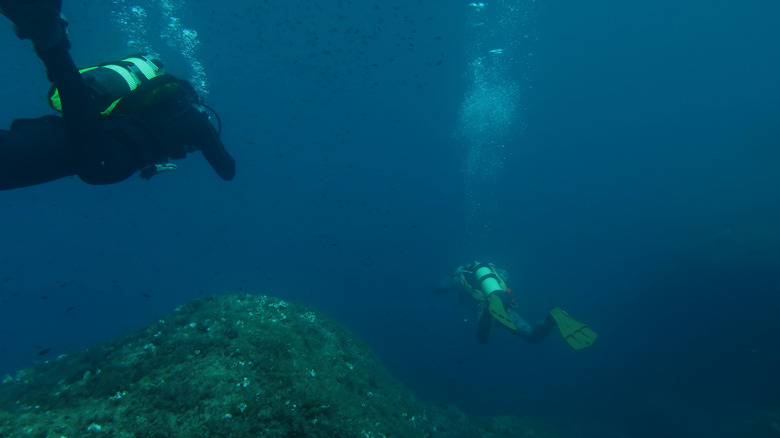
The 1960s are known as a time when humanity started reaching out into space, but it was also a time of exploring the depths of the ocean. During this period of exploration, the U.S. Navy ran a research project to demonstrate that divers could live and work deep underwater for extended periods. However, even with air to breathe, the pressures divers experience at great depths cause unusual things to happen to the human body. The project came to an abrupt halt in 1969 with the failure of key equipment and the sudden death of one of the project's divers, a civilian engineer named Berry Cannon.
The Navy's seafloor laboratory project, known as SEALAB, was intended to test techniques and equipment that would allow divers to stay underwater for days at a time. Central to this is something known as saturation diving, a technique in which divers sit in an environment where a special blend of gases slowly increases in pressure. Once at the same pressure as the targeted water depth, divers stay pressurized for days at a time. When the job is done, divers then slowly return to surface pressure. Gradually compressing and decompressing divers helps prevent decompression sickness caused by gas bubbles forming in the body if a diver ascends too quickly. With a single compression and decompression cycle over many days, saturation diving can improve safety and efficiency.
What was the SEALAB project?
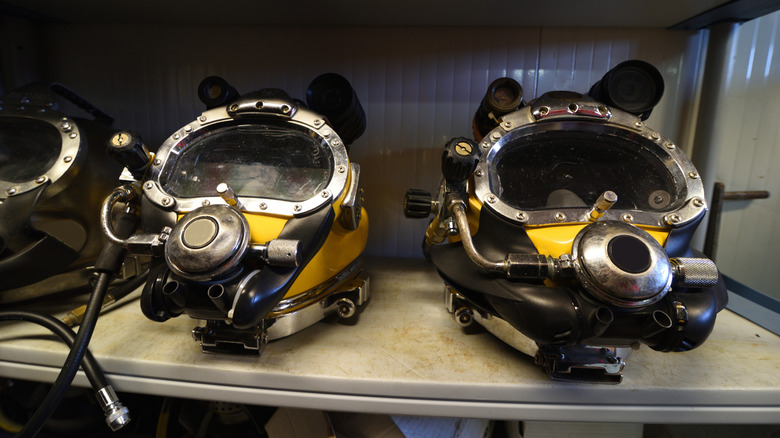
The first iteration of the SEALAB project, known as SEALAB I, had four divers stay in a submerged habitat for 11 days at nearly 200 feet. The next iteration of the project, SEALAB II, had three teams of 10 divers that each spent 15 days at more than 200 feet. This habitat was larger and had better insulation than SEALAB I, helping address problems divers experienced with extreme cold during the first excursion. These improvements and upgraded communications systems allowed the aquanauts to focus more effectively on scientific studies and demonstrations of technologies for working deep beneath the ocean surface.
Building on the success of SEALAB II, the program started preparing SEALAB III. The SEALAB III habitat would be a heavily modified version of SEALAB II, and the project was originally scheduled for 1967 and a depth of 400 feet. However, the project ran into several problems. Project leadership changed, leaving only a handful of people with experience in deep sea operations in key positions. At the same time, the deeper operational depth of SEALAB III called for equipment like heated wetsuits and rebreather systems that remove carbon dioxide.
The leadership changes and technical hurdles delayed the mission, and with the delay came a decision to push the project's operation depth to 600 feet. By late 1968 technical issues continued to plague the project, but despite these problems SEALAB III was slated to begin in February 1969.
Technical problems and a tragic incident
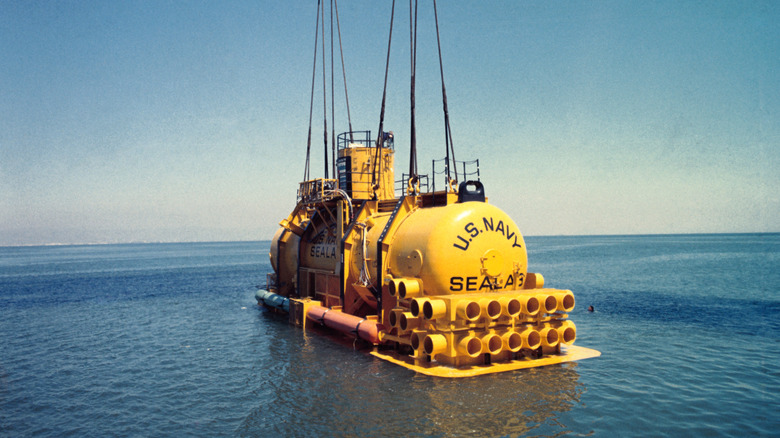
Almost immediately after the SEALAB III habitat was lowered to its target depth of 610 feet, the habitat started experiencing helium gas leaks, power surges, and flooding. Mission leadership sent a team of divers down in a personnel transfer capsule, or PTC, a pressurized vessel that ferried divers from their pressurized surface habitat to SEALAB III. Cannon and Navy diver Richard Blackburn made two dives to inspect and repair problems with the habitat.
Both divers reported being extremely cold after the first dive as the heating systems for their wetsuits had failed. Hours later, Cannon and Blackburn attempted a second dive, with Cannon checking umbilical connections and helium leaks. After only a few minutes the other divers heard a scream and found Cannon floating unresponsive near the habitat. The divers pulled Cannon into the PTC and quickly began the return to the surface, where Cannon was declared dead.
An investigation into the death reported that Cannon died of carbon dioxide poisoning caused by an empty canister in his rebreather system. However, this official explanation didn't convince the rest of the SEALAB team as it wasn't proven that Cannon had used the empty canister and alternative explanations like electric shock drowning caused by a broken cable were dismissed. After Cannon's death the SEALAB project was canceled, but questions remain about why project leadership pushed forward in light of multiple failures, how much blame leadership should bear, and what actually happened 610 feet under the surface.