

In The '60s, The US Military Buried Toxic Waste At A Maryland Fort. They're Still Cleaning It Up
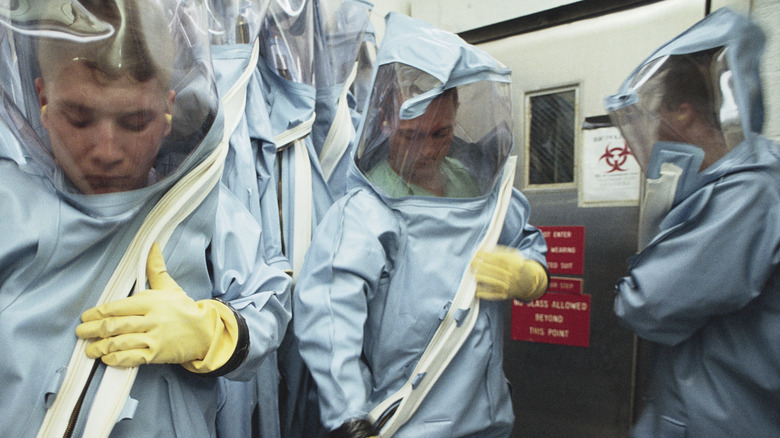
The United States EPA recognizes over 1,330 Superfund sites, which it lists on the EPA National Priorities List. Superfund sites are heavily contaminated areas that receive government funding for their cleanup. Most contaminated sites come from pollution left over from private industry, such as old manufacturing plants, unauthorized landfills, and abandoned mines. However, some of the most toxic Superfund sites come from contamination produced by the U.S. government itself. Such is the case in the ongoing cleanup of Fort Detrick, Maryland. Starting in 1955, the U.S. military used Fort Detrick's target range as a dumping ground for the toxic waste produced by a secretive federal bioweapons program that included germ warfare testing on unsuspecting American citizens. It was so secretive, in fact, that the Army's cleanup crew isn't entirely sure what toxic chemicals they'll uncover.
Here's what we do know. Cleanup attempts at the Fort Detrick landfill began in 2003, and the EPA added the project to its National Priorities List in 2009. Since then, tens of millions of taxpayer dollars have been spent in the cleanup, as several stops and starts have continuously extended the project. Cleanup crews have found vials of nonvirulent anthrax and live bacteria, as well as industrial solvents, poisonous gases, defoliants like Agent Orange, and even radioactive materials. Some of the gases have exploded into flames, and some workers have been hospitalized after breathing in the toxins.
In a statement to The Washington Post (via CBS News), project manager Lt. Col. Donald Archibald said, "The documentation for where this came from doesn't exist," while garrison commander Col. John Ball stated, "You never know what's there until you start digging." This palpable uncertainty extends to the surrounding ecosystem, and it's a likely reason for a spike in cancer among the surrounding community.
How Fort Detrick's mystery chemicals spread
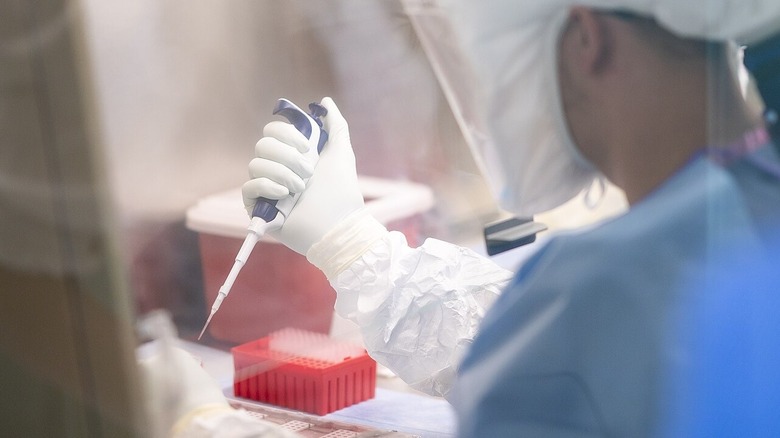
Fort Detrick is an army base within the city of Frederick, Maryland. For decades, Frederick residents have blamed the Fort Detrick Superfund site for spikes in cancer cases and other health complaints, culminating in the community filing a $750 million lawsuit against the U.S. Army in 2015. The plaintiffs argued that their city's high rates of lymphoma and other cancers are attributable to the toxic landfill. The defense pointed to a 2011 investigation by the Maryland Department of Health, which concluded that, although cancer rates were higher than average in the region, they didn't constitute a cancer cluster. The plaintiffs pointed to a 2012 Army study on the report, which found that the 2011 data was inconclusive.
The verdict came down to interpreting the law, not the science. In 2016, a federal judge dismissed the lawsuit on the grounds that the Army had "discretionary government function" at the time of the dumping. The ruling found that the 1946 Federal Tort Claims Act, which is primarily meant to allow the public to sue the federal government in the case of a personal harm or loss, wasn't applicable.
The dumping occurred over 50 years before the lawsuit was filed, at a time when relevant environmental laws didn't exist yet. In the absence of environmental regulations, the Army was legally expected to dispose of the waste at its own discretion. It wasn't the first nor the last time the "discretionary function" of the U.S. Army harmed its own citizens. In 1957, the U.S. military purposefully exposed its service members to the nuclear radiation of atomic bombs, and in the summer of 1953, it dropped research chemicals from planes over St. Louis. In most cases, the experiments left U.S. citizens with long-term side effects and cancers.
The toxic forever chemicals seeping out of Fort Detrick
Although the dump sites at Fort Detrick included waste from anthrax testing and other experimental bioweapons, its most devastating and long-lasting pollutants are industrial volatile solvents used in manufacturing and Agent Orange byproducts. The list of solvents in the ground at Fort Detrick includes the chemicals trichloroethylene and perchloroethylene, both of which have been linked to cancers. At Fort Detrick, these solvents slowly leached into the groundwater over the past half a century, and many private drinking water wells in the surrounding area were contaminated as a result.
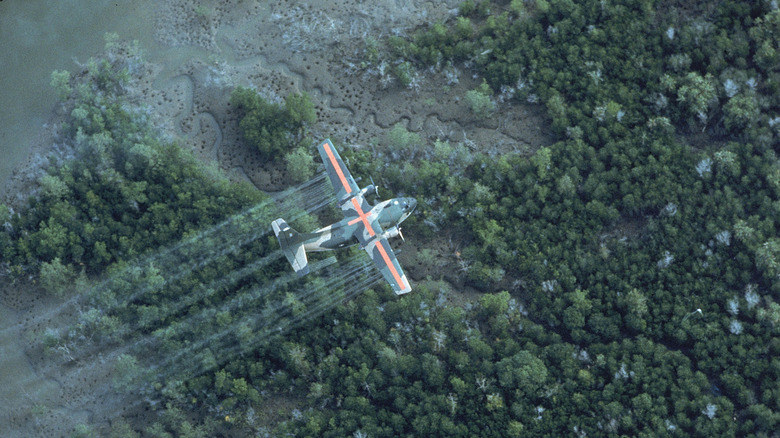
Fort Detrick also served as the testing site for Agent Orange, a defoliant chemical that was first developed as an herbicide. Agent Orange's chemical components were used in agriculture to strip leaves off of crop plants, such as cotton, and it was later used extensively in the Vietnam War to clear paths through the vegetation. The Army officially claimed that a total of 21.7 pounds of Agent Orange were tested at Fort Detrick, adding to the thousands of pounds of toxic sludge already dumped there.
Today, scientists are well-aware of the toxic dangers of Agent Orange. During its manufacture, it produces an unintended byproduct called TCDD, a potent carcinogen linked to a range of cancers, organ damage, developmental problems, and blood diseases. TCDD can remain in the body's fat and organ tissues for decades, which is why it's called a "forever chemical."
The cleanup at Fort Detrick continues, but the damage has been done. Evidently, many of the forever chemicals seeping through the unlined dumping grounds have already spread into people's drinking water and bodies. With the legacy of cancer and shady government accountability, it's hard to believe that the community living near the Fort Detrick Superfund site will ever find justice.