

Christa Pike Survived Two Lethal Injections. Here's How That Can Happen
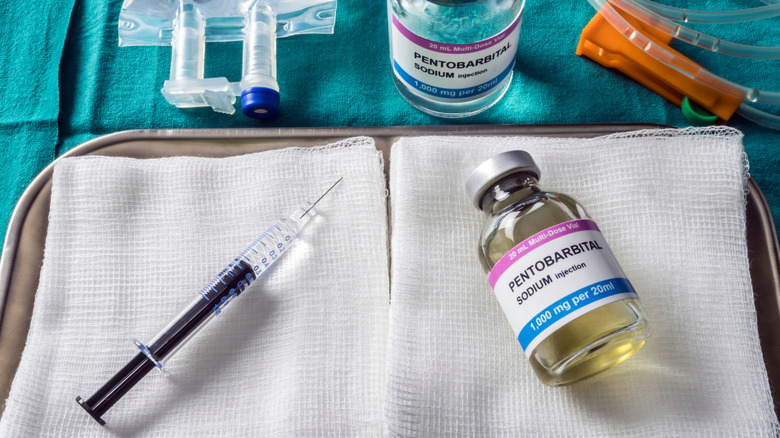
The death penalty is a controversial topic already, but the latest execution of Christa Pike not going as planned has incurred extra scrutiny. All but one of the 27 states that have the death penalty use lethal injections as the main method of execution (Idaho primarily uses the firing squad). Although lethal injections have failed before, no drugs were administered in those cases. Pike's case is unique because she received two full doses of pentobarbital and survived. How is that possible? One explanation comes down to incomplete administration of the drug.
For a lethal injection in Tennessee where Pike was imprisoned, the protocol is to administer pentobarbital into the veins via an IV. Then, the bloodstream carries the drug throughout the body. Certain medical conditions can halt that process, though. In Pike's case, for instance, thrombocytosis is a condition in which the body makes so many platelets (a component of peripheral blood) that blood clots can develop. A blood clot can obstruct the administered drug from entering the bloodstream if it forms at the IV site. As a result, only enough of the drug may enter the blood stream to reduce oxygen levels and weaken circulation — not enough to stop breathing as intended.
It's kind of ironic. While blood clots can put your health at risk during air travel and pretty much every other life situation, they could be lifesaving (albeit cause severe suffering) during a lethal injection execution.
Incomplete administration isn't the only reason a lethal injection execution can fail
Although receiving two lethal doses of pentobarbital didn't stop Christa Pike's breathing like it was supposed to, it's possible that she may have eventually died from complications. Letting that happen would have been considered "cruel and unusual" under the Constitution. In this case, Pike survived after receiving medical treatment when the drug failed to enter her bloodstream properly. The medical care that she received is unclear, but it's likely that the doctors worked to flush the drug out of her system while stabilizing her breathing, among other treatments.
On top of that, questions have been raised about how humane lethal injections actually are even when they succeed. That's because experts have compared the drug used in Christa Pike's failed execution to drowning since it can cause pulmonary edema (a buildup of fluid in the lungs). Questions have also been raised about the quality of the drugs being used.
That's because, generally, major pharmacies refuse to supply the drugs that will be used to carry out the executions. Instead, state authorities often turn to compounding pharmacies, which are pharmacies that mix or prepare medications on-site to meet a patient's specific needs. Since authorities aren't required to reveal their suppliers, it's challenging (sometimes impossible) to determine if the administered drug was prepared correctly. Some people even question whether such drugs are degraded, so they don't work as intended. Additionally, there has been at least one case of the lethal drugs not being tested according to procedure, which led to executions being paused in 2022.