

One Of The World's Most Painful Diseases May Already Be Lurking Inside You

Everyone experiences pain from time to time, but this can go beyond an occasional injury. For example, some people might have chronic pain stemming from arthritis, neuropathy, fibromyalgia, or other long-term conditions. One of the most painful conditions may appear without warning, and it might already be dormant in your body: shingles.
Also known as herpes zoster, shingles is caused by the varicella-zoster virus, which is also responsible for causing chickenpox. If you've ever had chickenpox, the varicella-zoster virus can remain dormant in your body where it survives in your nerve cells for the rest of your life despite your recovery from the initial infection. At some point, the virus might reactivate which leads to shingles, though not everyone who has had chickenpox will develop shingles. Still, the Centers for Disease Control and Prevention (CDC) says that shingles affects about 1 in 3 people in the U.S.
While chickenpox is highly contagious, shingles itself is not spread from person to person. However, since these are derived from the same virus, it is possible to get chickenpox from someone with an active shingles infection if you've never been exposed to the virus before. Shingles is also most common in adults over 50 years of age, although children can develop it as well. It is technically possible to develop shingles after receiving the live varicella vaccine used to prevent chickenpox, but this is uncommon. What's more, not all adults in the higher-risk group for developing shingles ever received a chickenpox vaccine, as this was not a part of routine childhood immunizations until 1995. Also, the CDC notes that about 99% of adults born before 1980 had chickenpox before the vaccine was created.
What makes shingles so painful (and other notable symptoms)
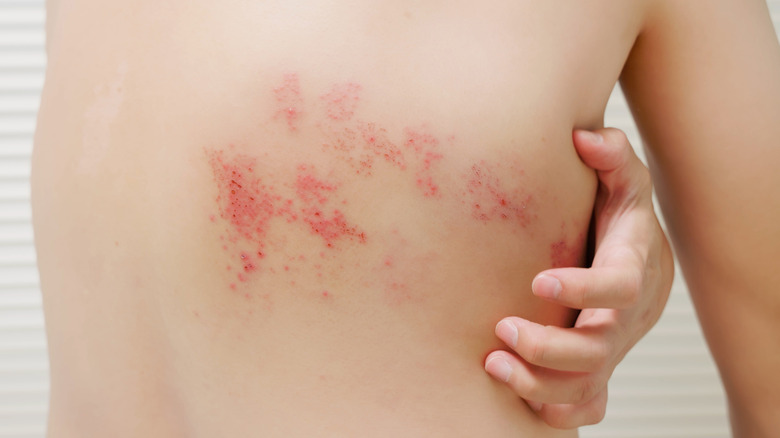
The most telling symptom of shingles is painful rashes that develop on one side of the body. While this can happen anywhere (including the face), shingles rashes most commonly occur around one side of your trunk. These rashes can cause tingling, shooting pain, or even burning sensations. The pain level is highly individual, ranging from mild to severe, and it can be worse if the rashes appear on the body parts most sensitive to pain. You're more likely to experience pain and discomfort a couple of days ahead of the rashes. Blisters then develop, which eventually scab over and clear up after a few weeks.
Shingles symptoms can last anywhere from three to five weeks, though the pain may last a bit longer in some people. Shingles also increases your risk of developing a complication called postherpetic neuralgia. It causes long-term pain where the shingles rashes once existed. Without treatment, postherpetic neuralgia from shingles can significantly impact daily activities and overall quality of life.
Shingles is best-known for pain and rashes, yet this disease can also cause symptoms common to other viral infections, including fever, chills, headache, and upset stomach. Aside from postherpetic neuralgia, shingles may increase the risk of vision or hearing loss if the related rashes develop near your eyes and ears, respectively. For these reasons, any shingles rashes on the face are considered a medical emergency. Facial paralysis and brain inflammation (encephalitis) are other possible, but less common complications.
Treatment options for shingles, and how to prevent this painful infection

It's important to reach out to a healthcare professional in the case of suspected shingles. Not only can they correctly diagnose this condition, but they may recommend certain treatments to reduce the duration while also making you more comfortable. First, a doctor may prescribe antiviral medications to shorten the infection while decreasing symptom severity. These treatments can decrease the risk of long-term postherpetic neuralgia. Ideally, for maximum benefit, the American Academy of Dermatology Association says these antiviral drugs should be started within three days of rashes appearing. In addition to antivirals, a doctor may recommend you take acetaminophen (Tylenol) or ibuprofen (Advil, Motrin) to help manage singles pain (just be sure you ask about the long-term side effects of Tylenol and other pain meds).
There's currently no cure for shingles, with vaccination paramount in preventing this painful infection and its possible complications. The shingles vaccine is recommended for all adults over the age of 50, as well as adults 19 years of age and older who are immunocompromised. Administered under the brand-name Shingrix, the vaccine is provided in two doses two to six months apart (or one to two months apart in some immunocompromised adults). The vaccine is at least 90% effective in preventing shingles infections, says the National Institute on Aging. Most people who develop shingles only have the infection once, but in rare cases, shingles may occur again.