

The Difference Between Orange And Purple Carrots Is Easily Explained By Science

When you think of carrots, you likely picture the ubiquitous orange-hued varieties. Whether you prefer buying whole, baby cut, chip cut, or shredded carrots, many of these styles are orange-colored. Yet you may have occasionally encountered purple carrots, or even rainbow variety packages that contain both orange and purple versions. While all carrots share many of the same nutrients, different colors indicate the presence of different antioxidants (this is similar to the difference between red and green grapes, or blue and brown eggs). In particular, orange carrots contain high amounts of beta-carotene, while purple carrots have anthocyanins.
Purple carrots contain antioxidant-rich anthocyanins, which are naturally purple in color. Aside from purple carrots, you can also find anthocyanins in blueberries, red cabbage, and even purple sweet potatoes. Orange carrots, on the other hand, get their coloring from a different type of antioxidant called beta-carotene. This substance can be found in other orange-colored plant foods, such as pumpkin, sweet potatoes, and butternut squash.
There are also different genes that support these key antioxidant differences. One 2023 study in Nature Plants found that orange carrots' beta-carotene content could be traced back to three specific genes. Interestingly, these genetic modifications were thought to be purposely selected for sometime around the 1500s help create the sweeter taste of the modern vitamin A-rich orange carrot. The American Society of Plant Biologists also notes that all non-purple carrots likely developed from the result of acquired genetic mutations. Despite the widespread availability of orange carrots, scientists believe that purple and yellow were actually the first known types of these root vegetables, and they are native to parts of Asia.
Different health benefits of purple and orange carrots (and similarities)
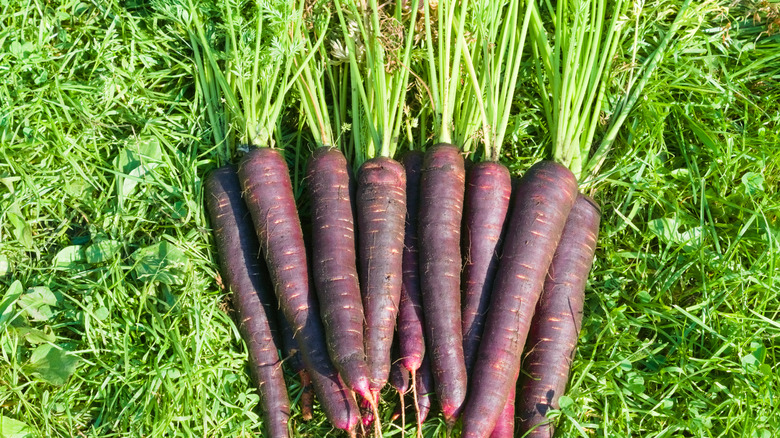
Both beta-carotene and anthocyanin contribute more than just natural pigments to carrots. These two antioxidants also provide different potential health benefits. First, beta-carotene is primarily connected with healthy vision, but it may also reduce inflammation in the body more generally. Anthocyanins, on the other hand, reduce harmful free radicals that may otherwise contribute to certain cancers, blood clots, and cellular aging. These antioxidants may even decrease the risk of high cholesterol and heart disease.
According to the U.S. Department of Agriculture, an 85 gram serving of raw baby carrots has about 35 calories, along with 7.72 grams carbohydrate, 2.3 grams fiber, and 0.68 grams protein. Carrots are also good sources of potassium and vitamins B6 and B7. All carrots offer the same basic nutritional profile, including orange and purple varieties. Yet each color also indicates the addition of antioxidants that set them apart from one another. Orange carrots ultimately offer the most vitamin A via beta-carotene compared to other colors, while purple will always have the most anthocyanins.
While orange carrots are more widespread in western countries, purple carrots remain more prevalent in the east. Nevertheless, you can still find purple carrots in select supermarkets and specialty stores. Like other purple-pigmented produce, these types of root vegetables can be welcome additions to any healthy diet thanks to their anthocyanin content. To get a range of antioxidants from all carrot varieties, you might even consider eating multi-colored (rainbow) carrots.