

Why Death By Lethal Injection Is One Of The Worst Ways To Die
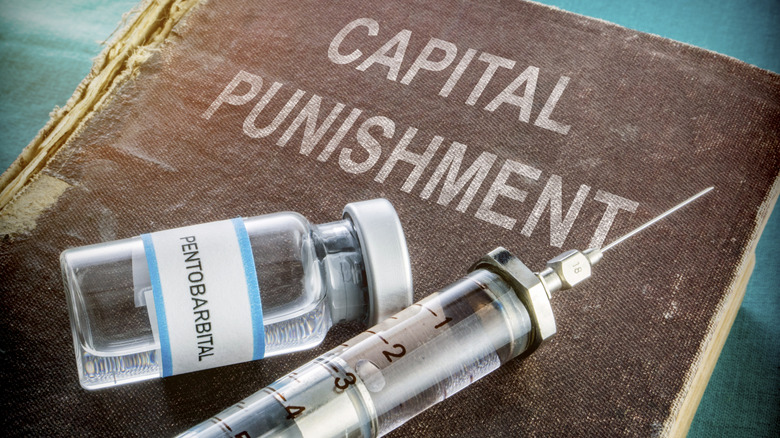
Capital punishment has been making its rounds in the media lately due to the failed execution of Christa Pike and the proposed execution of mass-murderer Nidal Hasan. Though Hasan is scheduled to die by firing squad, the vast majority of U.S. executions occur via lethal injection. Pike survived two lethal injections, and her experience was likely comparable to drowning. Indeed, anti-execution advocates have long argued that lethal injection isn't humane, leading to debates about the 8th Amendment's prohibition of "cruel and unusual punishments." But according to many experts, lethal injections aren't just cruel — they're downright nightmarish.
Christa Pike's failed execution took place in Tennessee, which follows a "one-drug" protocol. The American drug of choice is pentobarbital, a barbiturate sedative that depresses the central nervous system. At high doses, pentobarbital kills via cardiac arrest or respiratory failure as it slows breathing to a stop. This mechanism of death is widely considered humane, since the drug first induces unconsciousness before other physiological effects can appear.
Pike survived because her IV likely burst a vein. During the botched procedure, she choked and grunted for an hour on the execution table. Afterwards, she complained of extreme burning pain in her arm, blood clots, and pneumonia. Based on the pneumonia diagnosis and labored breathing, it's likely she experienced flash pulmonary edema, meaning her lungs filled with frothy blood and she experienced a prolonged sensation of drowning.
Most lethal executions, however, don't allow for follow-up interviews. Many experts agree that the multi-drug protocols are even more torturous than the single-drug protocol administered to Pike. While pentobarbital is a key ingredient in multi-drug executions, other drugs contribute to the torturous experience — it's possible that death by firing squad is the preferable option.
The lethal injection experience
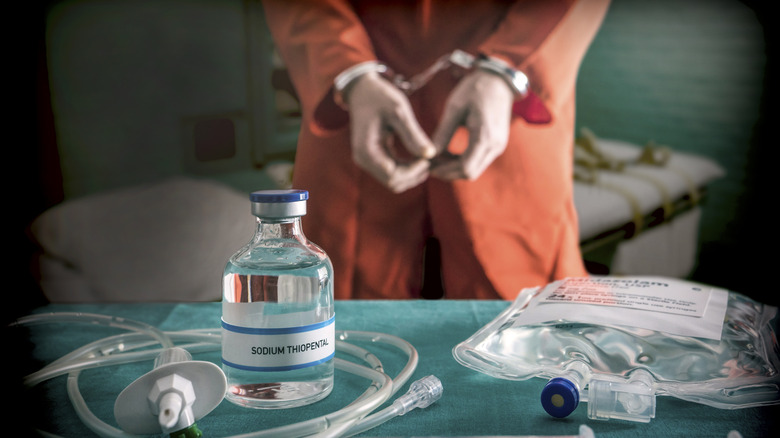
We can't ask those killed by lethal injection to recount their the experiences, since all but Christa Pike have become incommunicative and then died by the first stage, but medical science gives us a pretty good idea. The most common lethal-injection sequence is as follows.
First, a drug is administered to induce unconsciousness. In states with the death penalty, the most common drugs for this stage are pentobarbital or midazolam. For modern one-drug states, the prisoner is given a lethal dose of this drug. Most one-drug prisoners die from what is essentially a sedative overdose.
In multi-drug lethal injections, a second drug is administered after the sedative (without checking for unconsciousness). This second drug is a paralytic bromide, which often kills the condemned through asphyxiation by preventing breathing. The third drug is a cardiotoxin, like those found in many of the deadliest snake venoms. At this stage, states typically administer potassium chloride to flood the heart of the condemned with potassium and disrupt its biochemical signaling. It's an assured way to kill, especially after injecting the victim with other sedative and paralytic drugs.
Still, the question remains: does dying from a lethal injection feel like falling asleep or does it feel liked a prolonged, agonizing death? Lethal injections can take anywhere from a few minutes to a few hours to kill, depending on the competence of the executioners. In fact, botched executions happen fairly often, though Christa Pike was the only one to survive one. Much like beheadings, lethal injections are often blunderous, messy affairs. With all the uncertainty, it's hard to imagine preferring a lethal injection over something quicker.