

This 1970s Military Field Device Revolutionized Modern Medicine
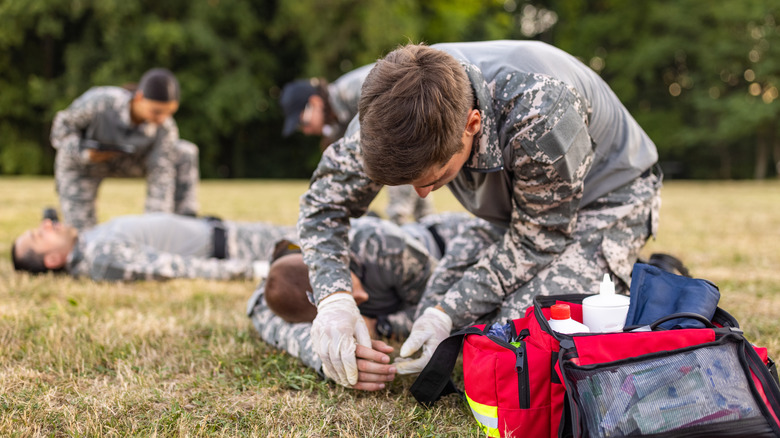
Like the GPS in your phone and the watch on your wrist, many of the things people use on a daily basis can be traced to something developed for military use. This is also true in the medical field, with innovations that saved soldiers' lives on the battlefield also helping critically injured people back home. One such device that saw refinement and widespread adoption in the military in the 1970s is the autoinjector, a technology best known for its use in the life-saving EpiPen.
This device, which brings peace of mind to people with life-threatening allergies and their families, owes its existence to the military's need to prepare service members for chemical warfare. Even with gas masks and protective clothing, the military knew from secret tests (such as those conducted at a Maryland base) that soldiers are at risk of exposure to deadly chemical agents. The military needed a way to treat exposed soldiers with antidotes without the need for trained medical personnel. A vial and syringe is too complex for untrained soldiers to use in a stressful situation, so militaries relied on syrettes. These were prefilled tubes of medicine with an attached needle that soldiers could use to inject a life-saving antidote. However, even these syrettes were deemed too complicated.
A way to save lives on the battlefield
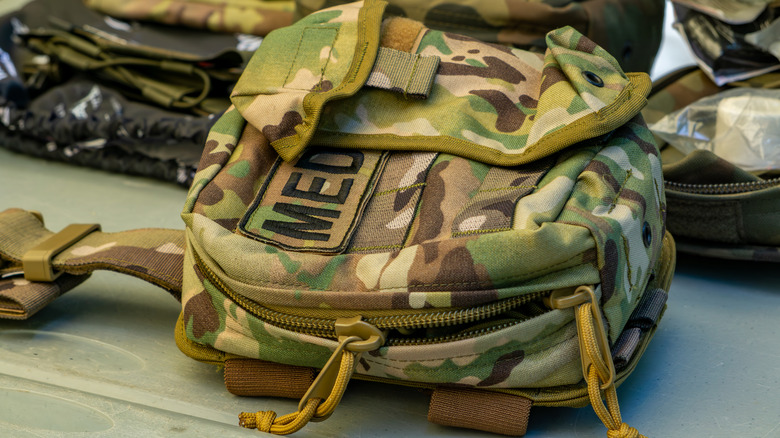
In the 1950s, an NIH cardiologist named Stanley Sarnoff started a company that developed the first autoinjector. This device holds a small amount of medicine and has a spring-loaded needle that activates when the autoinjector is pressed against the thigh. The needle quickly plunges deep into the thigh muscle to administer the medication. While an improvement over syrettes, by the 1970s, it was apparent that these early autoinjectors had a few shortcomings. They could only hold small amounts of medicine and were made of materials like stainless steel that could react with drugs and make them unstable.
Recognizing this, Sarnoff had Sheldon Kaplan, one his company's engineers, start working on an improved autoinjector design. His design used tempered glass instead of stainless steel and could inject larger doses of medicine than its predecessors. The military adopted this device, known as the ComboPen, in the 1970s, and versions of autoinjectors have been a part of chemical warfare kits in the military ever since.
Building a better autoinjector
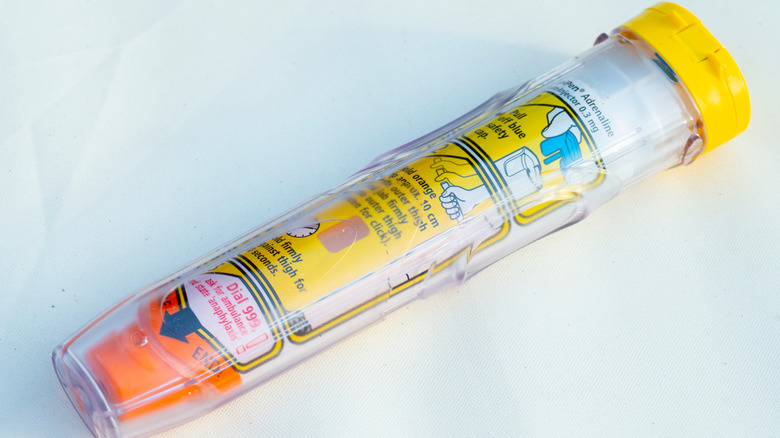
Soon after this, the engineers who designed the ComboPen realized it could be modified to carry epinephrine, a medication that increases heart rate and blood pressure to help counteract airway swelling and breathing difficulties caused by a severe allergic reaction. An epinephrine autopen would be far easier for non-medical people to use than the syringe and vial of medication that was the standard option.
Kaplan refined his autoinjector design to use epinephrine and patented the device under the name EpiPen. After extensive trials the device was approved for use by the Food and Drug Administration in 1987. With somewhere between 2% and 5% of Americans under the age of 18 having severe, life-threatening allergies, the EpiPen has become a widespread and beneficial device.
The years since the EpiPen's approval have seen the development of alternative injectors that are less expensive and easier to use, including some that can be refilled with medication and others that use high-pressure air instead of a needle to inject medication. At the same time, autoinjectors have found use with a variety of other drugs like Ozempic (which has some little-known side effects), asthma medications and treatments for migraines. Autoinjectors have helped streamline the process of administering medication for many people. And these helpful devices can be traced back to equipment first used by the military.