

Scientists Left Artificial Structures 100 Meters Deep In The Ocean For 10 Years. Here's What They Found
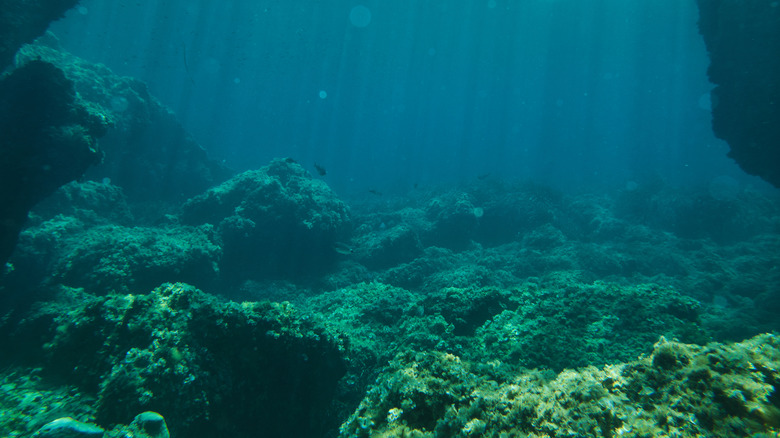
In 2016, a team of scientists dropped artificial structures made of several plates of PVC bolted together in a stack into the ocean near the western Pacific island nation of Palau. The tropical island is famed for its brilliant and colorful coral reefs, attracting tourists from around the world. However, this research project was interested in something deeper. Their plastic structures came to a rest around 300 feet beneath the waves, where they stayed until scientists retrieved them 10 years later. What they found was a diverse ecosystem that could help improve understanding of an understudied part of the ocean.
The researchers were looking into the inner workings of mesophotic coral ecosystems, sometimes also known as deep reefs. Unlike the shallow coral reefs that attract snorkelers and recreational divers, mesophotic reefs are found from around 100 feet to nearly 500 feet beneath the surface. At these depths, water is colder and there is far less light available. In the past, some deep reefs were written off as dead only to be recently found to have life. This raises questions about what the food chain looks like at this depth, how organisms have evolved to live in this zone, and how mesophotic reefs differ from their shallower cousins.
Deep and dark and cold
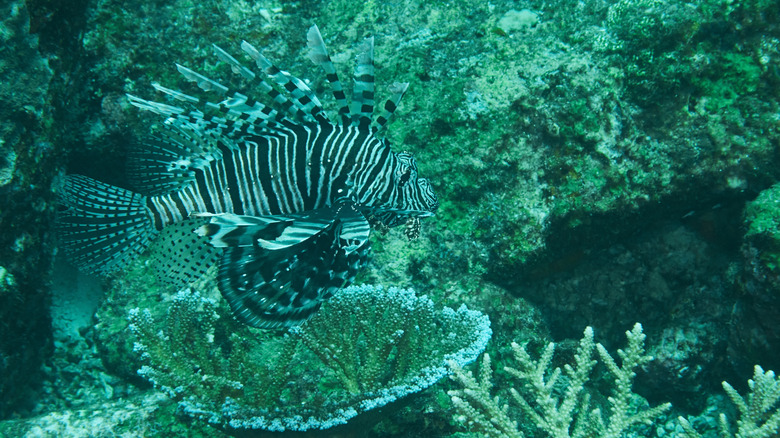
One of the main reasons mesophotic systems have been studied less than shallow reefs is their depth. Anyone diving to a deep reef would spend most of their time descending to the reef and slowly returning to the surface to avoid decompression sickness at depths of 160 feet (or more) underwater, leaving only a few minutes to actually study the reef. And while remotely operated submersibles are becoming more widespread, there are limits to what data they can collect with their cameras. For instance, animals often hide away in cracks and crevices in the reef that cameras can't see into.
What's needed is a way to bring the reef to the scientists. However, simply cutting out a section of reef is not an option. Doing so would harm the reef's delicate ecosystem. And even if it were possible to obtain a section of reef without harming the surrounding area, reef ecosystems change over time, making it impossible to compare one sample to another.
To overcome this challenge, scientists devised structures known as autonomous reef monitoring structures, or ARMS. Having several plates with uniform separations between them allows organisms to colonize the surface and find refuge between the layers. Over time the ARMS becomes a miniature reef that is packed full of diverse organisms.
Finding an abundance of life
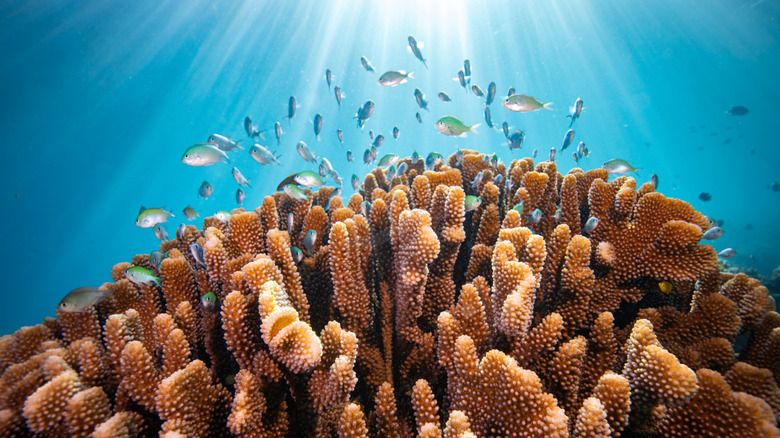
Scientists have deployed ARMS around Palau, as well as near Guam, French Polynesia, and the Marshall Islands. After 10 years, scientists pulled the ARMS out of the water and placed them in containers of seawater to send to the Palau International Coral Reef Center for further study. Once in the lab, researchers disassembled the structures, photographed the plates, and attempted to catalog all of the organisms that were present with the help of genetic testing.
The research team found close to 3,000 organisms in the Palau ARMS and are working to identify them. There is a strong possibility that this work will reveal multiple previously unknown species. At the same time, researchers will study how these different species interact with one another in this poorly understood zone of the ocean. For instance, some organisms filter water while others consume dead material or algae that would lead to the reef becoming overgrown.
With well-documented impacts to shallow coral reefs, this research will also help clarify the roles that mesophotic coral ecosystems play. Research would also highlight where these reefs are most vulnerable. This could help inform ways to protect them from stresses like climate change and overfishing, and whether deep reefs could provide refuge for shallower species.