

How Archaeologists Can Tell The Difference Between Dirt And Ancient Poop
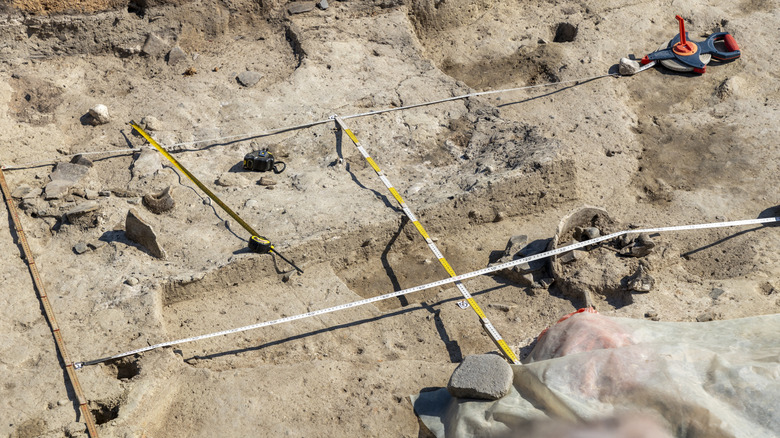
Although nowhere near as exciting and action-packed as portrayed by cinema icons like Indiana Jones, archaeology serves as a portal to the past. Careful excavation of artifacts like bones, pottery fragments, and the remnants of buildings has shed light on how people in the past lived. However, there's one thing that can reveal a lot about ancient diets, lifestyles, and even the diseases people had: poop. But how can archaeologists tell the difference between centuries old human poop, ancient animal feces, and ordinary dirt? They rely on multiple measures that include the size and shape of fecal samples, their physical and chemical content, and even the genetic material present.
The morphology, or shape, of feces is one of the most accessible methods for telling whether a sample is a piece of human poop, animal droppings, or a clump of dirt. One of the first things that hikers and backpackers will often learn about is how widely the size and shape of animal droppings varies. This rings true for people as well, with human feces differing in size and shape from most animals. However, poop can break down very quickly, leaving behind unidentifiable shapes or even sediments that resemble dirt.
Fecal chemical and physical signatures

Fortunately for archaeologists, fecal matter contains substances that aren't normally found in ordinary dirt in high concentrations. One substance of interest in human poop is a chemical known as coprostanol. This chemical is made in the human gut during the digestion of cholesterol and is one of the substances that gives poop its signature smell.
Archaeologists can isolate coprostanol and epi-coprostanol, a substance formed when coprostanol degrades in soil, to determine whether a sample is dirt or poop. Measuring the concentration of coprostanol can even yield insights into the size of an ancient human population. However, coprostanol doesn't seem to degrade at a constant rate, and is affected by temperature and humidity. And since coprostanol comes from cholesterol, the kinds of diets people ate will influence the amount of coprostanol they produced.
In addition to affecting coprostanol production, diet can also provide clues for archaeologists studying poop (and finding out it was used as medicine). Using microscopes, scientists can identify plant remains in samples of poop to understand what people ate. This can also help archaeologists distinguish between human feces and similarly shaped poop from dogs that lived among people. Dog feces, for example, will sometimes have masses of hair along with fibers from clothing that aren't typically present in human waste.
Genetic analysis of poop from the past

Physical and chemical properties can often help archaeologists figure out if something is poop and whether it's from a human or an animal, but this isn't always the case. Another method that's becoming useful is DNA sequencing. Archaeologists can sequence DNA in fecal samples to figure out whether they were from a human or an animal. However, in areas where dogs and humans lived together the picture can be less clear. Dogs eating human feces or humans eating dog meat can lead to poop with a mix of human and canine DNA.
To help clarify this, researchers are looking toward traces of gut microbiome DNA. Although microbiomes can differ between species and even among members of the same species, these genetic fingerprints can be difficult to decipher. In a 2020 study, scientists developed a machine learning model trained with known samples of DNA in human and canine stool and used it to analyze DNA in ancient poop samples. Using the model, researchers were able to tell the difference between poop and dirt and between human and dog feces, though some samples escaped identification.
DNA analysis could be a powerful tool that archaeologists can use alongside other methods for studying ancient feces. Being better able to tell the difference between dirt and poop and distinguish human and animal sources will help archaeologists unravel mysteries of how people used to live.