

10 Creatures Scientists Found That Look Like Poop
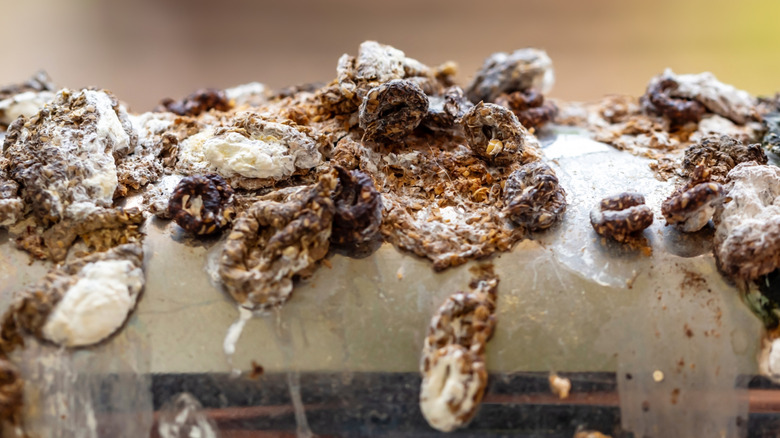
Researchers are always finding interesting-looking animals across land and sea. For instance, water bears (tardigrades) and wheel-looking rotifers are some of the strange organisms you can only see with a microscope, while the goblin shark and barreleye fish are examples of strange deep sea creatures. Some of these are more than just strange; they're also a little creepy. Meanwhile, other creatures that have been discovered are more on the gross side, resembling poop.
From sea cucumbers and sponges to caterpillars, moths, and spiders, scientists have discovered a wide variety of species that look like feces. Some of them look like giant human poop, while others look like liquidy, chunky bird droppings. However, not all of them naturally look like poop. A few of these creatures change their appearance or the appearance of their immediate surroundings to masquerade as fecal matter to avoid and hide from predators. Others take it a step further and emit an odor that smells like the real thing. In any case, it's certainly intriguing (and maybe a little off-putting) to observe some of these feces species.
Bird-dropping spider
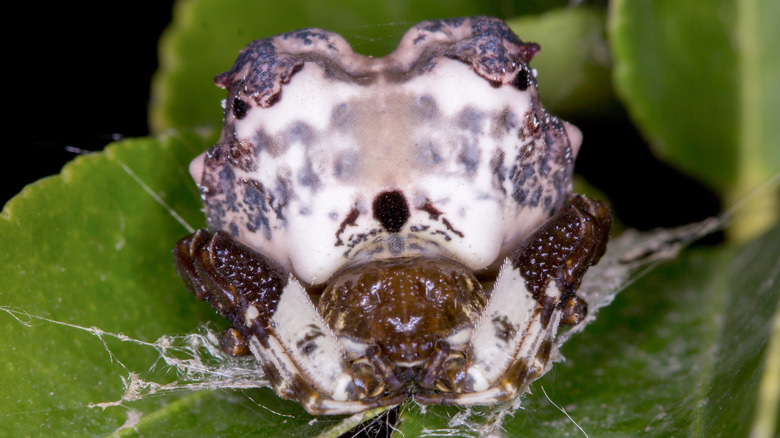
Several types of spiders have evolved to look like bird feces, but one of the most well-known spider species that looks like bird poop is the Celaenia excavata, which is also known as the death's head or orchard spider. This relatively large spider has a distinct color pattern of black, brown, and white blotches on its triangular abdomen. Because of that, predators like birds and wasps think that it's just a big blob of bird droppings during the day despite its immobile posture actually putting it into an exposed position.
Black teatfish sea cucumber
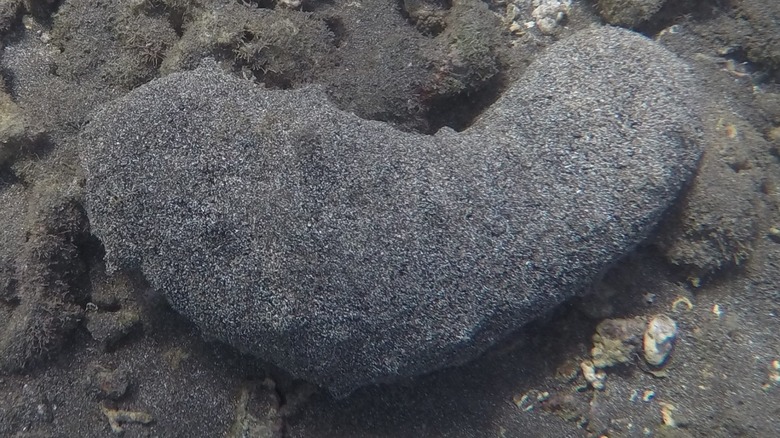
At first glance, you might think you're seeing a giant turd dumped by a massive animal that just drank an entire bottle of Pepto Bismol. It's actually the black teatfish sea cucumber (Holothuria whitmaei), a large, solid creature that's always black and tends to wear a thin layer of sand on its surface. Aside from its appearance, scientists studying these marine creatures have revealed in a paper published in iScience that they can live for more than 100 years, shrinking in length and weight as they age.
Flies-on-bird-droppings moth
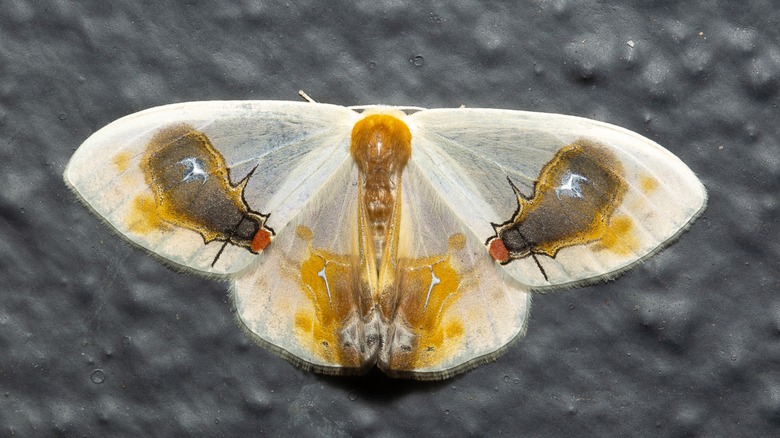
While moths generally tend to have drab-colored wings, the Macrocilix maia has quite the decoration going on. This rare species is only found in the Asian tropics at high elevations. When its white wings are spread out, the hind wings come together to create a splotch of yellowish brown and white that looks like bird droppings. The forewings take the visual further with mirroring markings that look like flies attracted to the poop. As if that wasn't enough to ward off predators, scientists recalled in Yale Environmental News that the moth emits an unpleasant odor as well.
Bird poop frog
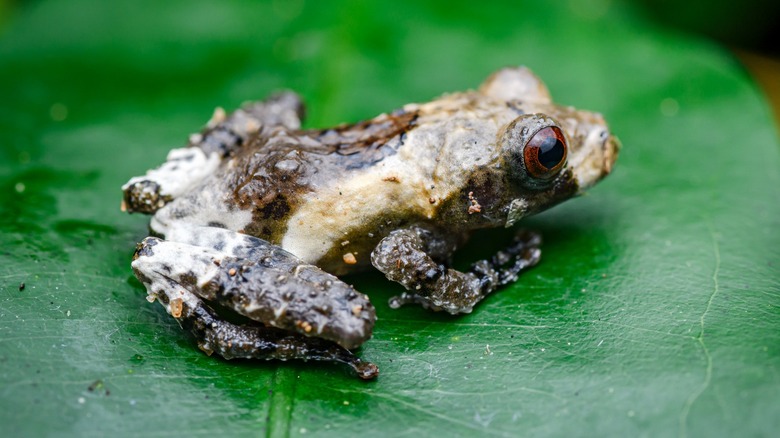
Also known as the Larut bug-eyed frog, hill garden bug-eyed frog, or pied warty frog, Theloderma asperum is a red-brown tree bark mimic residing throughout Southeast Asia. It has muddy brown and white colors splattered across its head, legs, and sides that give it the appearance of bird feces. Alongside the pattern, the frog tucks in its limbs to look even more like poop, including a slight iridescence. The combination of these makes birds, snakes, and other predators misidentify and totally ignore it.
Unidentified glass sponge
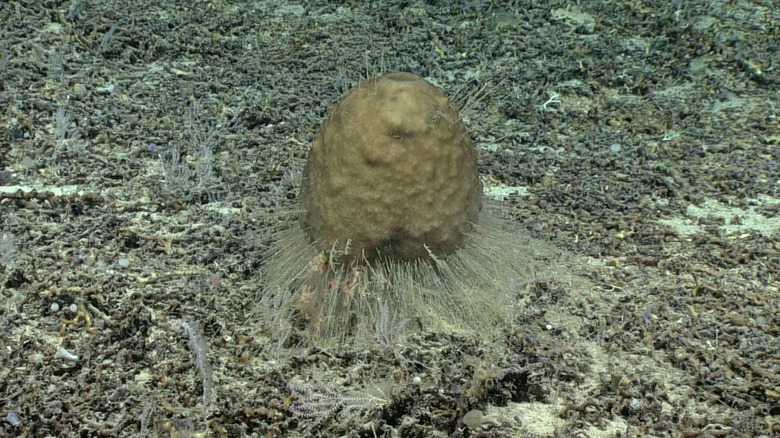
Among the types of sea sponges, some species are quite beautiful. This unusual glass sponge — discovered during the NOAA's 2019 Southeastern U.S. Deep-sea Exploration — is more gross-looking than anything else, though. With a drab brown coloration and shape, it looks like a big ball of poop with big spicules (hair-like structures) around its base. That's kind of ironic considering that sponges are animals that don't poop in the traditional sense (they handle waste differently). Since the specimen was collected for preservation and DNA testing, not much more is known about it.
Wrinkled bird-dung crab spider
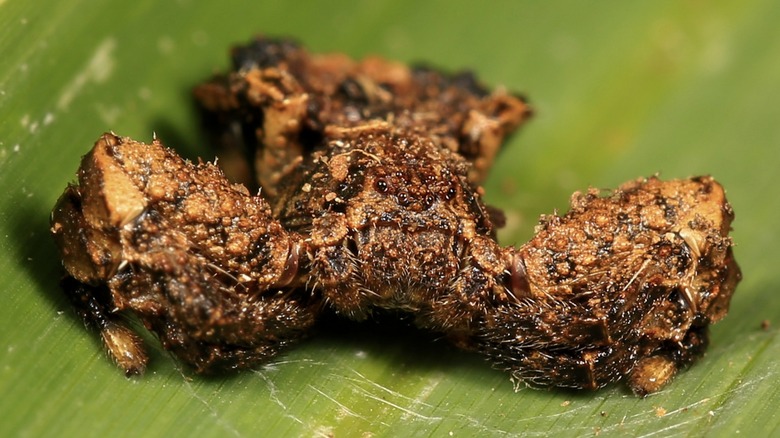
Also referred to as the sit-and-wait crab spider, the Phrynarachne rugosa looks strikingly like poop with bumpy chunks in it, while the color can be variations of brown and gray. The surface even looks glossy, giving it the appearance of being wet and freshly dropped. Most of the time, they remain completely immobile on plant leaves with their legs tucked in while waiting for prey to approach, which just adds to the poop look. Sitting motionless might seem dangerous, but they're known to emit the smell of fresh droppings, too, to avoid becoming prey.
Common mormon caterpillar
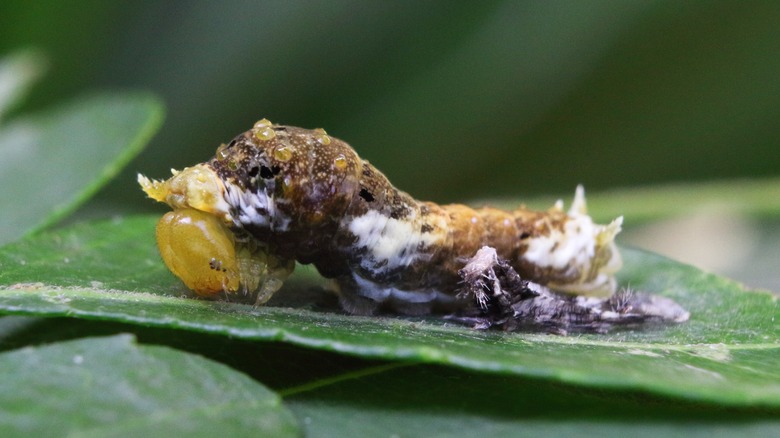
The common Mormon (Papilio polytes) is a widespread swallowtail butterfly species found across Asia. While the fully grown adults are beautiful creatures, the caterpillar stage is more off-putting to the eye. The body has a light-brown coloration with white spots and streaks, looking like bird droppings to camouflage itself from predators, such as birds, frogs, lizards, spiders, and wasps. When predators strike anyway, a forked organ — called the prothorax — emerges from its head and releases noxious chemicals with a strong odor as an additional deterrent.
Donkey dung sea cucumber
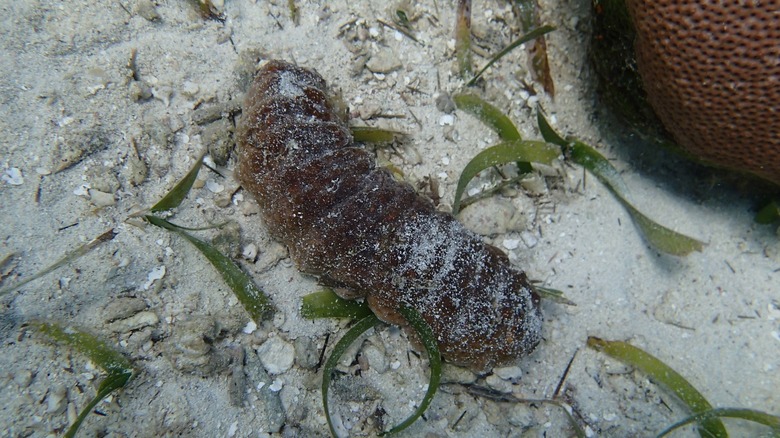
Found throughout the Caribbean, from Florida to Venezuela, the donkey dung sea cucumber (Holothuria mexicana) lives in lagoons, mangroves, shallow corals, and seagrass beds. It looks similar to the black teatfish sea cucumber with a bumpy surface on the top and tiny tube feet sticking out from the base. However, it's a little smaller on average and is more of a brown color — two characteristics that make it look even more like a huge turd laying on the ocean floor.
Wood-nymph moth
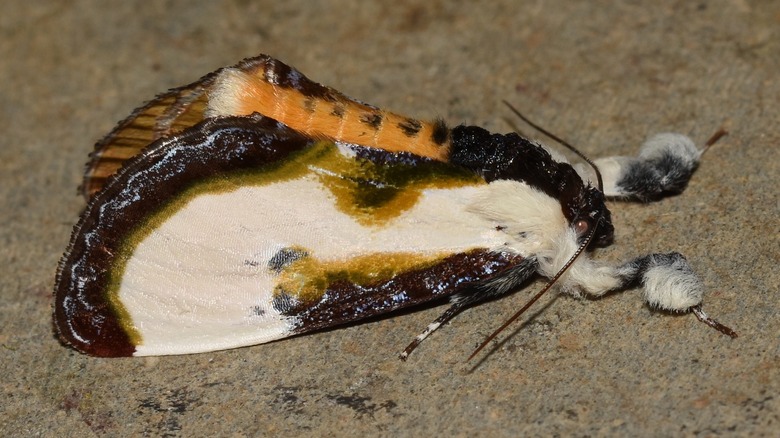
Also called the beautiful wood nymph, Eudryas grata mimics bird poop in the most spectacular way. It looks most like avian feces when it's at rest and its forewings are folded up like a tent over its body and hind wings. Along with being white, each forewing has a deep reddish-brown band around the outer edge and a yellowish band inside that darker band. What makes it look even more like bird droppings is its outstretched white-haired front legs, as if the white, chalky liquid of the feces is dripping.
Orb-weaver spider
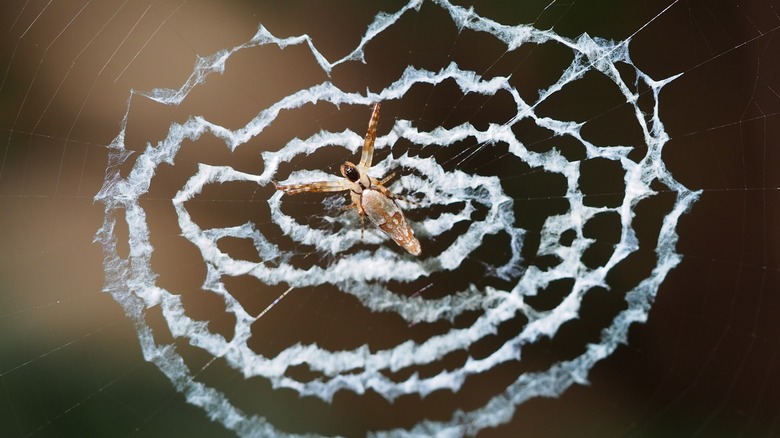
While red-legged golden orb weavers are the spider species that produces some of the world's finest silk, others orb weavers use their webbing to make them look like bird poop. Scientists specifically witnessed the Cyclosa ginnaga decorating its web with a spiral pattern and pieces of dead leaves. It then sits in the center so that its silver body completes the resemblance of a bird dropping. Testing the theory by blackening the decoration and publishing their findings in Scientific Reports, the researchers found that the masquerade reduces the spider's probability of being attacked by predators.