

Scientists Didn't Expect This Body Part To Grow Back After Amputation

It's an understatement, but the human body is a complex organism that can do some really amazing stuff. For instance, the liver is one of the organs you can donate while you're still alive because it's a vital human organ that can miraculously regenerate, regrowing up to its normal size even if only 10% is left. That's not the only body part that can grow back, though. As it turns out, scientists have found out that fingertips can regenerate.
The knowledge that fingertips can grow back isn't novel, as scientists have actually known about it since 1972, when a study was published in the Journal of Paediatrics and Child Health. In the paper, researchers noted fingertip regrowth in small children who suffered guillotine amputation with some remaining nail and only received treatment with dressings, no stitches.
Tons of research into the regrowth of fingertips has continued over the decades, including studies published in Nature in 2013 and the International Journal of Molecular Sciences in 2017. Meanwhile, a study published in npj Regenerative Medicine in 2025 reported excellent clinical results with nailbed, skin, and subcutaneous tissue regeneration in 22 human fingertip amputations. The results also provide clear differences from regenerative animal testing, and further analysis is needed to identify the mechanisms behind it.
Fingertips are vital, but how the human body regenerates them isn't clear
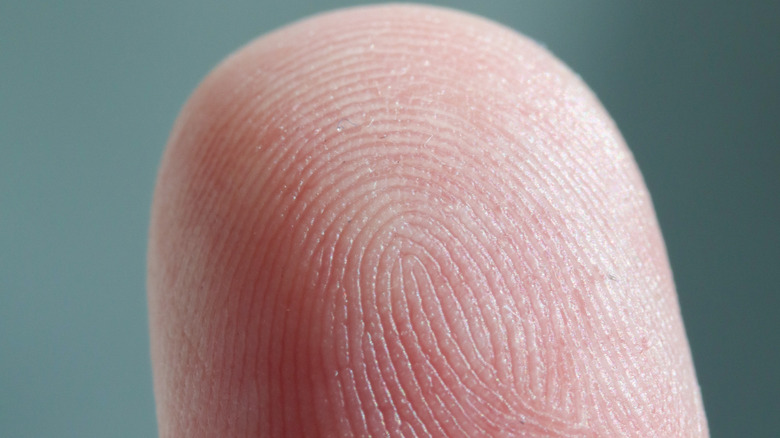
Your fingertips may be small body parts on your body, but they're essential for tactile sensation. While your finger bones provide length, the tips of your fingers consist of soft pads for feeling, nails to support the pads so that you can grip objects, and dense nerve endings, which put them among the body parts that are most sensitive to pain.
It's fortunate that they can grow back in the event of an injury, although the regeneration is limited. Of course, part of the process involves the skin, the largest organ in your body that has regenerative powers, whether it's replacing dying cells or healing wounds. Researchers are working to get a better understanding of what's happening beneath that in humans, but for now, they've determined the basics of how it works in animals.
In the 2013 Nature paper, New York University scientists studying mice discovered a population of nail stem cells (NSCs) within the proximal nail matrix at the base of the nail. These cells facilitate continuous nail growth and the restoration of amputated fingertips, including bone, in just five weeks. However, the limitation is that enough of the proximal nail matrix must be left behind. It also requires the activation of Wnt, a family of proteins that carries signals to regulate cell growth.
Once the Wnt signals activate, nerves are attracted to the area. Then, the protein FGF2 drives mesenchymal cell growth, which triggers the regeneration of bone, muscle, and tendons. The process shares features with the ability amphibians have to regrow limbs and tails — including the molecules involved and the necessity of nerves — but mammals and humans are missing other processes to do that.