

Scientists Figured Out How To Turn Human Poop And Wastewater Into Sustainable Energy
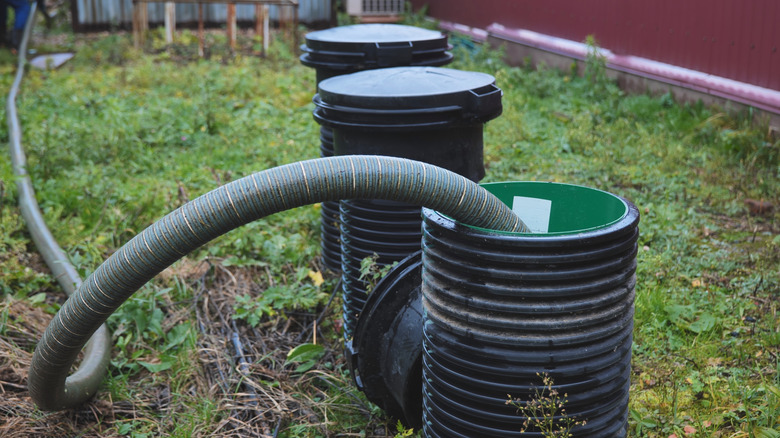
In places like California and Singapore, a large portion of the public water supply comes from recycled wastewater — often sourced from their toilet water. But these wastewater treatment plants are a great way to recycle freshwater and a poor way to reduce our carbon emissions. In the U.S., water treatment plants consume around 3 to 5% of the country's electricity, and, globally, they release an estimated 3% of the world's annual greenhouse gas emissions. But what if you could both treat wastewater and generate electricity along the way? Over the past two decades, scientists and engineers have sought to do exactly that, and they're getting closer by the year.
The emerging tech for generating electricity from poop water is called a microbial electrochemical system (MES), a technology that harnesses the electricity generated by microorganisms. These microbes generate free electrons when they break down their food (unlike the few animals that don't poop), producing electricity. Critically, their food source is biodegradable organic compounds, which are essentially any carbon-based molecules that decomposers can break down. One potent biodegradable organic compound is human poop, so combining MES with wastewater treatment is a no-brainer.
In a 2009 study from China, published in Acta Astronautica, researchers demonstrated a way to generate electricity using human wastewater. They designed microbial fuel cells, which are essentially batteries that contain microbes and microbe food instead of battery acid. But the wastewater had to be heavily treated first, so the electricity gained was likely less than the electricity spent. However, it laid the groundwork for later improvements on the design. In a 2026 paper published in Environmental Science & Technology, researchers improved the MES design to produce more electricity than is consumed by the filtration process.
How to generate electricity while also filtering wastewater using common materials
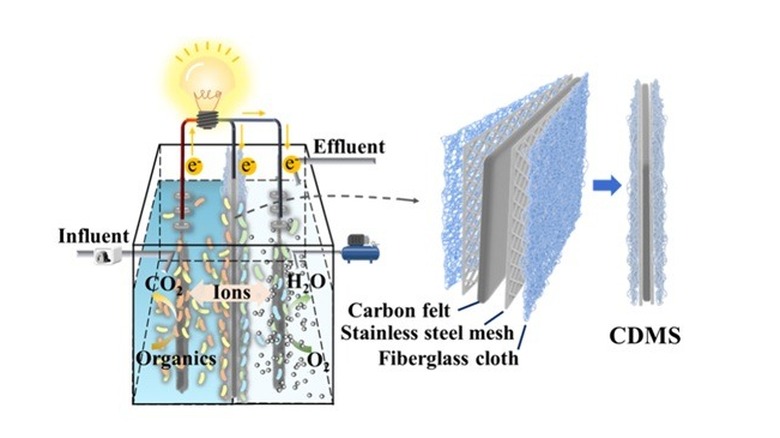
The 2026 study wasn't the first MES to achieve net-positive electricity generation from a wastewater-filtration system, though it was the first to do it efficiently. Before 2026, most systems relied on expensive materials and complex engineering. For example, many designs' filters use expensive ion-exchange membranes. Although these materials have been successfully used, most ion-exchange membranes require massive resources, time, and energy to make and maintain.
Thus, previous wastewater-to-energy systems were too delicate, complex, and expensive to work on a large scale, even when they were able to extract more electricity than they used. Many designs also required wastewater to be extensively treated, or "buffered," in advance (wastewater contains inorganic toxins like expired medications). So, rather than sticking to conventions, the 2026 research team decided to redesign the material makeup of the technology. In place of expensive membranes, the new system used simple carbon felt, stainless-steel mesh, and fiberglass cloth. Using these common materials, the new design brought the cost-per-square-meter of membrane down from thousands of dollars to about 30 bucks.
The materials may be simple, but the biochemical process behind it is not. In basic terms, the mesh filter collects the bacteria and organic compounds in the wastewater, which quickly forms a slimy layer. This layer of bacteria does the actual filtering. As the bacteria consume the organic compounds in the flowing wastewater, their tiny electrical discharges turn each side of the mesh into two opposite electrodes, like a battery. This electrical charge also repels grime and large particles from clogging the filter. Although the team only demonstrated their design on a small scale, it's hopefully a hint at the future of sustainability.
Other ways we turn human wastewater into energy
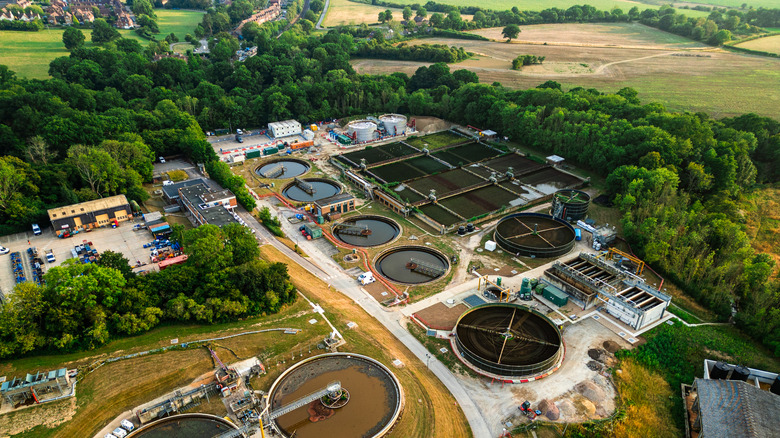
Although 2026 was a good year for making wastewater-treatment a viable energy source, humans have been using poop to create energy for a long time. After all, some of the fossil fuels that we burn come from the feces of long-dead life forms. Most poop is naturally broken down by microbes, which release carbon gases in the process. The majority of this natural cycle is released as carbon dioxide and methane, whether burped out by decomposers or released through combustion in a coal-powered energy plant (a fuel source that devastates the environment long before it's even burned.)
Although the electrical charge from microbes may be difficult to capture, collecting the methane for use as a natural gas is pretty straightforward. Some designs rely on anaerobic digestion, in which the sewage is mixed with bacteria and placed in an oxygen-free tank. Without oxygen, the bacteria break down the sewage quickly and efficiently, releasing methane and carbon dioxide. The methane is then isolated from the carbon dioxide and used to produce electricity or natural gas for generating heat.
There are other ways to get energy from human waste, as well, though they're not quite as efficient or cost-effective. Some systems use the residual warmth in wastewater to re-heat homes; others extract the biofuels directly using hydrothermal liquefaction; while others use gasification to chemically convert the carbon compounds into fuel. In any case, it looks like microbial electrochemical technology is the future of poop-to-power systems, since they could turn sewage treatment into a clean power source and clean up our waste at the same time.