


Contributing Writer
Sciencing Editorial Policies
The unique content on Sciencing is a result of skilled collaboration between writers and editors with broad journalistic, academic, and practical expertise across the wide variety of scientific fields we cover.
In pursuit of our mission to provide accurate and ethical coverage, the Sciencing editorial team consistently fact-checks and reviews site content to provide readers with an informative, entertaining, and engaging experience. Click here for more information on our editorial process.
Stories By Contributing Writer
-

-

-
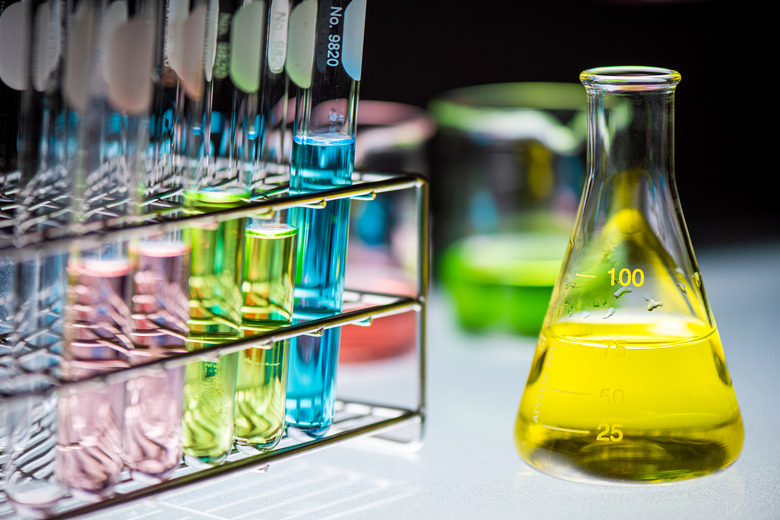
How To Store Acids & Bases
How to Store Acids & Bases. Both acids and bases are chemicals that present health hazards if inappropriately handled or stored. Handling chemicals incorrectly can lead to spills in the lab, fires, toxic environments and bodily damage. Therefore it is always important to practice safety in the laboratory by working slowly and carefully when storing acids and bases, and always wearing your protective equipment. Below are steps on how to safely and effectively store acids and bases.
Read More -
Properties Of Magnesium Chloride
Magnesium Chloride is an inorganic salt, which has the chemical formula of MgCl2 and molecular weight 95.210 g/mol. Predominantly magnesium chloride exists as various hydrates, particularly hexahydrate MgCl2 *6H2O having the molecular weight of 203.301 g/mol. Magnesium chloride hexahydrate occurs as a natural mineral Bischofite named after a german geologist Karl Gustav Bischo. The prefered synthetic method of preparation of anhydrous magnesium chloride is the reaction of mercury(II) chloride and magnesium: Mg + HgCl2 = MgCl2 + Hg.
Read More -
How To Test For Sodium Bicarbonate
Sodium bicarbonate, with the chemical formula NaHCO3, is the white powder widely known as baking soda. A similar compound is sodium carbonate (Na2CO3), used as a cleaning agent or an additive during clothes washing. The basic test for the presence of carbonate salts is a reaction with a diluted acid solution that leads to release of bubbles of the gas carbon dioxide and follows the reaction: NaHCO3 + HCl = NaCl + H2O + CO2. An additional test is required to distinguish between sodium bicarbonate and sodium carbonate.
Read More -

How Is Pure Cesium Stored?
How Is Pure Cesium Stored?. Cesium is a rare metal. It's used in a relatively small number of commercial applications; only about 55,000 pounds are used worldwide each year. The largest use of cesium is by the petroleum industry, where it's used as a component of drilling mud. Cesium is used in the U.S. Naval Observatory's atomic clocks and in ground systems used to track the space shuttle and satellites. Cesium is also used in agriculture and in the manufacture of certain electrical components. A radioactive isotope of cesium is used in treating cancer.
Read More -
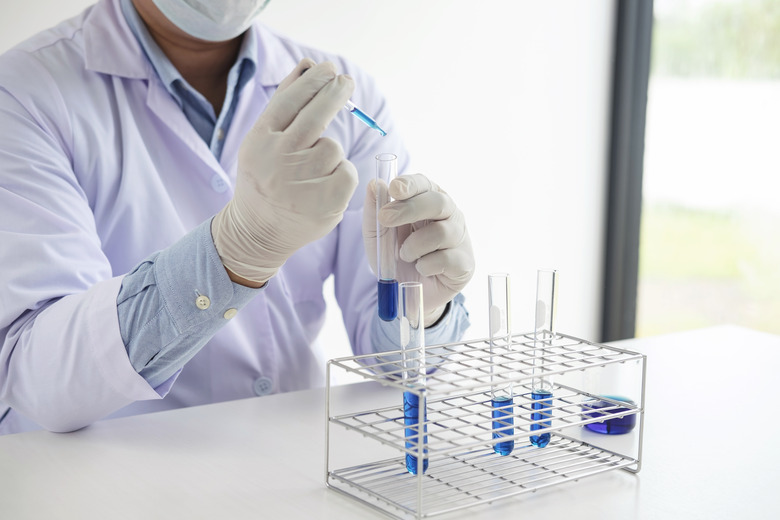
How To Calculate Grams From Normality
A concentration measures the amount of a dissolved compound (solute) in a solution. Commonly used molar concentration, or molarity, represents the number of moles of the solute in 1L (liter) of the solution. Normality (denoted as "N") is similar to molarity, but it refers to the number of chemical equivalents rather than moles. For instance, one molecule of sulfuric acid, H2SO4, produces two hydrogen ions in the solution, and hence can react with two molecules of another compound. As a result, one molar solution of H2SO4 will have the normality of 2. As an example, calculate the mass (in grams) of H2SO4 in 240ml of the 2.5 normal (N) solution.
Read More -

How To Find The Number Of Electrons
Atoms contain protons, electrons and neutrons. Protons have a positive charge, while electrons have a negative charge. Because all atoms have a neutral charge, the number of electrons in any given atom equals the number of protons. The latter stems from a distinct chemical element's characteristic known as an atomic number. However, molecules called ions can also carry a negative or positive charge---for instance, CO3(-2) or NH4 (+). The existance of ions indicates that during a chemical reaction the substance either loses or gains electrons. As an example, calculate the number of electrons in the molecule KNO3 and the negatively charged ion SO4(2-).
Read More -

How To Solve A Matrix
A matrix is a table of values written in row and column form that represent one or more linear algebraic equations. There are many different ways to solve a matrix depending on whether you are given linear equations, and your instructed mathematical operation such as multiplication, addition, subtraction and even inverse. Solving matrices may seem complicated at first, but with diligent studying and practice you'll be able to work through any matrix problem presented to you.
Read More -

About A Mammal's Nervous System
Mammals have the most complex nervous system on the planet, with humans being the most advanced. The nervous system works with the senses to transmit information to the mammal's brain, a process that takes less than one-hundredth of a second. The brains of mammals, especially humans, are wired to react to the world quickly to protect the animal from danger and to allow it to assess immediate environment easily.
Read More -

Where Do Venus Flytraps Grow Naturally?
The Venus flytrap plant is a carnivorous plant that catches and digests mainly insects to supplement its nutrition. It catches an insect by closing its trap when the insect triggers the hairs on the plant. The Venus flytrap has a rather small area of natural habitat and is a popular plant grown by gardeners.
Read More -
How To Calculate Initial Concentrations
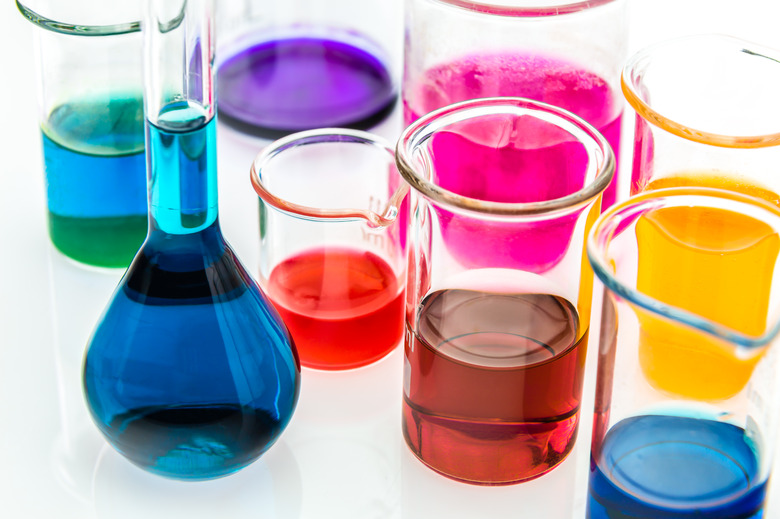
Calculating the initial concentration--otherwise known as molarity--is an important process commonly found in the chemical and biochemical world. Molarity is the number of moles of solute per the number of liters of solution. Therefore, knowing how many moles of a solute and the total volume of the solution is necessary.
Read More -

How To Find Ratios
A ratio is a way of comparing the quantity, amount or size of two or more things. Using the following information, you will learn how to find a ratio and how to write it three different ways: A pet store has 8 dogs, 10 cats and 15 birds.
Read More -

How To Calculate Volume At STP
The ideal gas law specifies that the volume occupied by a gas depends upon the amount of substance (gas) as well as temperature and pressure. Standard temperature and pressure -- usually abbreviated by the acronym STP -- are 0 degrees Celsius and 1 atmosphere of pressure. Parameters of gases important for many calculations in chemistry and physics are usually calculated at STP. An example would be to calculate the volume that 56 g of nitrogen gas occupies.
Read More -
How To Calculate Titratable Acidity
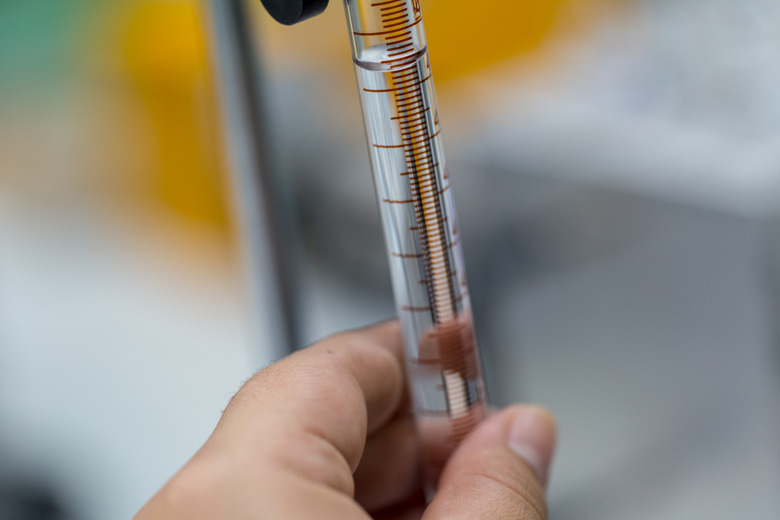
Titratable acidity is a total amount of acid in the solution as determined by the titration using a standard solution of sodium hydroxide (titrant). The reaction completetion is determined by a chemical indicator that changes its color at this point. Titratable acidity (in g/100 ml) is typically used to express an acidity of wines that contain several organic acids but mostly tartaric acid. As an example, we will calculate the titratable acidity of the tartaric acid (C4H6O6) solution if its 15 ml aliquot was titrated out with 12.6 ml of the 0.1 molar solution of sodium hydroxide (NaOH).
Read More -

How To Convert Kilometers To Hours
Kilometers (km) are used as a unit of distance in the majority of countries worldwide, including Europe but excluding the United States. The conversion of the distance to the time (in hours) is the very common task, since it allows you to estimate travel time. You need to know a speed, for example average of speed your car in the trip, to make that conversion.
Read More -

How To Identify Spiders In South Carolina
South Carolina, like most states, is home and habitat to many species of spiders. Learning how to tell them apart is a good idea for many reasons.One is so you'll know more about your environment and appreciate what you have and how to live with it. It also helps to know that many spiders have venom, but most will not cause harm to humans unless you have a sensitivity that causes an allergic reaction. Learning about the statistics will helps you lose some of your fear of this beneficial creature because most are not apt to cause harm. However, an ounce of prevention is always worth a pound of cure.
Read More -
How To Make A 1% Sucrose Solution
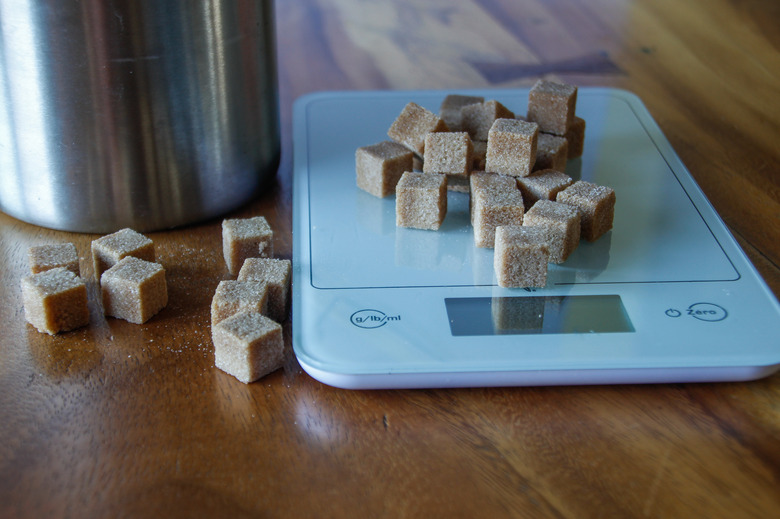
Sucrose, commonly known as table sugar, is a chemical compound that consists of glucose and fructose, and plays a crucial role in human nutrition. Upon consumption, sugar is quickly digested and serves as an efficient source of energy. Sugar solutions are commonly used in baking and cooking, as well as for various laboratory experiments in chemistry.
Read More -

How Much Electricity Does A Vending Machine Waste?
How Much Electricity Does a Vending Machine Waste?
Read More -

How Do Polar Bears Camouflage?
Polar bears are covered with white fur. Their fur does not change color like a chameleon's skin; however, since they live in a snowy zone they are always surrounded by the color white. They do not need to adapt to different color backgrounds like a chameleon does.
Read More -

How To Calculate Square Feet In A Triangle
Square feet are widely used to measure area in the United States and a few other countries. While an area defined by a triangle can be calculated in a number of ways, the Heron's Theorem (formula) allows you a straightforward computation of the triangle’s area. All you need to know are the lengths of all three of the triangle’s sides.
Read More -
Life Cycle Of A Squid
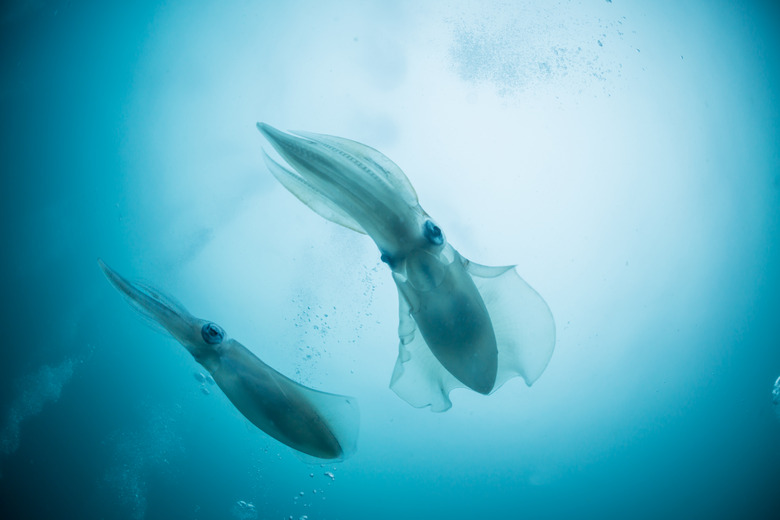
Squids belong to a group of mollusks called cephalopods of the order Teuthida, which includes about 800 species. Cephalopods appeared on Earth several million years before primitive fish, and despite their short life spans, they have a thriving population.
Read More -

What Is The Human Impact On The Freshwater Biome?
Ponds and lakes, streams and rivers, wetlands and estuaries and the plants and animals that live within them make up freshwater biomes. Human activities are significantly impacting and endangering freshwater biomes, which comprise one-fifth of the earth's surface. Freshwater biomes are declining worldwide.
Read More -

How To Measure Yeast Respiration
In the beginning of your biology laboratory career it is inevitable that you will run into the yeast respiration experiment. This simple experiment is a starting point many instructors use to introduce their students into the world of biological reactions. In this experiment the yeast, a living organism, feeds off the sugar in the solution and creates a byproduct. This is known as respiration and the product of the yeast is carbon dioxide, or CO2.
Read More -
How To Read A Mariner's Compass
Reading a compass may look complicated, but don't let all those intricate pieces throw you off. Mariners have been using compasses based on the same principle design for centuries. Even in this day of satellite imagery and echolocation, the compass remains one of our most efficient and reliable navigation devices.
Read More -
How To Make Sodium Chlorite
Sodium chlorite is used commercially to bleach fabrics and paper and to purify and disinfect municipal water. Homeowners use sodium chlorite as an anti-fouling agent for water and a precursor for other flammable or explosive chemicals. There are many different ways to make sodium chlorite. Commercially, chlorine dioxide is added to sodium hydroxide and hydrogen peroxide. For the home chemist, table salt is added to water for a saturated solution, then electricity is applied to bond the O2 from the water to the salt. Some people like to add battery acid or another caustic agent to speed up the process, however, this can result in an unstable, explosive solution.
Read More -

How To Calculate The Thickness Of A Rectangular Plate
You can easily measure the length and width of a rectangular plate with a metric ruler. However, a direct measurement of the third plate dimension (thickness) will not be accurate if the plate is thin enough. You can calculate the plate thickness as a ratio of the volume of the plate to its surface area.
Read More


