

Why Death By Box Jellyfish Is One Of The Worst Ways To Die
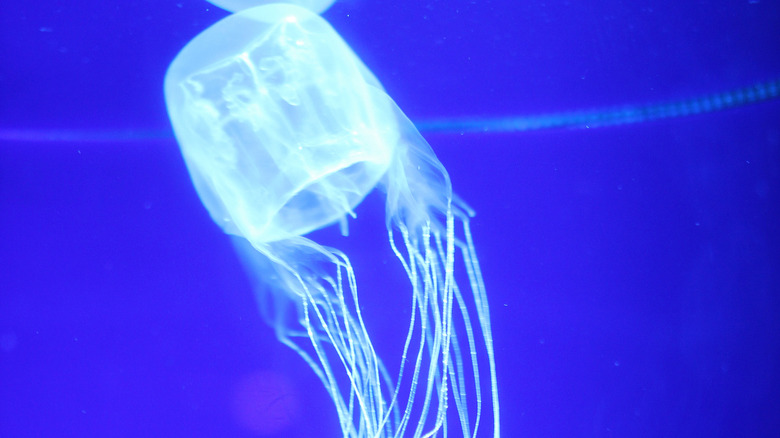
The box jellyfish may look elegant and almost ethereal, but some species are actually the most venomous creatures in the ocean, with a deadly sting that can lead to one of the worst ways to die. Hives and severe pain are just two of the effects, with the pain from the jellyfish venom intense enough to send victims into shock. Tissue damage, a drop in blood pressure, and irregular heartbeat are other effects, according to an article in Toxicon: X. To cap off this horrific sequence of events, the body goes into respiratory failure and cardiac arrest, followed by death soon after in many cases. All of this happens within two to five minutes of being stung by the tentacles of the box jellyfish. The box jellyfish venom causes some similar effects as the venom of these five types of dangerous spiders, but is even more potent.
This jellyfish has several features that can turn it into a fearsome killer of crustaceans and humans alike. Firstly, it produces a powerful venom that is actually a mix of lipids, carbohydrates, proteins, and small molecules. This cocktail of toxins affects the skin, nervous system, and heart. The CfTX-1 and CfTX-2 toxins can cause rapid cardiac arrest, putting a potentially fatal twist on happy hour. Some researchers think that the intense pain induced by the box jellyfish venom is due to the disruption of ion channels in pain-sensing neurons.
The toxins are delivered to the prey via a sophisticated and efficient system. The venom is stored at very high pressure in tiny harpoons that reside within nematocytes, special cells that line the entire length of the jellyfish's tentacles. When the tentacles encounter prey, they discharge the tiny harpoons at an enormous acceleration, 50 times greater than that of a bullet. What's more, the tentacles can grow to huge lengths, wrapping around the victim's body and injecting venom wherever they touch.
Box jellyfish are highly evolved predators
Box jellyfish are a particularly advanced type of jellyfish. For example, they can swim in a specific direction (at speeds of up to 4 knots) instead of going along with the current like many other types of jellyfish. Box jellyfish also have eye clusters on each side of the bell, with a lens, cornea, and retina, as well as an iris that can contract in bright light. However, scientists are not sure how they process the information gathered by their eyes since they lack optic nerves — or any nervous system at all.
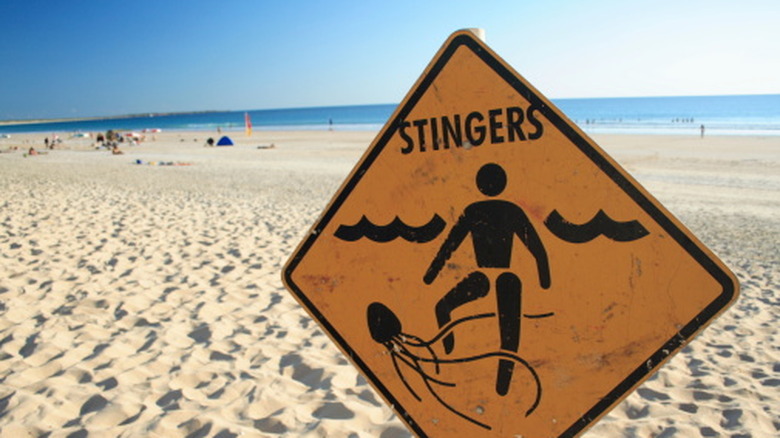
Even among box jellyfish, there are big differences. There are actually 50 different species of box jellyfish, most of which are not deadly to humans. Only a few species are highly venomous, and these are mainly found in northern Australia and Indo-Pacific waters. The most deadly species is the Australian box jellyfish (Chironex fleckeri). It is also the largest box jellyfish, with their bodies having diameters of up to 1 foot and tentacles as long as 10 feet.
Why did box jellyfish develop such an intense venom and sophisticated delivery system? Well, scientists believe that their the powerful venom and targeted delivery immediately stuns or kills prey to prevent them from struggling and damaging the fragile tentacles of the jellyfish. This super venom is likely a defense mechanism against potential predators as well, mirroring the strategy of the blue-ringed octopus, which is also an architect of one of the worst ways to die.
What treatments are available for box jellyfish stings?
The most effective treatment to counteract venom in the body is an antivenom, which is produced by injecting a non-toxic dose of crude venom into a large animal, such as a horse, and later extracting antibodies specific for the venom from the blood of the injected animal. Currently, however, there are no effective antivenoms against box jellyfish venom. One reason for this is the difficulty of extracting sufficient amounts of active venom from the box jellyfish tentacles since the venom is easily denatured by heat. Differences in extraction methods also lead to large variations in the composition of the extracted venom, resulting in an antivenom that may not universally work well. Scientists are working on improving venom extraction techniques, so there is hope that effective antivenoms will be developed in the future.
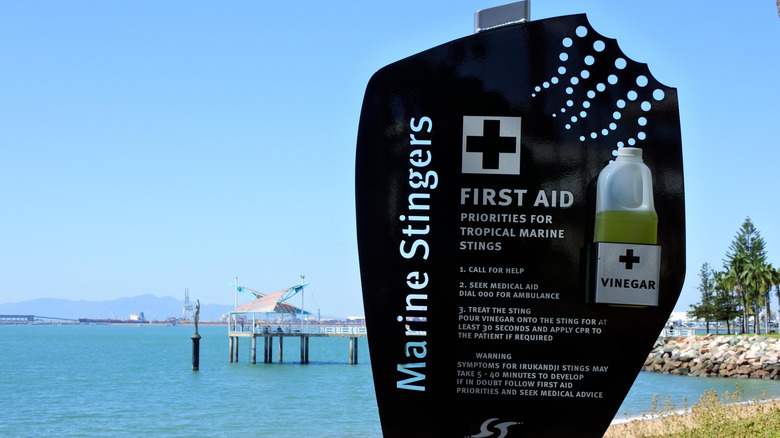
For people who don't die immediately from box jellyfish stings, several treatments can help alleviate the effects of the venom. A study on pigs in Military Medicine found that treatment with StingNoMore spray followed by StingNoMore cream, both of which contain copper gluconate, reduced tissue damage and hemolysis (rupture of red blood cells) caused by stings. The same article found that a vinegar rinse followed by a heat pack caused some reduction in tissue damage but was not as effective as the StingNoMore treatments. So, using vinegar in this way may be more useful than people spraying their patios with vinegar to repel spiders. However, a saline rinse followed by an ice pack actually exacerbated tissue damage.
Regardless of the treatment they receive, people who survive an attack by Chironex fleckeri are the lucky ones. In the last century, 77 people have succumbed to one of the most painful deaths around because they were stung by the long tentacles of this deadly sea creature. So, as beautiful as the box jellyfish may be, staying far away from it could be the smartest thing to do.