

Why America's 'Little Patagonia' Is In Serious Danger
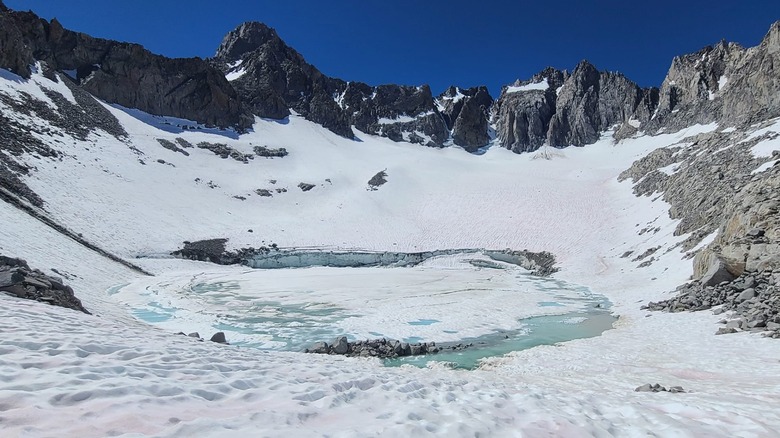
Covering most of southern Argentina, Patagonia is considered a picturesque region with a physiography that includes desert and semidesert with lakes, rivers, mountains, and glacial formations. California has a smaller version in the Sierra Nevada mountain range, a remote area known as the Big Pine Lakes, which fans affectionately refer to as "Little Patagonia." However, this area is at risk of potentially devastating changes because its glaciers could melt by the end of the century.
Research conducted on four of the largest glaciers in the Sierra Nevada was published in Science Advances and shows that they have existed for longer than previously believed — around 30,000 years, in fact. While they have been around since at least the last ice age and endured natural swings in climate, scientists say that they're facing hotter-than-ever temperatures. Just in the last century, local summer temperatures have risen about 3.6 degrees Fahrenheit.
University of Wisconsin, Madison researcher and lead study author Andrew Jones told the Los Angeles Times that about 70% to 90% of the glaciers' ice has been lost to this unprecedented climate change since the late 19th century. In fact, the Lyell Glacier stopped flowing in 2013, calling into question whether it should be called dead ice. Model projections estimate that, unless something is done to stop glacier melting, what remains of the Big Pine Lakes glaciers will be gone by 2100.
"When these glaciers die off, we'll be the first humans to see ice-free peaks in Yosemite," Jones said in an interview with SFGATE. "We're entering uncharted territory. Humans here have not seen Yosemite National Park without glaciers before."
The consequences of the Big Pine Lakes glaciers disappearing
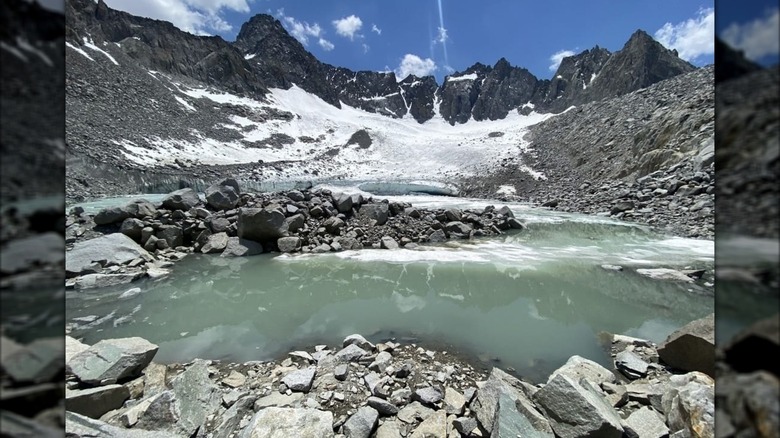
The development of glaciers changes the landscape, and as they move, they reshape the terrain through the erosion and deposition of rock and sediment. On the other hand, more changes happen when a glacier melts, and that loss has a ripple effect. Specifically, the Sierra Nevada glaciers play a vital role in stabilizing the area's water system. Plus, the glacial runoff produced during late summer keeps streams flowing through drought conditions. It even runs into Yosemite's Tuolumne River, which feeds the water supply for San Francisco and a lot of the Bay Area.
Jones told the San Francisco Chronicle, "When the glaciers are gone, you will lose that bit of remaining water." Without the buffer that the glacial runoff provides during droughts, some freshwater storage could be affected and small waterways could run dry when rain is less frequent and temperatures rise. The ecosystems that rely on the steady flow of cold water will be affected as a result. "This has ecological implications for plants and animals," he emphasized.
However, losing the Big Pine Lakes glaciers will have more than ecological implications; their loss could have emotional and cultural effects as well. Jones expressed that it will be "a symbolic loss. Climate change is very abstract, but these glaciers are tangible. They're iconic features of the American West." Not all hope is lost, though, because reducing greenhouse gas emissions can stop or at least slow down the ice melt. As he told SFGATE, "People have shown that the pathway that we choose determines how many glaciers survive."