

Not Bedbugs, Not Dust Mites: This Is Actually The Grossest Thing About Your Mattress
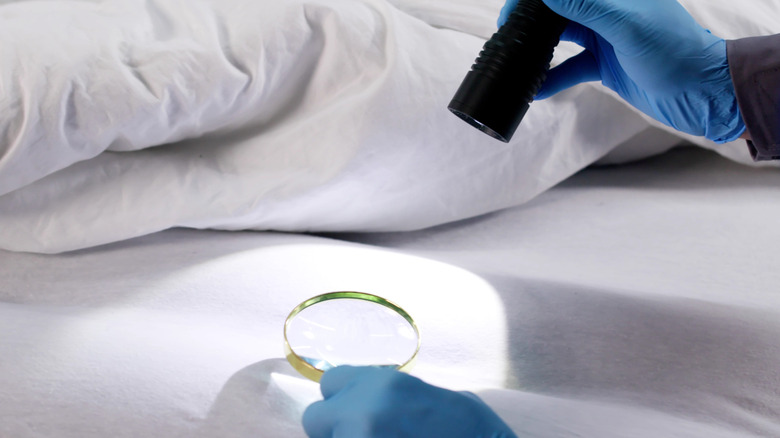
Even if you're washing the sheets on your bed once a week, gross things could be lurking in the mattress underneath. Bedbugs and dust mites are just a couple of examples. In fact, just the thought of a bedbug's feeding habits are pure nightmare fuel, and scientists have developed a new class of chemicals called isoxazolines for a game-changing spray that could finally beat bedbugs. However, these creepy pests aren't the grossest thing hiding in your mattress. That unfortunate honor goes to your own sweat and dead skin cells.
According to research published in Allergy in 2005, adults can produce as much as 26.4 gallons of sweat per year while sleeping. Using different methods, a 2024 study in the Journal of Clinical Sleep Medicine found that normal sweat loss ranges from 16.9 to 33.8 ounces per night — amounting to about 48 to 96 gallons per year — with higher temperatures contributing to increased sweat loss. The problem is that, while your sheets absorb sweat (hence experts recommending that you wash them at least once a week), some of that sweat soaks through and into your mattress.
Sweat isn't the only thing that gets into your mattress, though. On average, the body sheds 1.5 grams of dead skin cells every day (per the American Lung Association). A major share of that ends up in the bed since one-third of the day is spent sleeping (based on an eight-hour night). Plus, the friction that occurs between the bed and body while sleeping aids that skin shedding. Like with sweat, the sheets catch a lot of that, but not all of it.
The consequences of a mattress full of sweat and dead skin cells

There's a big downside to having a mattress soaked in sweat and riddled with your dead skin cells. For starters, it attracts a host of other gross things. A study published in Scientific Reports found that bedbugs (blood sucking bugs) are attracted to anything that contains human odors, including sweat in your mattress.
Also, dead skin cells are part of a dust mite's diet, so those in your bedding and mattress can attract thousands of these microscopic pests. The dead skin and sweat create the perfect breeding ground for bacteria, too, which makes sense because the skin is one of the most common areas that bacteria inhabit. Along with those, hair and skin care products can seep into the mattress, making the contamination even worse.
All of these things can trigger allergies on their own, exacerbating the problem when they combine. When you breathe them in, they can cause inflammation, infection, and irritation that makes it hard to breathe. That reaction can lead to nasal congestion, headaches, eczema, and chronic sinus issues that disrupt sleep to the point of causing insomnia. A dirty mattress can cause acne and eczema, as well as make those existing conditions worse.
Fortunately, you can reduce these consequences by cleaning your mattress about every six months. All it takes is vacuuming the surfaces to suck up dead skin cells and dust mites. Then, use warm water and mild detergent to spot-clean the sweatiest areas, allowing the mattress to fully air dry before putting fresh sheets on. You can also avoid making the bed as soon as you get up. Instead, let the sweat that you lost overnight dry to reduce the moisture that allows bacteria and dust mites to thrive.