

Everyone Had It In Their Home In The '70s. Science Might Explain Why It Was So Hard To Look Away
We may receive a commission on purchases made from links.
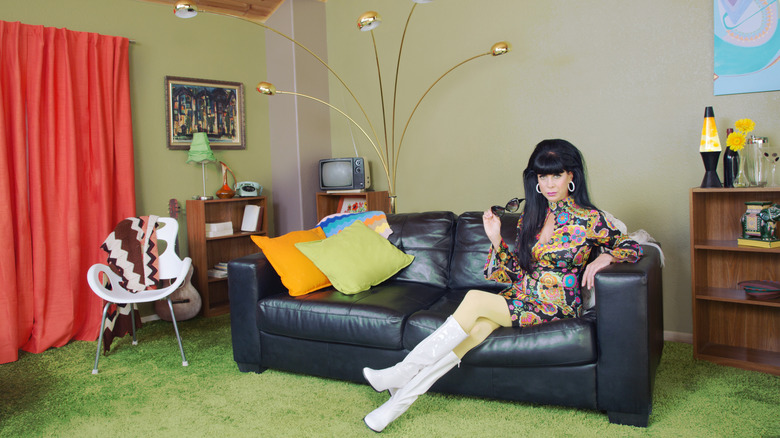
The 1970s had a distinct aesthetic that's hard to miss. Closets were filled with staples like bell bottom pants and leisure suits while living spaces often had one item that captured everyone's eyes: the lava lamp. First produced by English inventor Edward Craven Walker in 1963, the lava lamp consists of a glass container filled with a clear or tinted liquid and waxy substance that melts and rises when heated by a lightbulb in the base of the lamp. The lava lamp took the world, and human attention, by storm in the '70s. Since then, scientists have found that the flowing motion in lava lamps stimulates the brain in a manner that makes it hard to look away.
Research on human cognition has found that slow and unpredictable movement like flowing water, flames, or the slowly moving blobs in a lava lamp capture attention in a way unlike more demanding stimuli. Instead of the high-effort attention demanded by tasks like focusing on work in a noisy office or safely crossing a busy street, a lava lamp triggers a low-effort state of attention referred to as soft fascination. Research on the human mind has found that soft fascination is a crucial part of how the brain recovers its ability to focus and pay attention.
Attention is a limited resource

This ability to recover focus and attention through soft fascination is especially important for those of us dealing with the sensory overload of urban living. Traffic, crowds, and other sensory inputs in cities and the constant presence of modern technology can be overwhelming, so we have to be selective with what we pay attention to and take steps to ignore distractions. These kinds of functions are what allow people to perform complex tasks, but constant attention comes with the price of fatigue.
Attention has come to be thought of as a resource that can be depleted and must be routinely restored. As a result, researchers have been working on a concept known as Attention Restoration Theory, or ART. While nutrition, exercise, sleep, and stress reduction are important habits for maintaining cognitive health, ART focuses on how certain properties of nature can reduce mental fatigue. Researchers posit that soft fascination is vital to ART, with other aspects like being away from the routine demands of life and work, being immersed in a larger environment, and doing preferred activities playing supporting roles. The restorative power of nature has not gone unnoticed, with people advocating spending more time outdoors to improve attention or counteract the 'brain rot' phenomenon.
Fascinating fluid flows
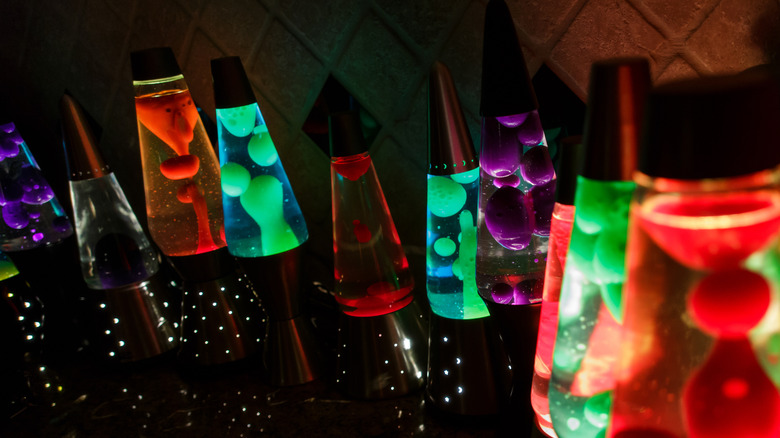
While the benefits of spending time in nature are well documented, it's possible to achieve soft fascination without stepping outside. Including plants in your household decor could improve your health and focus. Appreciating the beauty of a potted plant or flowers can help keep attention going. Flowing water and other unpredictable and slow motion can also trigger soft fascination, reducing stress and helping restore mental energy
While far less common than in the '70s, lava lamps like this 16-inch Jambo-brand lamp are still an option for bringing the restorative power of soft fascination home. However, there are other options that work similarly without looking like you're trying to bring the '70s back. Liquid motion bubblers, which have two small chambers containing colored liquids that bubble up and down, have become popular among people managing ADHD. Some even function as a timer like this 2-minute liquid motion bubbler sensory timer by Livond. Some people may even find it helpful to use an app that simulates unpredictable fluid flow on a device screen.
Whether it's flowing water, a smart phone app, or a traditional lava lamp, slow fluid motion can bring about the kind of soft fascination response that can help with attention. Lava lamps were a regular feature in homes in the '70s, and our brain's response to their slowly rising and falling blobs explains why it was so hard to look away.