

Giant Panda Poop Led Scientists To A Never-Before-Seen Fungus
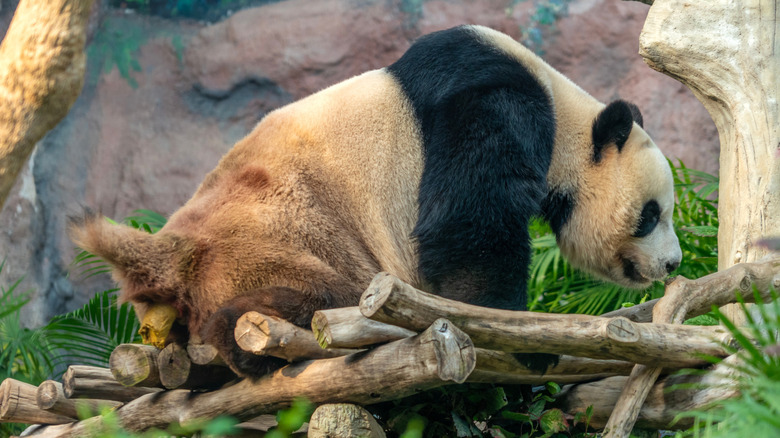
You might be surprised at how much scientists can learn from analyzing feces. For instance, scientists unexpectedly discovered a well-preserved feather from a now-extinct waterfowl species when they dug up 66-million-year-old fossilized dino poop. Researchers are also using poop to save the critically endangered Gilbert's potoroo. More recently, scientists analyzing giant panda poop have discovered a new species of fungus.
When the researchers found the new species, which has been named Mucor melanoleucus, they noticed that it was strikingly similar to another species, M. saturninus. They found and published in Current Microbiology, though, that the two species have different physical attributes. By comparison, the M. melanoleucus has smaller columella (non-reproductive columns) within smaller sporangia (stalk-like structures). It also has larger sporangiospores (asexual spores) but no zygospores (sexual spores).
Along with anatomical and physical examinations and experiments, the scientists performed phylogenetic analysis, which involves DNA and RNA sequencing to determine the relationship between the M. melanoleucus and saturninus species. The results confirmed that, although the two are closely related, they aren't the same species. This research also demonstrates that habitats like the ones where giant pandas eat and poop could be home to other fungi and species that haven't been identified yet. On top of that, it justifies the study of animal poop to learn more about fungal diversity.
Mucor melanoleucus is just the most recent species of this genus to be discovered
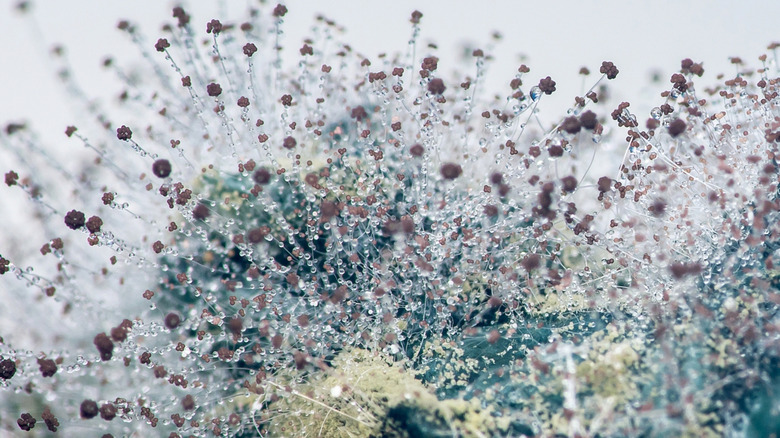
Mucor is a genus in the Mucoraceae family of fungi, which are one of the common types of fungi found in soil and predominantly saprotrophic, which means that they feed off of dead organic matter to obtain nutrients. Although not much more is known yet about M. melanoleucus other than what is described in the study, the scientists noted that this genus of fungi can be important ecologically and practically. While some Mucor species can cause mucormycosis (a fungal infection), others are used in food and pharmaceuticals.
Giant pandas, which are among the animal species scientists saved from the brink of extinction, are the subject of multiple poop-related analyses. However, their feces isn't the only place where new species of Mucor have been discovered over the last decade. M. pernambucoensis was found in the Brazilian upland rainforest in 2018, and M. merdophylus was isolated from dog poop in Rio de Janeiro in 2020. Also in 2020, M. cheongyangensis was identified in Korea on the surface of a spotted lanternfly (an invasive species destroying Illinois). Then, M. thermorhizoides was discovered at a post-mining site in Poland's Sudety mountains in 2023. All of these findings are a testament to not only the diversity of the Mucor genus but also the many environments where they can thrive.