

Scientists Compared Poop From Africa And South America. They Found A Hidden Link Between Two Continents
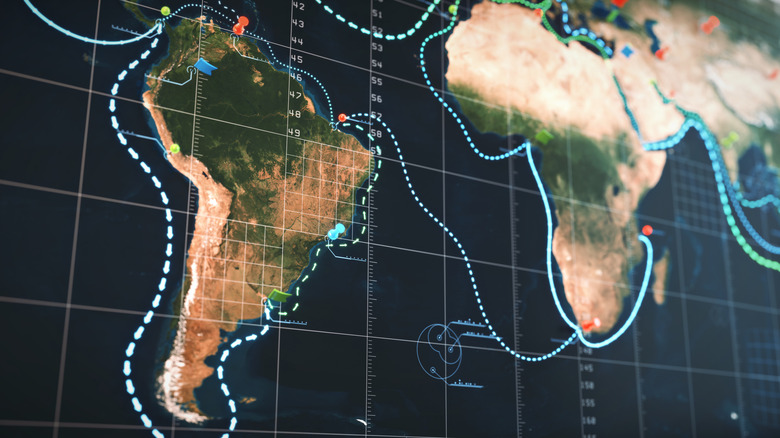
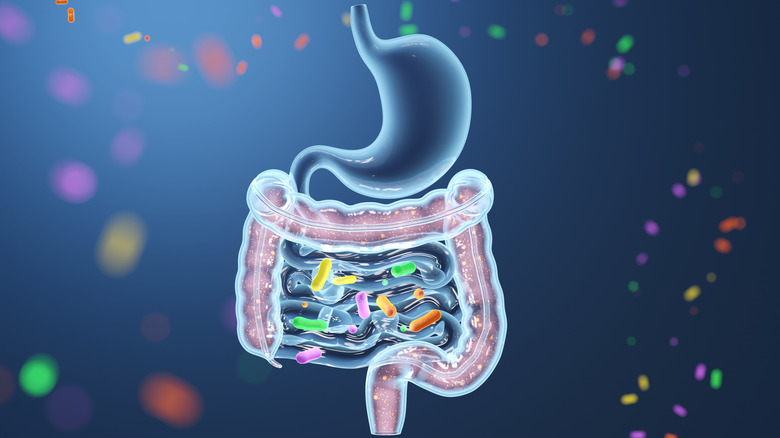
It's a gross reality, but the human body is full of bacteria — good and bad. For instance, scientists have revealed what bacteria actually live in the belly button, and most of it isn't harmful (and may even be beneficial). The gastrointestinal system has its own thriving ecosystem of microbes, which can be exhaled, explaining why your breath reveals more about your health than you realize. What's more surprising about the gut microbiome, though, is that it's overwhelmingly similar in two populations despite them living on different continents separated by the Atlantic Ocean.
Published in Nature, a study led by Stanford University researchers involved several analysis techniques to investigate the gut microbes of Tanzania's Hadza (a group of hunter-gatherers) and the Bolivian Amazon's Tsimané (a group of forager-horticulturalists). These non-industrialized groups were separated geographically tens of thousands of years ago. Along with stool samples taken from the Hadza and reported in a 2023 study published in Cell, the team collaborated with the Tsimané Health and Life History Project to obtain fecal samples from the Tsimané. When comparing the two, about 87% (over 1,231) of the about 1,400 bacteria detected in the Tsimané population was present in the Hadza.
Aside from the distance between them, the team was surprised about the results because the Hadza's diet consists of mammal and bird meat, fish, and foraged fruits and vegetables. Meanwhile, the Tsimané's diet consists mostly of corn, manioc root, plantains, rice, as well as fish, peccaries (pig-like mammals), and other animals hunted in the forest.
What this gut microbiome discovery means for human health
Co-author Benjamin Good said in a statement that the results made them "wonder if there really is a core set of bacterial and other species that traveled with the ancestors of the Tsimané as they migrated around the globe." That's when the researchers dug deeper, but they faced a major challenge: Microbes evolve quickly and can vary from one season to another or with food availability.
To overcome that, they looked for independent genomic signatures to differentiate shared ancestry from more recent changes. They also looked at mutation rates to estimate when microbe species likely diverged. The results provided evidence that many of the same gut microbes were present in the Hadza and Tsimané populations' ancestors. Because of that, the scientists hypothesize that the same gut microbes were present in all human ancestors.
Here comes the unsettling news. The phrasing of "were present" is significant because people living in industrialized countries have lost much of their gut microbial diversity. In fact, about 60% of the gut species present in people who don't live in industrialized areas are rare or nonexistent in industrialized populations. The scientists note that previous studies have attributed microbiome changes to diseases. More specifically, the loss of the VANISH species (volatile and/or associated negatively with industrialized societies of humans) has been connected to a higher risk of chronic inflammatory and metabolic disorders.
Questioning whether reintroducing these species could improve health, the researchers plan to continue investigating. It's similar to how scientists analyzed 2,000-year-old human poop and found peptides that, if revived, could eliminate the need for synthetic peptides used in medical treatments, such as GLP-1s.