

In The '30s, Military Scientists Conducted Gruesome Human Experiments. The Results Were Horrifying
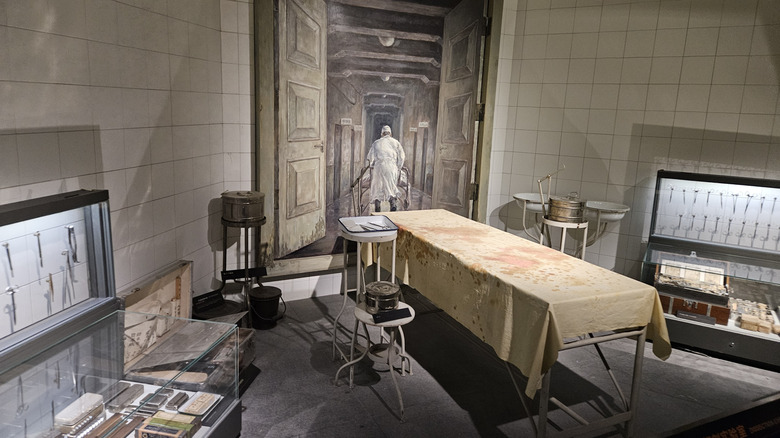
Just about every major country committed terrible atrocities during World War II, but it's important to recognize acts of large-scale cruelty to hopefully prevent them from happening again. Between 1933 and 1945, a "research" unit of the Imperial Japanese Army conducted unimaginably torturous experiments on its short-lived military prisoners. Called Unit 731, the program's mission statement was biological and chemical warfare research and development — essentially, they tested their weapons on the prisoners. Yet, the experiments took a sadistic turn and went beyond basic torture. Somewhere between 3,000 to 12,000 prisoners were caught in a dangerous explosion of Japanese nationalism, which drove the captors to view their foreign prisoners as non-humans.
In the lead-up to WWII, Japan went from a feudal caste system of numerous regional allegiances to a nation unified around the empire. To accomplish this unification, the military government aggressively rallied its population around worship of the emperor as a divine being. This nationalistic fervor placed ethnically Japanese people in an elevated caste from the populations the military planned on conquering. The result was the thorough dehumanization of the people living within Japan's imperial aspirations, specifically the Chinese, Koreans, Russians, and Mongolians.
Because chemical and biological weapons were explicitly banned by the 1925 Geneva Convention, Unit 731's "research" was hidden from the public for many years. We may never know the full extent of the atrocities. What we do know comes from the Khabarovsk War Crimes Trials of 1949 and decades of investigative journalism. Initially, the "researchers" subjected the prisoners to different diseases and toxins, including CO poisoning, cholera, mustard gas, tetanus, smallpox, "poison," plague, and anthrax (the U.S. tested anthrax, too, burying it at a Maryland fort). They even forced prisoners to commit suicide. But as the war grew in scope by the 1940s, their experiments became more torturous.
Live vivisections and hypothermia tests with no survivors
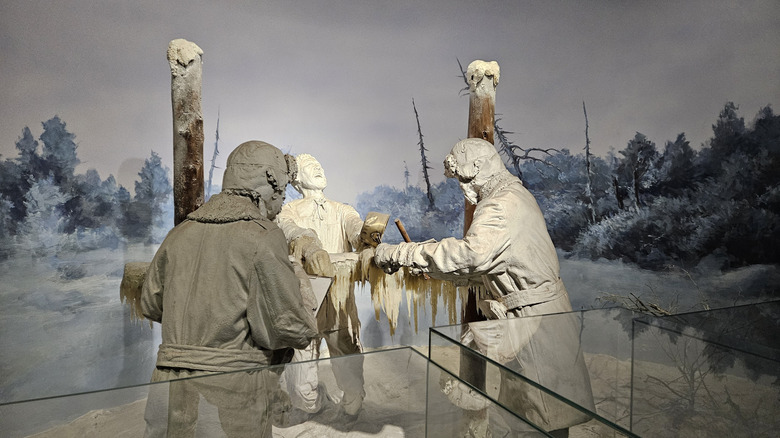
It appears that prisoner subjects were used the same way scientists use mice and lab rats today: If the subject survives the experiment, it won't survive the laboratory. This assured death meant the Japanese "researchers" could do whatever they wanted without leaving behind non-Japanese witnesses to their crimes. These crimes included live vivisections, in which largely Chinese prisoners were labelled as "maruta" or "logs." This meant they were dissected while alive and awake. This group of so-called "prisoners" included children and forcibly impregnated women, though none survived the "experiments."
Most of the experiments sought to document the limits of the human body by killing victims under controlled conditions. In one round of testing, the victims were submerged in freezing cold water until they reached the brink of death. Under the pretense of testing treatment options for frostbite, the Japanese "researchers" waited until the critical moment and then poured hot water over the victim, or exposed them to fire, to see if they could survive.
Other brutalities included pressure-chamber tests. Prisoners were put into hypobaric chambers, and the "researchers" lowered the pressure to extremes until blood vessels burst, eyes ruptured, or the victim simply died from the lack of atmospheric pressure (similar to the way a rapid shift from high-to-low pressure, known as decompression sickness or "the bends," can kill a scuba diver). Official documents also assert that prisoners were used as live targets for weapons testing — though such atrocities weren't even under the guise of science and were standard for the Japanese Imperial Army (IJA) at the time. Indeed, the Japanese Army's crimes against humanity went beyond the walls of its research facility.
Beyond the laboratory: Tens of thousands of unwilling Chinese test subjects
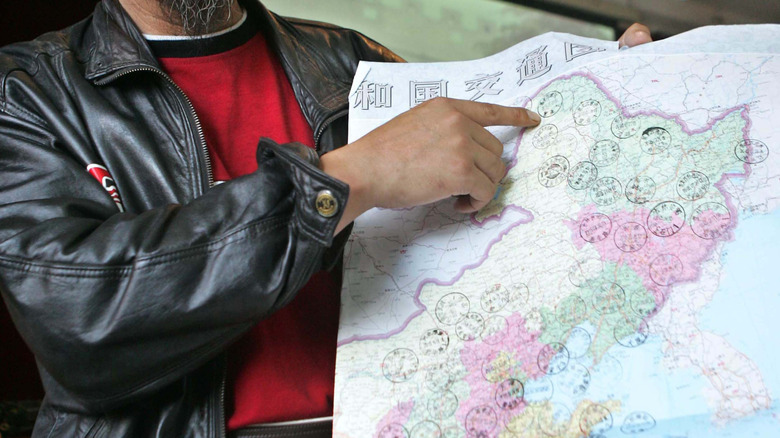
While the horrors within Unit 731's secret laboratories were inhumane on an individual scale, the program was responsible for large-scale murder, as well. In 1940, the program expanded to large-scale testing of its biological weapons, and the Chinese population in Manchuria was the designated testing grounds. These civilian tests resulted in an estimated 200,000 to 580,000 deaths, as the reach of the germs spread to the countryside.
In one attack, Japanese planes dropped fabrics and fleas infected with the bubonic plague, forcing the city of Ningbo to quarantine its citizens and burn down buildings to contain it. A year later, the same "test" was conducted on the city of Changteh, only this time with cholera mixed in. Both pathogens spread easily within the already-famished city. To make matters worse, grain was mixed in with the fleas, which attracted rats which carried the diseases far and wide. Other such tests by Unit 731 were conducted elsewhere in China, and one involved a clay bomb that contained plague-infected fleas and other contaminants. Unit 731's commanding director, General Shirō Ishii, named it the Uji Bomb.
Although sadistic curiosity drove the inhumane experimentation in the laboratories, Unit 731's large-scale experiments were highly technical and industrialized. Fleas for Uji Bombs weren't picked from street cats; they were bred in a massive factory designed for breeding diseases. The facilities held millions of plague-infected rats, which helped cultivate a population of hundreds of millions of plague-infested fleas.
Unit 731 is just a fraction of the broader war crimes committed by Imperial Japan during WWII, which serves as just a single chapter in a long story of risky biological warfare experiments conducted against unwilling subjects — the U.S. has engaged in such experiments, too.