

Archaeologists Discovered Ancient Egyptians Were Using Poop For Something You'd Never Expect

It sounds like a gross way to learn about ancient cultures, but scientists have been able to learn a lot over the years by analyzing poop. When they analyzed 2,000-year-old human poop, for instance, they found dozens of ancient peptides that have largely disappeared from modern guts. Perhaps that's why ancient physicians would prescribe poop-containing medicinal treatments for ailments like carcinoma and throat infections, for which archaeologists finally have physical evidence of ancient Romans doing. Treating ailments wasn't the only use, though. Ancient Egyptian prescriptions included poop as an ingredient for birth control.
The Gynecological Kahun Papyrus (also known as the Kahun Papyrus and variations of the two) is the oldest medical papyrus to be discovered, dating from 1850 to 1825 B.C. Found in 1889 by British archaeologist and Egyptologist W.M. Flinders Petrie, researchers have restored and translated much of it. They've determined that the last paragraphs are about pregnancy, including educational notes about gynecological treatments and contraception. Among the contraception options, the first recipe calls for pounding crocodile poop with fermented vegetal mucus (think of okra slime).
Since the papyrus sheet had to be reconstructed from 46 pieces, scientists aren't totally certain how the crocodile poop mixture is supposed to be used. It's entirely possible, though, that women inserted it into the vaginal canal. That's because crocodile poop is alkaline like modern spermicides, while the fermented vegetal mucus likely diluted it so that it wasn't infectious. As sperm enters during intercourse, the poop paste would chemically neutralize it. However, some researchers believe that the recipe was intended for burning, essentially preventing intercourse altogether by ruining the mood.
Crocodile poop wasn't the only substance ancient cultures used for birth control
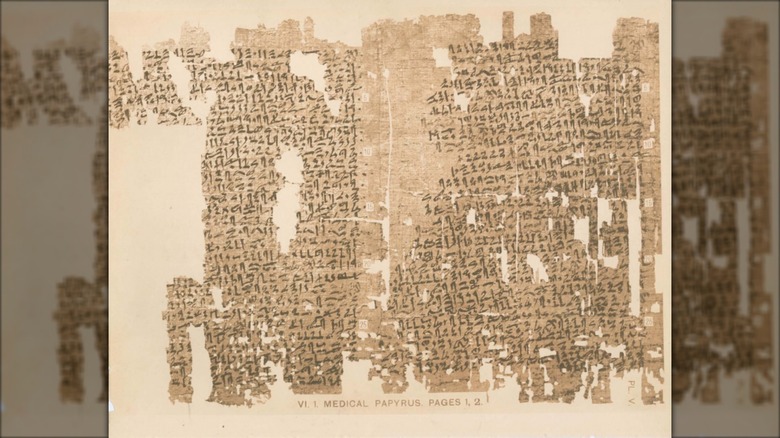
As mentioned, the Gynecological Kahun Papyrus had more than just one contraceptive option among its pregnancy-related teachings. Another recipe involved using honey and natron. While the honey would essentially trap the sperm, the natron (a sesqui-carbonate of soda) would make the cervix contract — combining to prevent sperm from entering the cervix. The third option was to sprinkle fermented vegetal mucus into the vulva to trap the sperm and keep it from passing into the uterus. Dating to around 1550 B.C., the Ebrus Papyrus is another Egyptian medical artifact that recommends placing a combination of dates, acacia tips, bitter apple, and honey on the vulva as a spermicide.
The Egyptians aren't the only ancient culture that implemented contraceptive practices. Greek philosopher Aristotle, who lived from 384 to 322 B.C., suggested mixing olive oil with either cedar oil, lead ointment, or frankincense and applying it to the vagina. During the 1st century A.D., Indian women would use honey as a contraceptive combined with seeds from the palash tree and clarified butter (specifically ghee). There's evidence they used water and elephant poop as well. During his life from A.D. 40 to 90, Pedanius Dioscorides suggested honey-based vaginal suppositories that were mixed with either peppermint or sicklewort (a yellow-flowered, viny plant).
Modern-day contraceptives have come a long way since ancient days, although the British were using suppositories of cocoa butter until 1960 and vitamin C tablets until the 1970s. While contemporary birth control pills have long-term side effects no one talks about — such as spinal bone mineral density and an increased risk of breast and cervical cancer — they (and newer options) are largely preferable to ancient methods.