

In The '40s, The US Military Detonated A Nuke Underwater. They Didn't Expect What Happened Next.
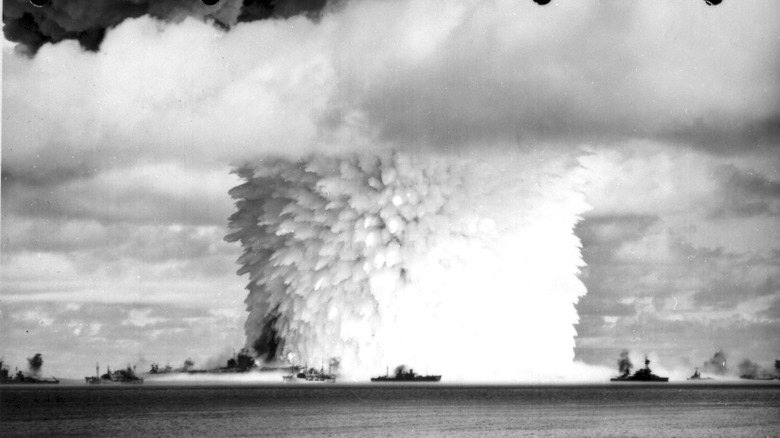
After the end of World War II, the U.S. military struggled to determine how, if at all, they should plan to use nuclear weapons. It was around this time that military planners decided that they needed a better understanding of the destructive power and environmental effects of nuclear weapons, in part to see how survivable a blast might be for land-based facilities and ships at sea. This prompted tests of two nuclear bombs at a ring of small coral islands in the Pacific Ocean known as Bikini Atoll. However, the second test, which involved a shallow water detonation, was far more destructive than any of the test planners had anticipated.
The explosion blasted a crater in the ocean floor 2,000 feet wide and 30 feet deep and produced a bubble of water and steam that reached more than a mile into the air. Then a 94-foot-high wave of radioactive water expanded outward in all directions, washing over ships and causing massive damage. Radioactive elements created during the nuclear explosion, leftover plutonium from the bomb's core, and irradiated sand and coral contaminated the surrounding area, making it impossible for people to safely visit the remaining ships for more than a week.
Choosing a test site
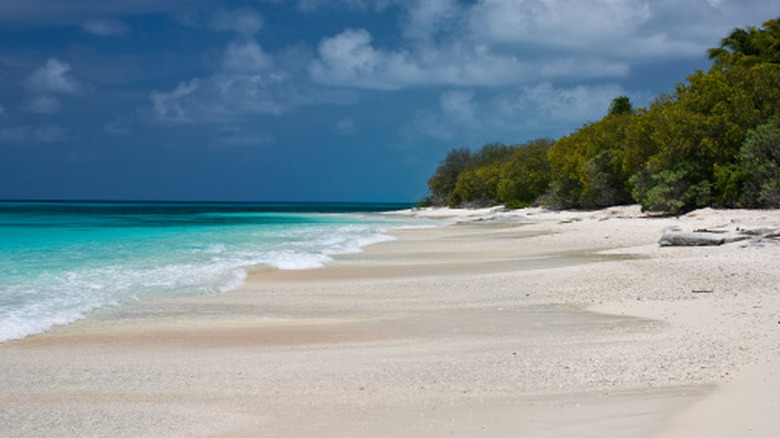
Planners chose Bikini Atoll for a few key reasons. First it was far away from existing shipping routes, reducing the level of risk. Second, it was under U.S. control and within range of an airbase from which a bomber capable of carrying a nuclear weapon could operate. The ring of islands also featured a lagoon that could be a sort of harbor that protected ships involved in the testing. Lastly, the population of Bikini Atoll was was only around 160, meaning the military could relocate residents.
With a location in place, officials first scheduled the tests to start in May 1946. Unlike the test of the first atomic bomb in New Mexico during the war, Operation Crossroads was not a secret. The U.S. government invited hundreds of journalists and officials from countries around the world to witness the tests. After rounding up a fleet of decommissioned ships to serve as a target fleet and putting together the personnel and equipment needed to measure the tests, they were finally scheduled to begin in July. The first test, known as Able, was an airburst. The second, named Baker, was detonated 90 feet below the surface. Officials had also planned a third test of a device 1,000 to 2,000 feet underwater, but that test was canceled following the unexpected destruction from Baker.
Same yields but wildly different effects
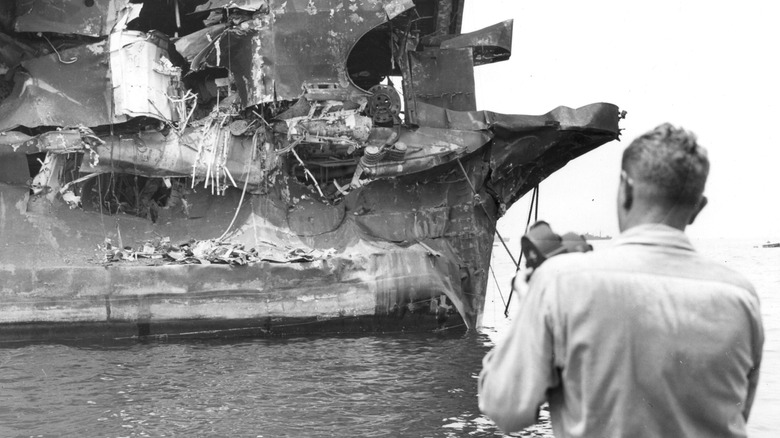
On July 1, a bomber dropped a nuclear device over Bikini Atoll. This bomb missed its target by around half a mile and detonated at an altitude of about 520 feet. The blast heavily damaged many of the target ships, sinking five of them. However, military personnel were able to board the target ships to assess damage the next day. This result was dramatically different from what followed a few weeks later. On July 25, officials detonated Baker, a weapon with an identical yield to Able. The resulting blast and wave sank nine target ships and a handful of support vessels.
In the years after Operation Crossroads, the U.S. tested many more nuclear weapons in and around Bikini Atoll, including a hydrogen bomb that massively exceeded its expected strength in 1954 that contaminated an area spanning more than 100 miles. The effects of these and other nuclear tests spurred the signing of the Partial Test Ban Treaty in 1963, which banned atmospheric nuclear tests. However, the legacy of these tests lived on for years. In 1968, Bikini Atoll residents were allowed to return, but underestimates of residual radiation levels there led to those same people again leaving the islands within a decade.
Military officials wanted to know more about the effects of nuclear weapons, and Operation Crossroads did exactly that. The unanticipated result of the Baker detonation showed how devastating nuclear weapons can be and how their effects linger.