

Scientists Took Another Look At A 309-Million-Year-Old Museum Fossil. Something Didn't Add Up
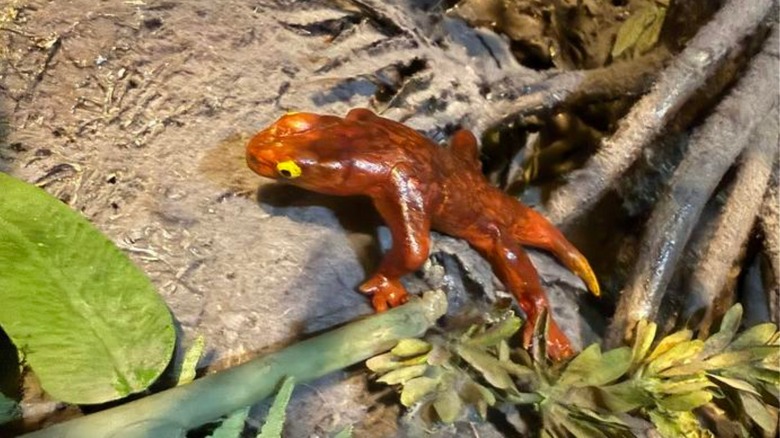
Using fossils, scientists are able to identify new species of animals that have long been extinct, filling the gap between ancient and modern-day species. One example is the fossilized bones of a 92-foot dinosaur that were discovered by accident in China last year, which turned out to be a new sauropod. However, it's not always easy to distinguish various species from each other — even when the animals are still alive, like when scientists discovered the first new cat species in over 100 years. More recently, a pair of student scientists took a look at an old fossil and found some connections that had previously been overlooked.
The fossil specimen in question was donated to the Field Museum in Chicago by an amateur collector decades ago. At the time, it was classified as Amphibamus grandiceps, a small species of ancient amphibian that has been well-established in the Mazon Creek area in northeastern Illinois. That classification became a sort of "waste bin taxon," a metaphorical term for specimens that appear to be related but haven't been studied well.
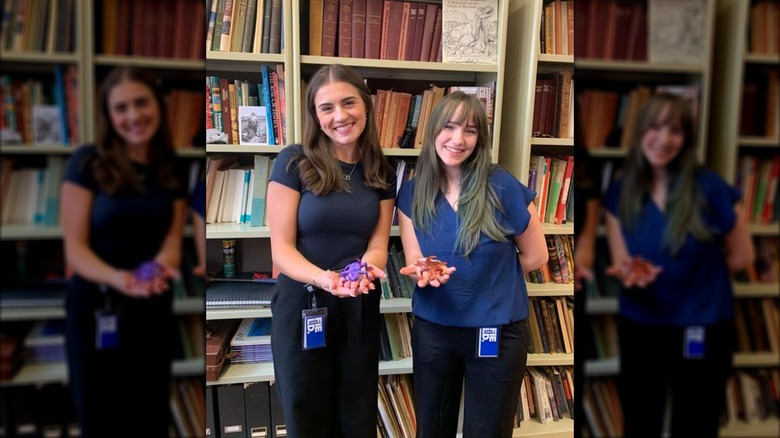
After taking a closer look as part of the 2025 Field Museum Women in Science program, student scientists Allison Sefcovic and Payton Kohlberg saw that one specimen was preserved so well that the skeleton was nearly complete with an impression of the body's soft tissue. They noticed several distinctions from the others, published their findings in the Journal of Vertebrate Paleontology, and named the specimen Jeanerpeton mazonensis.
Describing and naming Jeanerpeton mazonensis
The area around Mazon Creek was a river delta during the late Carboniferous period (when the climate was pure nightmare fuel) and home to early species of giant insects. With sediment quickly turning dead animals and plants into fossils, it's now home to one of the best fossil sites in the world because even fine details and soft tissues are often found preserved. "What's really cool about Mazon Creek is that it preserves all of these unusual details — things like toe pads and body outlines," Sefcovic said in a statement. "In the fossil of Jeanerpeton, we can see some of the scales on its back and tiny 'belly ribs' called gastralia. You can even see the eye impressions!"
Based on its location, the fossil of J. mazonensis is 309 to 307 million years old (before dinosaurs existed). The authors note that a previous paper published in the Journal of Vertebrate Paleontology in 2020 only noted that this specific specimen had several anatomical differences from A. grandiceps. The new student-led paper takes the comparison further, providing evidence that J. mazonensis is a distinct taxon.
The name that they decided to give it — Jeanerpeton mazonensis — is very different from the other species as well. It's in honor of the students' mothers, both of whose names are both Jean, and the area where the specimen was retrieved. Translated, it means "Jean's crawler from Mazon Creek."